The Final Vision of Non-Duality: Introduction to Verses 41–50 of the Alatasanti Prakarana
The concluding verses (41–50) of Chapter 4 of the Mandukya Karika, known as the Alātaśānti Prakaraṇa, present the pinnacle of Gaudapada’s non-dual philosophy. In these verses, he affirms the doctrine of ajātivāda — the view that the Self is unborn, eternal, and untouched by worldly distinctions. Just as dreams are understood as illusions upon waking, so too is the waking world recognized as unreal by the enlightened. Gaudapada dismantles all notions of duality such as knower and known, birth and death, time and action. The Self (Atman) is revealed as pure awareness, beyond grasp, unaffected by thoughts or teachings. Realizing this truth brings complete freedom from delusion and the cycle of rebirth. For More Information Click Here

Mandukya Karika Chapter 4 (Alatasanti Prakarana): Verses 41–50 – The Unborn Self and the Illusion of Duality
Verse 41
Original Sanskrit:
यथा स्वप्नविहारं तु गृह्णन्ति स्वप्नबुद्धयः।
तथैव जागरविहारं गृह्णन्ति ज्ञानबुद्धयः॥
Translation:
Just as people awakened from dream understand dream experiences to be unreal, the wise perceive the waking world in the same way.
Point:
The wise see waking life as illusory, like a dream.
Verse 42
Original Sanskrit:
नान्तर्विज्ञानमाज्ञातं न च विज्ञानमन्तरम्।
न विज्ञानं विज्ञानं च विज्ञेयं न च विद्यते॥
Translation:
There is no internal consciousness, nor is there external consciousness. Neither is there both. Consciousness is not an object to be known, nor is there any knower.
Point:
Ultimate reality is beyond dualistic perception—no subject, object, or knowledge process exists.
Verse 43
Original Sanskrit:
अविज्ञातं विजानन्ति विज्ञाते नास्ति तत्कथम्।
विज्ञातारं क आत्मानं अविज्ञाय जनो यतः॥
Translation:
People think they know the unknown, but how can that which is known still be unknown? Because people do not know the Knower (Self), they remain confused.
Point:
The Self, being the Knower, cannot itself be known as an object.
Verse 44
Original Sanskrit:
नान्तःप्रज्ञं न बहिष्प्रज्ञं न चोभयतःप्रज्ञं न प्रज्ञानघनं।
न प्रज्ञं नाप्रज्ञमदृष्टं व्यवहार्यं ग्राह्यग्राहकवर्जितम्॥
Translation (condensed):
The Self is not inwardly, outwardly, or both ways conscious. It is not a mass of consciousness, nor unconscious. It is unseeable, ungraspable, and beyond all dualities.
Point:
The Self (Turiya) transcends all mental categories and dualistic descriptions.
Verse 45
Original Sanskrit:
न चास्य जन्म मरणं न क्षुत्पिपासे न शोकमोहौ।
न चाधीतं न च शास्त्रमिति स्थितं तत्त्वमविप्रयोगात्॥
Translation:
It has no birth or death, hunger or thirst, grief or delusion. It neither learns nor teaches. This is the eternal Truth due to its indivisibility.
Point:
The Self is changeless, complete, and untouched by worldly experiences.
Verse 46
Original Sanskrit:
नैवात्मा न शरीरं वा संसारं न च सन्नतम्।
एतत्त्यक्त्वा तु ये तिष्ठन्ति ते नन्दन्ति महायशः॥
Translation:
There is no Self (as distinct), no body, no worldly cycle, nor liberation. Those who give up these conceptual notions live joyfully and gloriously.
Point:
Realizing the non-dual nature of reality brings supreme joy and freedom from delusion.
Verse 47
Original Sanskrit:
एक एवात्मा मन्दानां विविधा कल्प्यते यथा।
घटाकाशादिकं यद्वत्सत्यं तद्ब्रह्म तत्परम्॥
Translation:
The Self is one, but the ignorant imagine it to be many, like space divided in pots. But the truth is one Brahman, beyond all divisions.
Point:
The one Self appears manifold to the ignorant, but in reality, it is undivided.
Verse 48
Original Sanskrit:
कालो न याति नायाति न जायते न म्रियते।
न हि जायते वा कालो न चास्ति न च विद्यते॥
Translation:
Time neither comes nor goes. It is not born, nor does it die. Time itself is unreal—it does not exist in truth.
Point:
Time is an illusion; ultimate reality is beyond time. For More Information Click Here
Verse 49
Original Sanskrit:
विज्ञातारं न तं मन्ये न ग्राह्यं न च ग्राहकम्।
न ज्ञाता ज्ञेयभावेन न चास्त्यात्मा न चान्यथा॥
Translation:
I do not regard the Knower as an object of thought. It is not the perceiver or the perceived. The Self does not exist as knower-known duality.
Point:
The Self is not subject to mental grasping; it is beyond all dualities.
Verse 50
Original Sanskrit:
यस्य साक्षाद्विविक्तस्य नास्त्यजातिः कथं पुनः।
उपादाय स्मृतिं जन्तोः प्रवृत्तिर्दृश्यते खलु॥
Translation:
For the one who directly realizes the Self as unborn and distinct, how can there be birth again? Action persists only due to past impressions.
Point:
Once the unborn nature of the Self is realized, rebirth ends. Actions seen in such a one arise only from past momentum.
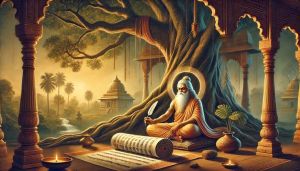
Adi Shankaracharya’s Insights on the Final Verses of the Mandukya Karika
Adi Shankaracharya, though he did not write a direct commentary on Gaudapada’s Mandukya Karika, deeply resonated with its teachings, especially those found in the concluding verses of the Alātaśānti Prakaraṇa (41–50). His Advaita Vedanta philosophy strongly reflects the same non-dual vision presented by Gaudapada. Shankara upheld the doctrine of ajātivāda—the unborn and changeless nature of the Self—as central to true knowledge. He taught that both the waking and dream states are ultimately illusory, sustained by ignorance (avidya), and that the knower-known distinction is a mental projection with no basis in the absolute Self. Time, action, and individuality are all seen as mere appearances caused by maya, having no reality in Brahman, which is timeless, formless, and indivisible. Liberation, according to Shankara, comes not through rituals but through the realization of this non-dual truth. By accepting and revering Gaudapada’s work, Shankara affirmed the Karika’s philosophical authority, noting that the Mandukya Upanishad alone, when properly understood, is sufficient for liberation. For More Information Click Here
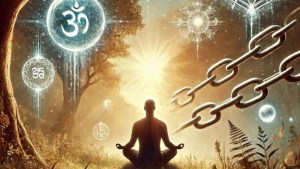
Conclusion
The final verses of the Mandukya Karika encapsulate the essence of Advaita Vedanta—non-origination, non-duality, and the illusory nature of all phenomena. Gaudapada masterfully reveals that the Self is beyond time, space, and causality, untouched by birth, death, or action. Adi Shankaracharya’s philosophy echoes these truths, emphasizing that liberation comes through knowledge alone. When the Self is realized as unborn and indivisible, all distinctions dissolve, and true freedom dawns. The world, seen as a dream by the wise, loses its binding power. Thus, the seeker awakens to the unchanging reality—pure consciousness, which is Brahman.
Join Our Classes:
The Upanishads are more than just ancient texts—they are timeless guides to living with clarity, balance, and inner peace. Our classes make their profound wisdom easy to understand and apply in everyday life. Join us to explore these teachings and discover a new way of seeing yourself and the world!