The Silent Self in Deep Sleep: Summary of Prashna 6.3
In this verse, the Upanishad describes the nature of deep sleep and the role of the Self during that state. It explains that when a person sleeps, all mental functions—such as seeing, hearing, and thinking—cease to operate. The individual does not perceive anything, yet the Self (Ātman) does not vanish; it remains silently present. This state is not a loss of existence but a withdrawal of awareness due to the inactivation of the senses and mind. When the prāṇa (life-force) reconnects upon waking, the faculties of knowledge resume, and the person becomes conscious again. The verse conveys that the Self is constant, underlying all states of consciousness, and independent of bodily or mental activity. For More Information Click Here

Prashna Upanishad – Chapter 6, Verse 3
Sanskrit (Transliteration):
sa eṣa eva suptaḥ saṃjñānām ajñānam anupraviśya, na kiñcana paśyati na kiñcana svinoti, sa etasmaj jīvaghnāt prāṇasambandhāt pratibodho bhavati |
evaṃ hy asmin pratibuddhe sarve saṃjñāḥ pratyutthitā bhavanti || 3 ||
Verse Meaning & Explanation
In this verse, the sage explains what happens to the Self during the state of deep sleep:
- “When a person sleeps,” he says, the Self (Ātman) enters a state where all mental functions (saṁjñā) such as thinking, seeing, and hearing become inactive.
- The Self withdraws from all activity, not perceiving anything, not hearing anything—yet it remains present.
- The moment the body reconnects with the life-breath (prāṇa) upon waking, the mind resumes, and all sensory and cognitive faculties arise again. For More Information Click Here
- It is this reconnection with prāṇa that allows the person to wake up and become conscious once more.
Shankaracharya’s Vision: The Self Beyond Mind and Sleep
Shankaracharya explains that in the state of deep sleep, there is no perception because the mind and senses are inactive, not because the Self is absent. The Ātman (Self) does not perform actions like seeing or hearing—it merely witnesses. During deep sleep, it remains untouched, free from duality, and not subject to the modifications (vṛttis) of the mind.
He emphasizes that the reawakening is due to the resumption of the connection with prāṇa, the life-force. This return to awareness proves that the Self never ceased to be—it was simply not associated with any mental activity at that time. Hence, waking, dreaming, and sleeping are states superimposed on the ever-present Self.
Ultimately, Shankara teaches that liberation (moksha) is gained by realizing this unchanging, ever-present consciousness, which exists independently of the body, senses, and mind. Knowing this Self removes ignorance and leads to fearlessness and freedom. For More Information Click Here
Conclusion
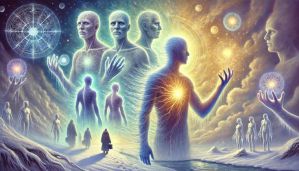
This verse highlights the profound Vedantic insight that the Self (Ātman) is ever-present, even in the absence of mental and sensory activity. In deep sleep, though a person does not see, hear, or think, the Self remains untouched, beyond perception and thought. Its continued presence is confirmed by the return of consciousness upon waking, made possible through the reactivation of prāṇa (life-force). This teaches that the Self is not the mind or the senses, but the unchanging witness behind all states of being. Realizing this truth leads the seeker to detach from the transient experiences of waking and dream, and rest in the knowledge of the eternal, ever-luminous Self—revealing the path to liberation.
Join Our Classes:
The Upanishads are more than just ancient texts—they are timeless guides to living with clarity, balance, and inner peace. Our classes make their profound wisdom easy to understand and apply in everyday life. Join us to explore these teachings and discover a new way of seeing yourself and the world!