Journey of the Individual Soul and the Inner Controller
This section explores the journey of the individual soul (Jiva) after entering the human body. It describes how the Self organizes the senses, mind, and vital forces to function harmoniously within the body. The Upanishad emphasizes the importance of detachment (Vairagya) and knowledge in guiding the soul toward its true nature. By understanding the Self as the inner controller, one can transcend identification with the body and worldly desires. The section also highlights the connection between consciousness and the faculties, showing that all experiences arise from the Self. It encourages reflection on the divine origin of life and the pursuit of spiritual awakening. Ultimately, it teaches that realization of the Self leads to liberation (Moksha) and freedom from the cycle of birth and death. For More Information Click Here
Verse-by-Verse Summary – The Soul’s Journey and Inner Control
Verse 1: The Self enters the human body, establishing itself as the inner conscious principle.
Verse 2: The senses are created and assigned their functions under the guidance of the Self.
Verse 3: The mind (Manas) is formed to coordinate the activities of the senses.
Verse 4: The vital forces (Pranas) are established to sustain life and bodily functions.
Verse 5: The Self directs the faculties to maintain harmony and proper functioning within the body.
Verse 6: The individual soul experiences the world through the senses, but the Self remains the inner observer.
Verse 7: The Upanishad emphasizes that all living beings share the same essential consciousness.
Verse 8: Detachment (Vairagya) is necessary to realize the Self beyond bodily identification.
Verse 9: Knowledge of the Self enables mastery over desires and mental fluctuations.
Verse 10: The Self is the ultimate cause of creation, sustaining both life and the universe.
Verse 11: By realizing the Self, one understands the interconnectedness of all beings.
Verse 12: The section highlights the sacredness and potential of human life for spiritual awakening.
Verse 13: Meditation and reflection on the Self lead the individual toward liberation (Moksha).
Verse 14: Recognizing the Self as the inner ruler allows the soul to transcend the cycle of birth and death.
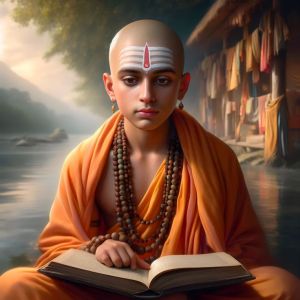
Shankaracharya’s Insights on Chapter 1 – Section 3 (Aitareya Upanishad)
Shankaracharya interprets this section as emphasizing the Self’s role as the inner controller of the human body and mind. He explains that the faculties, senses, and vital forces are instruments of the Self, which alone is conscious and aware. The teachings highlight detachment (Vairagya) as necessary to rise above identification with the body and worldly pleasures. According to Shankara, understanding the Self within leads to discrimination between the eternal and the transient. This realization allows the soul to transcend ignorance, recognize its unity with Brahman, and attain liberation. The section underscores that spiritual knowledge transforms ordinary human life into a path toward Moksha. For More Information Click Here
Significance of the Soul’s Journey and Self-Realization
This section is important because it explains how the individual soul (Jiva) is guided by the Supreme Self within the human body. It emphasizes that all senses, mind, and vital forces are instruments of consciousness, teaching that true understanding comes from recognizing the Self as the inner controller. By highlighting detachment and knowledge, it directs seekers toward spiritual awakening and liberation. This section reinforces the idea that human life is sacred and uniquely suited for realizing one’s divine nature. It also forms a crucial link between understanding the body, mind, and ultimate reality. For More Information Click Here
Conclusion
Chapter 1, Section 3 of the Aitareya Upanishad highlights the central role of the Self as the inner controller of the human body and mind. It teaches that all faculties and experiences are guided by consciousness, emphasizing the importance of detachment and knowledge. Recognizing the Self within allows the individual to transcend identification with the body, attain spiritual insight, and progress toward liberation (Moksha). This section underscores that human life provides a unique opportunity for self-realization and understanding the unity of the individual soul with Brahman, making it foundational for spiritual growth.
Join Our Classes:
The Upanishads are more than just ancient texts—they are timeless guides to living with clarity, balance, and inner peace. Our classes make their profound wisdom easy to understand and apply in everyday life. Join us to explore these teachings and discover a new way of seeing yourself and the world!