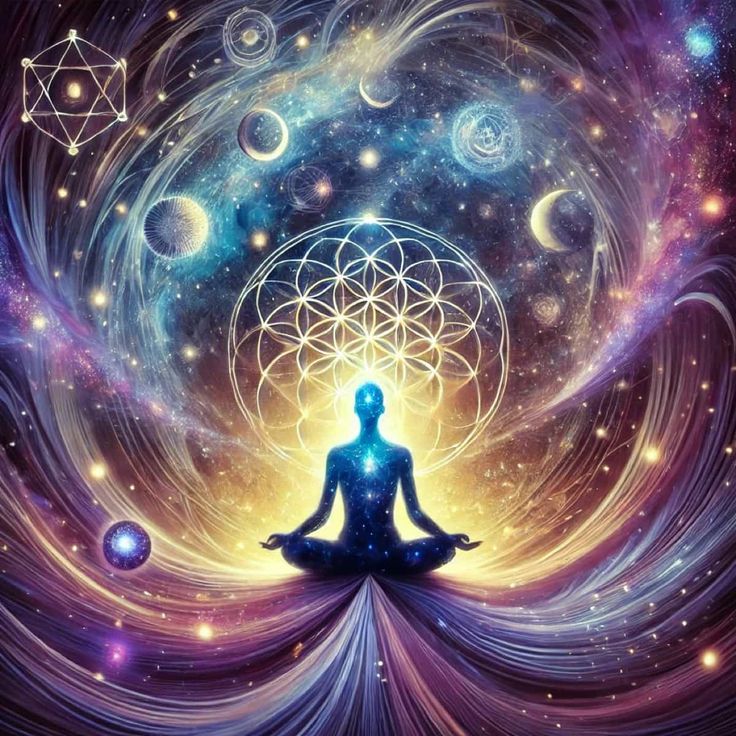
Overview of Chapter 2 – Mandukya Upanishad
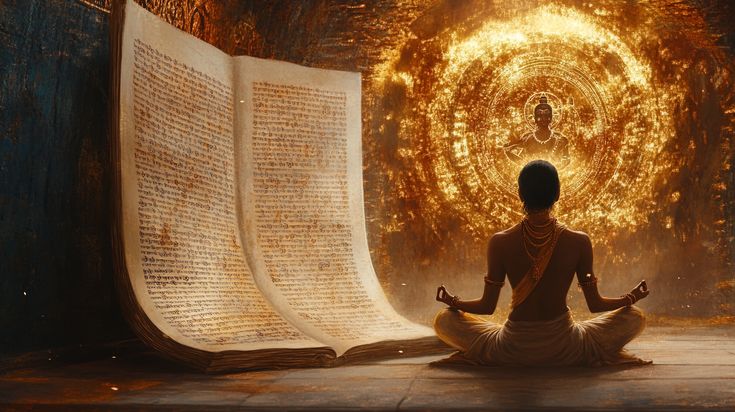
Chapter 2 of the Mandukya Upanishad elaborates on the four states of consciousness—waking, dreaming, deep sleep, and Turiya—by examining their qualities and functions. It explains how the waking state (Jagrat) is outwardly focused and engages with the physical world through the senses. The dream state (Svapna) is inwardly focused, where the mind creates experiences independent of external objects. Deep sleep (Sushupti) is a state of unified consciousness, free from desires and mental modifications. Turiya, the transcendent fourth state, remains ever-present, pure, and blissful, beyond the three ordinary states. The chapter emphasizes that understanding and abiding in Turiya leads to true knowledge and liberation (moksha), revealing the non-dual nature of the Self (Atman) as identical with Brahman. For More Information Click Here
Verse-by-Verse Summary – Chapter 2 (Mandukya Upanishad, 38 Karikas)
- The waking state is outwardly conscious, experiencing the physical world.
- The dream state is inwardly conscious, experiencing mental projections.
- Deep sleep is a state of undifferentiated consciousness, where the mind rests.
- Turiya transcends waking, dreaming, and deep sleep, representing pure consciousness.
- The Self is identical in all states, witnessing without being affected.
- The waking state appears real but is ultimately illusory, like a mirage.
- The dream state projects inner experiences as reality but is temporary.
- Deep sleep shows bliss and unity, yet lacks awareness of individuality.
- Turiya is the ultimate reality, eternal, blissful, and non-dual.
- Liberation arises from realizing Turiya as one’s own Self.
- The Self is beyond dualities of pleasure and pain in all states.
- The letters of Om symbolize the three ordinary states of consciousness.
- The silence after Om represents Turiya, beyond letters and sounds.
- Meditation on Om leads to direct experience of Turiya.
- The waking, dream, and deep sleep states are superimpositions on the Self.
- Ignorance creates the illusion of multiplicity in the world.
- The Self alone is real; all else is transient and illusory.
- The mind and intellect function within the waking and dream states.
- Deep sleep reflects the absence of mental modifications, yet awareness persists in Turiya.
- Turiya is untouched by the phenomenal world, pure and unchanging.
- Knowledge of Turiya dispels fear, sorrow, and attachment.
- The Self is the witness of all states and remains independent.
- The apparent world is projected upon consciousness due to ignorance.
- The Self is beyond time, space, and causation.
- Turiya is the source, sustainer, and dissolution of all states.
- Realization of Turiya is attained through self-inquiry and discrimination.
- The world of duality exists only for the ignorant, not the realized.
- The Self is tranquil, blissful, and free from all modification.
- Waking, dream, and deep sleep states are illusory experiences overlaid on Turiya.
- Turiya is beyond all attributes, unmanifest, and pure consciousness.
- Meditation on Om purifies the mind and leads to realization of the Self.
- The Self alone is eternal; all other experiences are impermanent.
- Identification with Turiya frees one from the cycle of birth and death.
- The non-dual Self is beyond all distinctions and mental limitations.
- The world of plurality is a projection on the one reality.
- Self-knowledge is the supreme knowledge, superior to all ritual or action.
- Turiya is beyond words, mind, and senses; it can only be realized directly.
- The chapter concludes that abiding in Turiya is the path to liberation (moksha).
Shankaracharya’s Insights on Chapter 2 – Mandukya Upanishad
Adi Shankaracharya explains that Chapter 2 elaborates on the four states of consciousness and their relation to the ultimate Self. He emphasizes that the waking (Jagrat) and dreaming (Svapna) states are phenomenal and marked by duality, while deep sleep (Sushupti) shows bliss but lacks awareness of individuality. Beyond these three lies Turiya, the fourth state, which is pure, non-dual, and eternal consciousness, untouched by mental modifications or worldly experiences. Shankara interprets Turiya as the true Self (Atman), identical with Brahman, which alone is real. He stresses that the letters of Om symbolize the three ordinary states, while the silence following Om points to Turiya, which can only be realized through meditation, self-inquiry, and direct experience. According to Shankara, recognizing Turiya dispels ignorance, duality, and suffering, leading the aspirant to liberation (moksha). Thus, Chapter 2 reinforces the Advaita Vedanta teaching of non-duality, showing the path from apparent multiplicity to the ultimate reality. For More Information Click Here
Importance of Chapter 2 – Mandukya Upanishad
Chapter 2 of the Mandukya Upanishad is crucial for understanding the nature and progression of consciousness. It systematically examines the waking, dreaming, and deep sleep states, highlighting their impermanent and illusory nature, and contrasts them with Turiya, the eternal, non-dual state of pure consciousness. This chapter provides a practical framework for meditation and self-inquiry, guiding seekers to discern the real Self from transient experiences. By emphasizing the identity of Atman and Brahman, it establishes the foundation for Advaita Vedanta philosophy. Realization of Turiya through contemplation of Om leads to liberation (moksha), freeing one from suffering, duality, and ignorance. Chapter 2 thus deepens the aspirant’s understanding of consciousness, offering both philosophical insight and spiritual practice. For More Information Click Here
Conclusion
Chapter 2 of the Mandukya Upanishad reinforces the understanding of the four states of consciousness—waking, dreaming, deep sleep, and Turiya. It highlights that the first three states are temporary and illusory, while Turiya represents the eternal, blissful, and non-dual reality that underlies all existence. Through the symbolic letters of Om, seekers are guided to meditate and discern the real Self from transient experiences. The chapter emphasizes that the Self is identical with Brahman, and realization of this truth leads to liberation (moksha) from suffering and duality. By combining philosophical exposition with practical guidance, Chapter 2 provides a clear path for self-inquiry, meditation, and experiential knowledge. It establishes the foundation for the remaining teachings of the Upanishad, showing the aspirant the way from ordinary consciousness to the supreme, transcendent reality.
Join Our Classes:
The Upanishads are more than just ancient texts—they are timeless guides to living with clarity, balance, and inner peace. Our classes make their profound wisdom easy to understand and apply in everyday life. Join us to explore these teachings and discover a new way of seeing yourself and the world!