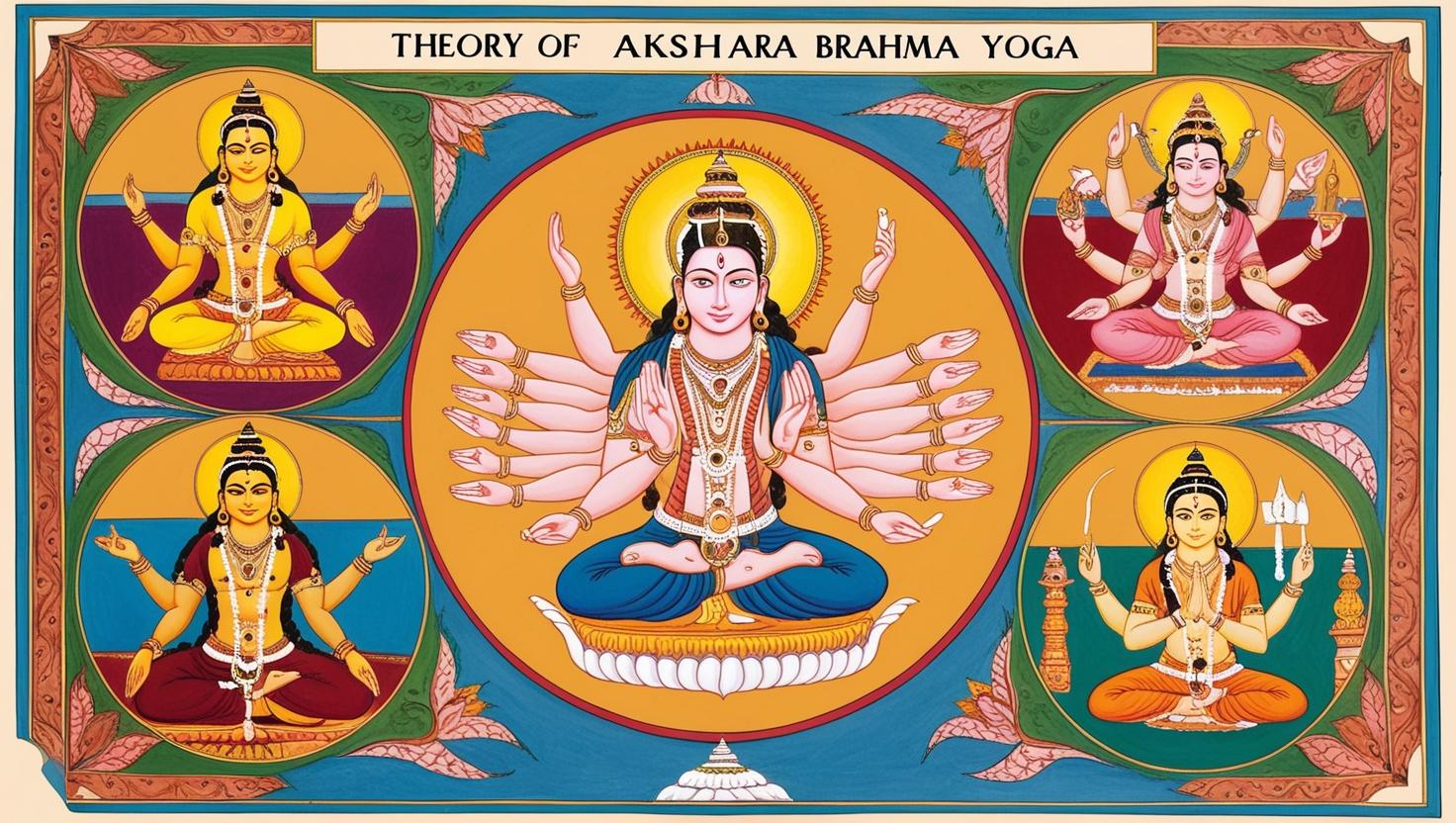
Overview of Chapter 4 – Mandukya Upanishad
Chapter 4 of the Mandukya Upanishad delves deeper into the nature of Turiya, the fourth state of consciousness, and its role as the ultimate reality (Brahman). It explains that Turiya is beyond the waking, dreaming, and deep sleep states, remaining eternal, blissful, and non-dual. The chapter highlights that the Self (Atman) is identical with Brahman and serves as the witness of all experiences without being affected. It emphasizes the illusory nature of the phenomenal world, which appears due to ignorance (Avidya) and superimposition on consciousness. Meditation on Om and realization of Turiya lead to liberation (moksha) from suffering, duality, and bondage. Chapter 4 thus consolidates the philosophical and practical guidance of the Upanishad, offering a path to direct experiential knowledge of the Self. For More Information Click Here
Verse-by-Verse Single-Line Summary – Chapter 4 (Mandukya Upanishad, 100 Karikas)
- Turiya is the ultimate reality, beyond waking, dream, and deep sleep states.
- The Self alone is real; the world is a projection due to ignorance (Avidya).
- Waking, dream, and deep sleep are illusory experiences superimposed on the Self.
- Turiya is eternal, blissful, pure, and non-dual.
- Knowledge of Turiya dispels fear, attachment, and suffering.
- Meditation on Om leads to realization of the Self as Turiya.
- The letters A, U, and M symbolize waking, dream, and deep sleep states.
- Silence following Om signifies Turiya, the transcendental state.
- The Self is the witness of all states yet remains unattached.
- Ignorance causes duality and the appearance of multiplicity in the world.
- The world and experiences vanish in the light of Self-knowledge.
- The Self is beyond mind, intellect, and sensory perception.
- Liberation (moksha) arises from abiding in Turiya.
- Turiya is the source, sustainer, and dissolution of all states.
- Waking, dream, and deep sleep exist only for the ignorant.
- The Self is tranquil, blissful, and ever free.
- Realization of Turiya is beyond intellectual comprehension.
- The three states are temporary and impermanent, unlike the Self.
- Meditation on Om purifies the mind and leads to direct experience of Turiya.
- Turiya is beyond time, space, and causation.
- The Self alone is eternal; all else is transient.
- Ignorance creates the illusory perception of plurality.
- Abiding in Turiya removes all doubts and dualities.
- The Self is the witness of all modifications in consciousness.
- The letters of Om serve as symbolic tools for self-inquiry.
- Silence after Om indicates the unmanifest, transcendental reality.
- The Self is independent, beyond all worldly conditions.
- Waking, dream, and deep sleep are superimposed on the Self.
- Meditation leads to the realization of non-dual consciousness.
- The Self is identical in all beings.
- The phenomenal world exists only in the mind due to ignorance.
- Turiya is ever-present, unchanging, and the ultimate goal.
- Realization of Turiya brings bliss and freedom from bondage.
- Turiya is beyond all mental modifications and sensory experience.
- The Self is tranquil, blissful, and free from limitations.
- Ignorance causes fear, desire, and suffering in the three states.
- Abiding in Turiya destroys all illusions and attachments.
- The Self is eternal and unchanging, unlike transient experiences.
- Waking, dream, and deep sleep are temporary coverings of the Self.
- Turiya is beyond all distinctions, dualities, and attributes.
- Meditation on Om leads to knowledge of the non-dual Self.
- The Self alone is real; all else is illusion.
- Liberation is attained by discerning the eternal Self from the transient.
- Turiya is the witness of all experiences without being affected.
- The Self is beyond birth, death, and worldly transformations.
- The letters of Om symbolize different states of consciousness.
- Silence after Om represents the ultimate, unmanifest reality.
- The world is an appearance created by ignorance and superimposition.
- The Self is the source and substratum of all experiences.
- Turiya transcends all mental and sensory activities.
- Realization of Turiya leads to supreme peace and bliss.
- The Self is the eternal witness, unchanging and independent.
- Waking, dream, and deep sleep are illusory only for the ignorant.
- Meditation on Om purifies the mind and reveals the Self.
- Turiya is beyond thought, language, and conceptualization.
- The Self alone is free from duality and mental modifications.
- Knowledge of Turiya dispels ignorance and suffering.
- The Self is tranquil, blissful, and ever free.
- The world and its experiences exist only in relation to ignorance.
- Abiding in Turiya leads to liberation (moksha).
- Turiya is the ultimate reality, eternal and non-dual.
- Waking, dream, and deep sleep are superimpositions on the Self.
- The Self is the witness of all states, unaffected by them.
- Meditation on Om and silence leads to realization of Turiya.
- The Self is beyond mind, intellect, and senses.
- Ignorance causes attachment, fear, and suffering in the three states.
- The Self alone is real; all else is temporary and illusory.
- Turiya is the source, sustainer, and dissolution of all phenomena.
- Realization of Turiya removes all duality and ignorance.
- The Self is identical in all beings.
- Waking, dream, and deep sleep exist only for the ignorant.
- Meditation leads to direct experience of the non-dual Self.
- Turiya is beyond time, space, and causation.
- The Self is tranquil, blissful, and free from limitations.
- Ignorance creates the illusory perception of plurality.
- Abiding in Turiya dispels fear, sorrow, and attachment.
- The letters of Om symbolize different states of consciousness.
- Silence after Om signifies the unmanifest, transcendental reality.
- The Self is eternal, unchanging, and independent.
- Waking, dream, and deep sleep are illusory coverings.
- Turiya is beyond all dualities, attributes, and modifications.
- Knowledge of Turiya leads to liberation (moksha).
- The Self alone is real; all else is temporary.
- Meditation on Om purifies the mind and reveals Turiya.
- Turiya is the ultimate reality, the goal of spiritual practice.
- The Self is the witness of all experiences without attachment.
- Waking, dream, and deep sleep are impermanent and illusory.
- Turiya transcends all mental, sensory, and intellectual activities.
- Realization of the Self dispels ignorance and duality.
- The Self is tranquil, blissful, and free from limitations.
- The world is projected on consciousness due to ignorance.
- Abiding in Turiya leads to eternal peace and freedom.
- The letters of Om represent the three states; silence represents Turiya.
- The Self is eternal, non-dual, and the source of all.
- Meditation and self-inquiry lead to experiential knowledge of Turiya.
- Turiya is beyond thought, language, and conceptual understanding.
- The Self alone is real; all else is impermanent and illusory.
- Abiding in Turiya removes fear, sorrow, and attachment.
- The Self is tranquil, blissful, and ever free.
- The chapter concludes that Turiya is the supreme reality and the path to liberation (moksha).
Shankaracharya’s Insights on Chapter 4 – Mandukya Upanishad
Shankaracharya explains that Chapter 4 of the Mandukya Upanishad, known as the Alata Santi Prakaraṇa, establishes the final realization of non-duality (Advaita) through deep reasoning and experiential insight. He clarifies that all distinctions between the waking, dreaming, and deep sleep states are mere superimpositions on the one unchanging consciousness—Turiya, which alone is real. The world, like a moving firebrand that appears as a circle due to motion, is an illusory projection of consciousness, having no independent existence apart from it. Shankara teaches that bondage and liberation are both concepts within ignorance (Avidyā)—the Self is ever free, untouched by the appearance or disappearance of phenomena. Through right knowledge (Jnana) and meditation on Om, the aspirant realizes that the Self is beyond birth, death, and causation, and that duality never truly existed. Chapter 4, according to Shankara, is the culmination of Advaita Vedanta, revealing that the Self (Atman) and Brahman are one, ever-pure, ever-liberated, and eternally blissful. For More Information Click Here
Importance of Chapter 4 – Mandukya Upanishad
Chapter 4 of the Mandukya Upanishad holds immense importance as it brings the seeker to the culmination of Advaitic realization—the understanding that there is no duality whatsoever. It asserts that all experiences of the waking, dream, and deep sleep states are illusory projections of consciousness, much like illusions seen in a firebrand’s motion. This chapter reveals that the Self (Atman) alone is real, ever free, and untouched by the appearance of the world, bondage, or liberation. It teaches that ignorance (Avidya) alone gives rise to duality, and through right knowledge and meditation on Om, this illusion dissolves into the awareness of Turiya, the fourth, timeless state of reality. By realizing the Self as non-dual, eternal, and self-luminous, one attains liberation not as a new achievement, but as the recognition of the freedom that always existed. Thus, Chapter 4 serves as the final teaching of non-duality, confirming that Brahman alone is, and all else is mere appearance. For More Information Click Here

Conclusion
Chapter 4 of the Mandukya Upanishad concludes the sacred text by affirming the absolute non-duality of reality. It declares that the apparent universe, along with all states of consciousness—waking, dreaming, and deep sleep—is a mere superimposition on the changeless Self (Turiya). Through deep inquiry and meditation on Om, the seeker realizes that the Self alone exists, untouched by creation, preservation, or dissolution. Shankaracharya and Gaudapada emphasize that liberation (moksha) is not something to be attained, but rather the realization of one’s ever-free nature. The illusions of bondage, duality, and multiplicity dissolve in the light of Self-knowledge. Chapter 4 thus brings the Mandukya Upanishad to its spiritual climax, revealing the Self as eternal, non-dual consciousness—beyond time, space, and causation, the very essence of Brahman itself.
Join Our Classes:
The Upanishads are more than just ancient texts—they are timeless guides to living with clarity, balance, and inner peace. Our classes make their profound wisdom easy to understand and apply in everyday life. Join us to explore these teachings and discover a new way of seeing yourself and the world!