Chapter – 14 Gunatrayavibhaga Yoga – The Yoga of Division of the Three Gunas
What is Gunatrayavibhaga Yoga?
Gunatrayavibhaga Yoga explores the fundamental forces of nature—the three Gunas or modes of material nature:
- Sattva (goodness)
- Rajas (passion)
- Tamas (ignorance)
Shree Krishna reveals that these three qualities govern the behavior, thought patterns, and spiritual inclinations of all beings. While these gunas are born of prakriti (material nature), the true self (the soul) is beyond them. Understanding and transcending these modes is essential for spiritual liberation. Access Bhagavad Gita Notes & Summary.
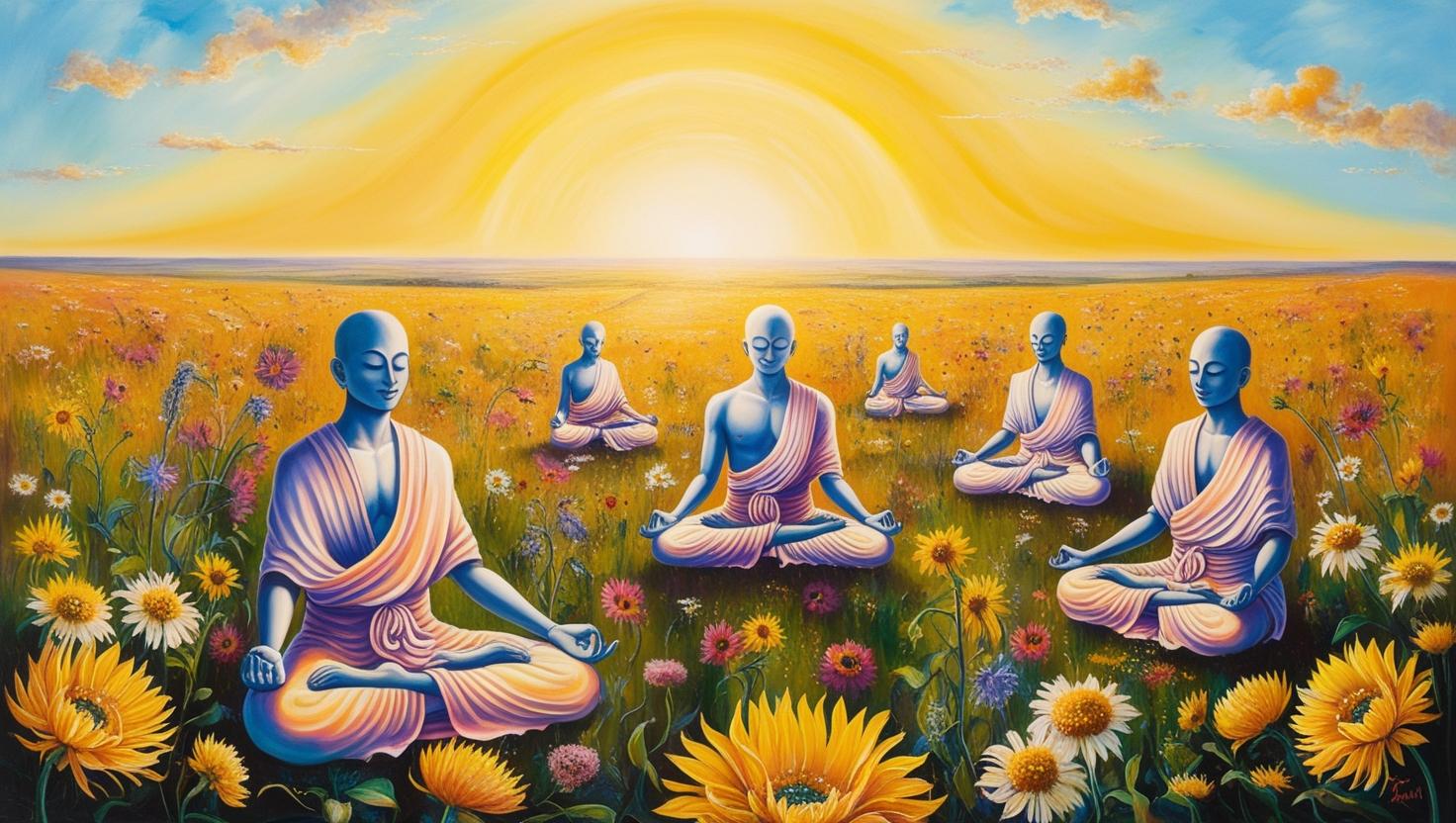
1. Sattva (Goodness)
Essence: Purity, harmony, wisdom, and balance
Nature & Qualities:
- Sattva is the most refined of the three gunas.
- It is illuminating, uplifting, and leads to spiritual awareness.
- It brings clarity, peace, knowledge, and compassion.
Signs of Sattva in a person:
- Calm and serene behavior
- Self-control and contentment
- Love for truth, knowledge, and spiritual pursuits
- Compassion for all beings
- Detachment from material outcomes
- Healthy body and mind
- Joy in service and simplicity
Sattva’s Binding Nature:
- Even though Sattva is pure, it still binds the soul to a sense of happiness and knowledge. One may become attached to this purity itself.
Outcome (Karma & Rebirth):
- Leads to higher births, such as among the wise and learned
- Promotes spiritual evolution
- Associated with Sat-loka (pure realms) Click Here For Chapter-14.
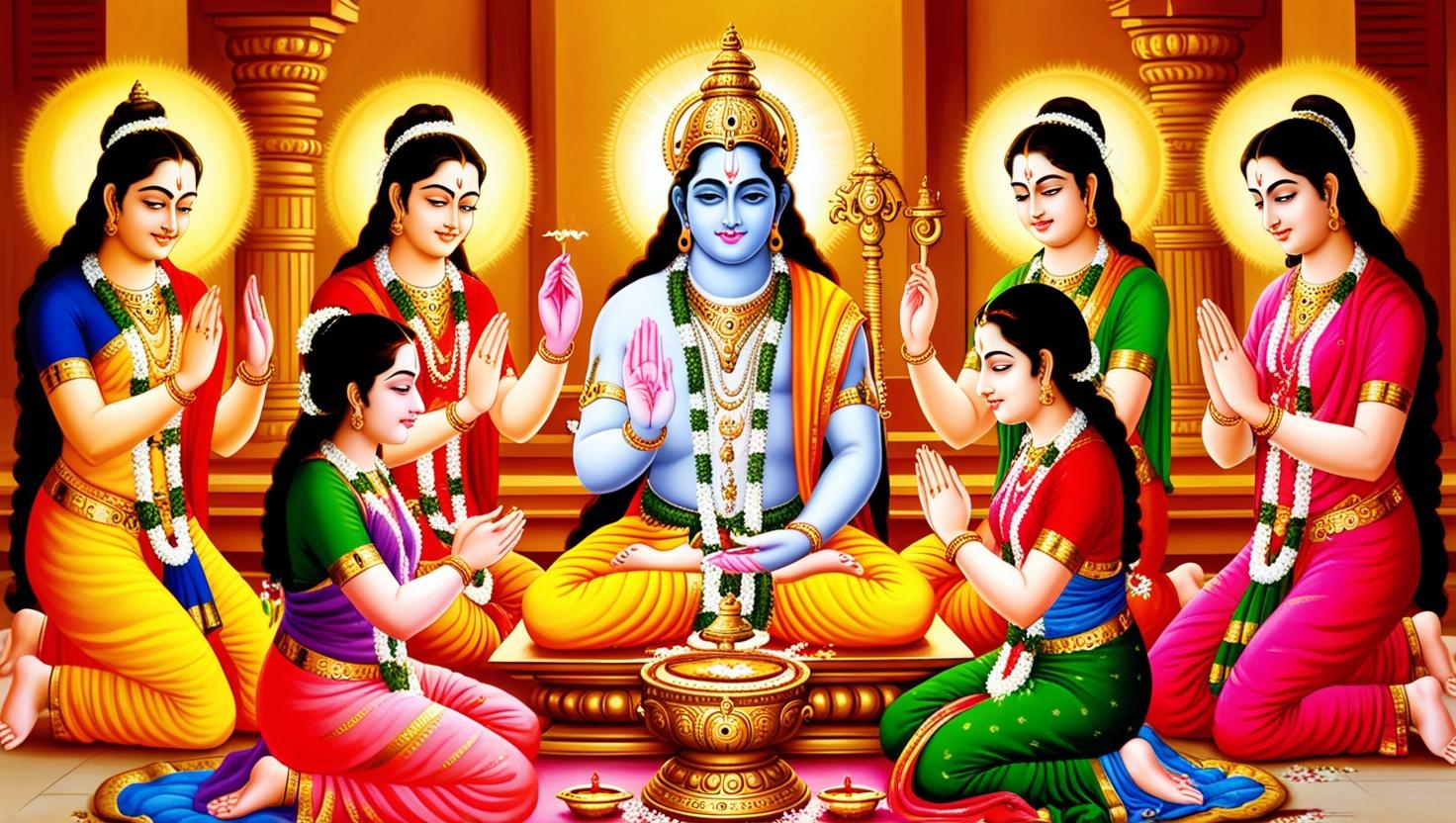
2. Rajas (Passion)
Essence: Activity, desire, ambition, restlessness
Nature & Qualities:
- Rajas is dynamic and agitating.
- It is the force behind movement, action, and change.
- It is driven by ego, attachment, desire, and ambition.
Signs of Rajas in a person:
- Restlessness and impatience
- Strong desires and cravings
- Attachment to results and success
- Competitive mindset
- High ambition and achievement-oriented
- Oscillating between joy and sorrow
- Tendency to overwork or burnout
Rajas’ Binding Nature:
- It binds the soul through attachment to action and desire for results. The person becomes trapped in a cycle of effort and expectation.
Outcome (Karma & Rebirth):
- Rebirth among the active, ambitious, and materially driven
- Generates stress, dissatisfaction, and ego-centric tendencies
- Can lead to exhaustion and frustration Click Here For Chapter-14
3. Tamas (Ignorance)
Essence: Inertia, darkness, delusion, stagnation
Nature & Qualities:
- Tamas is the lowest and most binding guna.
- It is characterized by ignorance, confusion, laziness, and lack of awareness.
- It resists growth, clarity, and action.
Signs of Tamas in a person:
- Lethargy, depression, and excessive sleep
- Addictions or overindulgence
- Neglect of duties and responsibilities
- Ignorance and refusal to learn
- Fear, confusion, and victim mindset
- Escapism and procrastination
- Tendency to blame others
Tamas’ Binding Nature:
- It binds the soul through negligence, laziness, and illusion, keeping the person stuck in lower consciousness and ignorance.
Outcome (Karma & Rebirth):
- Rebirth in lower life forms, such as animals or even darker states
- Leads to spiritual stagnation and repeated suffering
- Associated with mental darkness and delusion Click Here For Chapter-14

How the Gunas Influence Daily Life
Every person has all three gunas in varying degrees.
- In morning hours, Sattva is stronger — clarity and peace are easier to access.
- During the day, Rajas takes over — action and restlessness increase.
- At night, Tamas dominates — inducing sleep and inertia.
A sattvic lifestyle—pure food, meditation, righteous living—enhances Sattva and reduces Rajas and Tamas.
Spiritual Goal: Transcending the Three Gunas
The Gunas are tools of nature, but the soul is beyond them.
The ultimate goal of spiritual life is to transcend these Gunas:
“One who is unaffected by the three gunas and sees their play but remains untouched—such a person attains liberation.”
(Bhagavad Gita 14.22–14.25)
- Through bhakti (devotion), jnana (knowledge), and vairagya (detachment), one can rise above the Gunas and realize the eternal Self (Atman) and God (Brahman). Click Here For Chapter-14

Themes of Gunatrayavibhaga Yoga
Origin of the Material World:
- Shree Krishna explains that He is the seed-giving Father of all living beings, and prakriti (material nature) is the mother. This prakriti operates through the three gunas.
Nature of the Three Gunas:
- Sattva is illuminating and knowledge-bound, yet binds the soul to happiness.
- Rajas is active and desire-driven, binding the soul to action and its fruits.
- Tamas is inert and ignorant, binding the soul through delusion, laziness, and negligence.
Influence and Symptoms:
- All living beings are under the influence of these modes, which dominate in cycles. Their predominance is shown through signs such as serenity (Sattva), desire and restlessness (Rajas), or laziness and confusion (Tamas).
Karma and Rebirth:
- A person dying in Sattva is reborn in realms of knowledge.
- One dominated by Rajas returns to human life focused on activity.
- One overwhelmed by Tamas is reborn in lower life forms.
Transcending the Gunas:
-
- A soul must rise above the Gunas to achieve freedom from rebirth, old age, sorrow, and to attain immortality. This is done through steady devotion to God. Click Here For Chapter-14
Why Study Gunatrayavibhaga Yoga?
- It helps us identify the influence of material nature in our lives and how it shapes our thoughts and actions.
- Provides a roadmap for spiritual growth by recognizing and transcending lower tendencies.
- Teaches us to remain equipoised and detached, understanding that all actions are driven by the Gunas.
- Helps in achieving liberation (moksha) and unity with the Divine. Click Here For Chapter-14
Key Verses from Chapter 14 (Gunatrayavibhaga Yoga)
-
Verse 14.5 – Introduction to the three Gunas:
“The material energy consists of three guṇas—sattva (goodness), rajas (passion), and tamas (ignorance). These bind the eternal soul to the perishable body.”
-
Verse 14.16–18 – Effects of actions based on each Guna:
“Actions in goodness bring purity; in passion, pain; and in ignorance, darkness.”
-
Verse 14.20 – Transcending the Gunas:
“By transcending the three modes of nature, one becomes free from birth, death, old age, and misery, and attains immortality.”
-
Verse 14.26 – Supreme path to transcendence:
“Those who serve Me with unalloyed devotion rise above the three modes and come to the level of Brahman.”
Benefit of Gunatrayavibhaga Yoga
- Self-Realization: Helps individuals understand their inner tendencies.
- Spiritual Liberation: Offers tools for transcending material bondage.
- Mental Equanimity: Cultivates a balanced and stable mindset.
- Clarity in Action: Enables one to act without being enslaved by desires.
- Devotional Focus: Guides seekers to remain steadfast in devotion, which is the ultimate path to freedom from Gunas. Click Here For Chapter-14
Conclusion
Gunatrayavibhaga Yoga serves as a profound map of inner psychology and spiritual evolution. It unveils the subtle workings of nature within and around us. While every action, thought, and response is shaped by the Gunas, the goal of life is to rise above them. Through unwavering devotion to God, a seeker can become free from the cycles of birth and death and unite with the Supreme Being.
Join Our Classes:
The Bhagavad Gita is more than just a book—it’s a guide to living with balance and peace. Our classes make its deep wisdom easy to understand and apply in everyday life. Join us to explore the teachings and see the world in a new light!
Explore More Text Join Our Classes
1. Watch Chapter-14 [Verses 1&3]Youtube Video 2. Watch Chapter-14 [Verses 4&6]Youtube Video 3. Watch Chapter-14 [Verses 6&9]Youtube Video 4. Watch Chapter-14 [Verses 10&18]Youtube Video> 5. Watch Chapter-14 [Verses 18&20]Youtube Video 6. Watch Chapter-14 [Verses 21&23]Youtube Video 7. Watch Chapter-14 [Verses 23&27]Youtube Video