Anubhuti Prakasha Volume 1 – Unlocking the Wisdom of the Keno Upanishad
Anubhuti Prakasha Volume 1 is a detailed commentary text written by Swami Vidyaranya, explaining the essence of the Upanishads through 100 carefully structured verses. This volume focuses on unfolding the teachings of the Keno Upanishad (in Chapter 19), where subtle spiritual truths are revealed about Brahman, the Self, and the limitations of intellectual knowledge. Each verse combines reasoning, scriptural authority, and experiential wisdom to lead seekers from doubt to clarity. The commentary emphasizes that realization of the Self is beyond speech and mind, attained only through inner awakening. Volume 1 thus serves as both a philosophical guide and a practical manual for contemplation. For More Information Click Here
Essence of Verses 1–41: The Journey Beyond Mind and Senses
Verses 1 to 41 of Anubhuti Prakasha (Chapter 19 – Keno Upanishad) explain the Upanishadic inquiry into Brahman, which transcends speech, mind, and sense perception. They highlight that the Self is the unseen power behind hearing, sight, and thought, yet beyond their grasp. Through dialogue and reasoning, Swami Vidyaranya shows that Brahman cannot be known as an object but realized as the very subject. These verses guide seekers from intellectual pursuit to direct Self-experience, emphasizing humility, faith, and contemplation.
Verse-by-Verse Explanation of Anubhuti Prakasha (Keno Upanishad) – Verses 1 to 41
1. The Upanishad begins with an inquiry: What power enables the ear to hear, the eye to see, the mind to think, and life to exist? This points towards Brahman.
2. It is revealed that Brahman is the hidden source behind all faculties. They function only because of Its presence, yet It remains beyond their grasp.
3. Speech cannot define Brahman, for it is the very foundation that enables all speech to exist. Hence, Brahman is the unspeakable Truth.
4. The mind cannot capture Brahman as an object. Instead, the mind itself functions because of the power of Brahman.
5. The eye perceives the world but not Brahman. Vision itself becomes possible only due to Brahman’s subtle presence.
6. The ear can hear sounds but not Brahman directly. Yet, without Brahman, hearing is impossible.
7. Brahman is subtler than the subtlest, beyond all sensory perceptions, yet It pervades everything.
8. Brahman is realized as the Witness of all experiences, never as an external object of knowledge.
9. One who proudly claims, “I know Brahman,” has not truly known It, since Brahman transcends ego and limited knowledge.
10. True realization dawns when the ego subsides, and the seeker sees Brahman as the inner Self, not as something separate.
11. Brahman is beyond both knowing and unknowing, for It is the very basis of both knowledge and ignorance.
12. The wise recognize Brahman as the Self dwelling within, the essence of all awareness.
13. Realization of Brahman occurs in deep stillness, beyond mental activities and restless seeking.
14. Partial glimpses of Brahman make the seeker humble, knowing that there is always more to unfold.
15. Even the enlightened admit Brahman cannot be fully grasped by thought or intellect.
16. Brahman can be indirectly known through Its manifestations in life—vitality, awareness, and existence.
17. Direct experience alone, not mere scholarship, brings true realization of Brahman.
18. Brahman is paradoxical—closer than the closest, yet farther than the farthest, depending on one’s awareness.
19. Those who truly know Brahman perceive unity everywhere—seeing all beings in Brahman and Brahman in all beings.
20. Brahman is the essence of life itself, the hidden energy that sustains every breath.
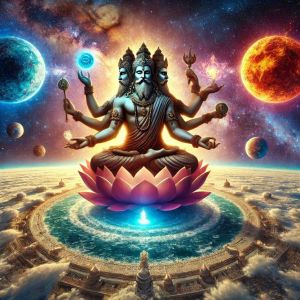
21. Every act of perception is possible only because of Brahman, the unseen ground of all experience.
22. Ignorance makes us mistake body and senses as the Self; knowledge reveals Brahman as the true Self.
23. Realizing Brahman frees one from fear, sorrow, and the cycle of delusion.
24. Logic and reasoning cannot establish Brahman; It is grasped only through direct Self-realization.
25. The Upanishad employs paradoxes to shake rigid thinking and awaken higher understanding.
26. Brahman transcends all dualities of knower and known, subject and object.
27. Language fails when attempting to capture Brahman’s reality, for words belong to the realm of limitation.
28. Therefore, silence itself becomes the highest expression of Brahman.
29. Though Brahman is the basis of all activity, It remains untouched, pure, and beyond doership.
30. The knower of Brahman gains inner strength, fearlessness, and unshakable peace.
31. Brahman shines as the eternal Witness within, illumining every thought and perception.
32. The Self is never an object of knowledge; it is the eternal subject that knows.
33. To know Brahman is to recognize unity in diversity—one essence manifesting as all forms.
34. Realization of Brahman is the ultimate fulfillment and purpose of human life.
35. Brahman is pure consciousness, free from limitations of body, mind, or world.
36. Knowledge of Brahman destroys ignorance, bringing an end to sorrow and bondage.
37. The Upanishad stresses the need for direct experience, beyond secondhand belief or intellectual debate.
38. The guidance of the Guru and the authority of the scriptures are essential for awakening this realization.
39. Devotion, humility, and surrender prepare the seeker’s mind for receiving Brahman-knowledge.
40. The realized sage lives freely in the world, unattached, rooted in the awareness of Brahman.
41. The section concludes that Brahman is both unknowable and self-evident—the eternal, unchanging Truth, beyond description yet the very essence of all existence. For More Information Click Here
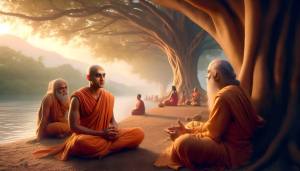
Swami Vidyaranya’s Vision in Anubhuti Prakasha
Swami Vidyaranya, through Anubhuti Prakasha, aims to bridge the gap between intellectual inquiry and direct realization. In these 41 verses (based on Keno Upanishad), his thought process is clear: the human tendency is to seek Brahman as an object of knowledge, but Brahman is the very subject behind all knowing. He stresses that logical reasoning, speech, and senses can only point toward It but never grasp It fully. The author repeatedly uses paradoxes (“known yet unknown, nearer than near, farther than far”) to shift the seeker’s attention inward. His thought is that Brahman is realized only when the ego dissolves, and the Self shines by itself.
The Core Message of Volume 1
Volume 1 of Anubhuti Prakasha is essentially a guidebook for seekers of Self-realization. It tells us that:
- Brahman is not an external object but the inner Self that enables all perception.
- Speech, mind, and senses are limited; silence and contemplation reveal the Truth.
- Intellectual pride is a barrier; humility and devotion are the doorways.
- Guru’s guidance and Upanishadic wisdom provide direction, but realization must be personal and experiential.
- Realization of Brahman brings fearlessness, peace, and liberation from sorrow.
- Ultimately, Volume 1 tells us that the highest knowledge lies not in “knowing about” Brahman but in being one with Brahman. For More Information Click Here
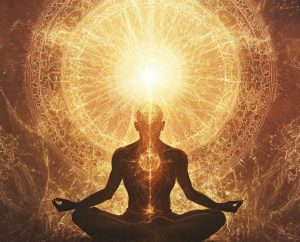
Why Volume 1 of Anubhuti Prakasha Matters
Anubhuti Prakasha Volume 1 is important because it lays the foundation for understanding the Upanishadic path to Self-realization. By focusing on the Keno Upanishad, it shows that Brahman is not an external object but the innermost Self, beyond speech, thought, and sensory grasp. It emphasizes humility, devotion, and contemplation as the true path to knowledge, preparing the seeker’s mind for deeper inquiry in later volumes. Volume 1 thus becomes a spiritual doorway, guiding aspirants from intellectual questioning to the silent realization of Truth. For More Information Click Here
“That which cannot be spoken by speech, but by which speech is spoken—know That alone to be Brahman, not this which people here adore.” (Keno Upanishad 1.5)

Conclusion
Anubhuti Prakasha Volume 1, through its explanation of the Keno Upanishad, beautifully shows that the highest Truth cannot be captured by words or intellect, but must be directly realized as the Self within. Swami Vidyaranya guides seekers to move beyond ego, embrace humility, and contemplate deeply on Brahman, the essence of life. These verses remind us that true knowledge is not about knowing about Brahman, but living in awareness as Brahman. Thus, Volume 1 stands as a timeless spiritual compass, leading aspirants from questioning to realization.
“He truly knows Brahman who knows It as beyond knowledge and ignorance. He who thinks he knows, knows not; he who admits he knows not, knows indeed.” (Keno Upanishad 2.3)