Who is Adi Sankaracarya?
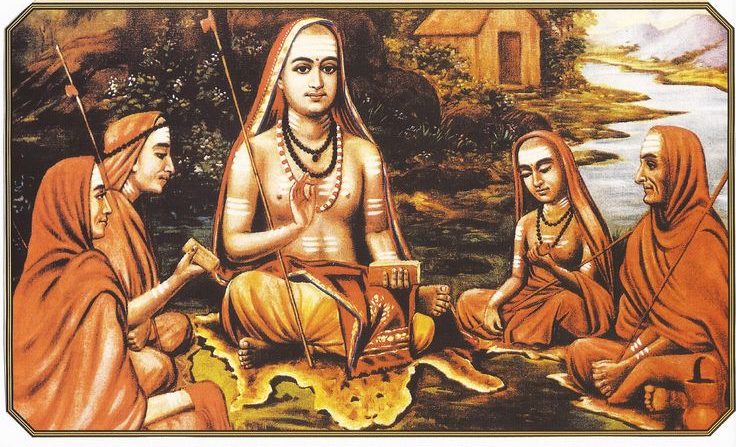
Adi Sankaracarya (circa 8th century CE) is a towering figure in the Indian spiritual and philosophical tradition. A prodigious philosopher, mystic, poet, and reformer, he is best known for revitalizing and systematically presenting Advaita Vedānta—the doctrine of non-duality. His core teaching emphasizes that the individual soul (Ātman) is not different from the ultimate reality (Brahman): Click Here To Access more other text.
“Atman is Brahman (Tat Tvam Asi)”.
Key Contributions
Scriptural Commentaries (Bhāṣyas)
- Saṅkara wrote profound commentaries on the Prasthāna Trayam (three foundational texts of Vedanta):
- Upaniṣads
- Bhagavad Gītā
- Brahma Sūtras
- His commentaries reveal that these texts consistently affirm the non-dual nature of reality.
Introductory Treatises (Prakaraṇa Granthas)
- He authored concise works to introduce core Vedantic ideas, including:
- Tattva Bodha
- Ātma Bodha
- Vivekacūḍāmaṇi
- Upadeśa Sāhasrī
- These serve as stepping stones for spiritual aspirants.
Institutional Reforms
- Traveled across India, debating scholars and promoting Vedic unity.
- Established four maṭhas (monastic centers) in Sringeri (South), Dwarka (West), Puri (East), and Badrinath (North) to preserve and disseminate Vedānta.
Atma Bodha – “Self-Knowledge”
Among Śaṅkara’s Prakaraṇa Granthas, Ātma Bodha (meaning “Knowledge of the Self”) is another vital introductory text similar in spirit to Tattva Bodha.
Purpose of Atma Bodha
-
Spiritual Awakening: Meant for aspirants (sadhakas) who possess mental purity and earnestness.
-
Clarity of Vision: Reveals the essential truth: “You are not the body-mind complex, but the eternal, unchanging Self.”
-
Direct Knowledge (Aparokṣa Jñāna): Aims to shift the seeker from intellectual understanding to experiential realization.
Structure and Themes
- Verses: 68 slokas in Sanskrit with vivid metaphors and direct teachings.
- Teaching Mode: Verse form (not Q&A like Tattva Bodha) for poetic clarity and memorization.
Key Topics:
- Nature of Atman (Self)
- Illusory nature of Anātman (non-Self)
- Importance of viveka (discrimination) and vairagya (dispassion)
- Liberation (mokṣa) as freedom from ignorance (avidyā)
- Role of karma, bhakti, and knowledge
- Realization through nididhyasana (meditative contemplation)

Benefits of Studying Atma Bodha
Self-Realization (Atma-Jnana)
-
-
Understanding one’s true identity as limitless awareness (sacchidānanda svarūpaḥ).
-
Discrimination & Detachment
-
-
Sharpens the intellect to distinguish eternal from the transient.
-
Mental Purification
-
-
Cultivates qualities like tranquility (śama), restraint (dama), and focus (samādhāna).
-
Liberation from Suffering
-
-
Destroys ignorance, the root of bondage and sorrow.
-
Complementary to Tattva Bodha
-
-
While Tattva Bodha is systematic and analytical, Atma Bodha is poetic and contemplative.
-
Sample Verse from Atma Bodha
Sloka
“Aparokṣānubhūtiḥ tu yad artham śāstram ācāryataḥ |
tena kartavyam tat sarvam prāg jñānasya tu niṣphalāḥ”
Translation:
All the scriptural study and teachings from the guru are only meaningful when they lead to direct experience (aparokṣānubhūti). Without this, they are fruitless.
Recommended Reading Practices
- Beginner: Read one verse daily with reflection.
- Sādhaka: Chant and contemplate each verse twice a day.
- Serious Student: Study alongside traditional commentaries, preferably under a teacher.

Structure of the Class Notes
The notes are organized into five main topics, each covering specific verses:Vedanta Students.
Verses 1–5: The Spiritual Journey
- Introduces the path combining Karma Yoga (selfless action) and Jnana Yoga (knowledge).
- Emphasizes the importance of purifying the mind through practices like devotion (bhakti), meditation, and ethical living. Click view To PDF.
Verses 6–14: Understanding Samsara and Adhyasa
- Discusses how ignorance leads to the superimposition (adhyasa) of the non-self onto the self, causing the cycle of birth and death (samsara).
- Highlights the need to discern the real (Atman) from the unreal (body, mind, world).Click view To PDF.
Verses 15–30: Acquiring Knowledge
- Explains the methods to attain self-knowledge: listening to teachings (sravanam), reflecting upon them (mananam), and deep meditation (nididhyasanam).
- Encourages the seeker to negate false identities and realize the true self. Click view To PDF.
Verses 31–41: Internalization of Knowledge
- Focuses on assimilating the knowledge gained, leading to a steady and unwavering realization of the self.
- Addresses the challenges in maintaining this realization amidst daily life.
Verses 42–68: Fruits of Self-Knowledge
- Describes the characteristics of a liberated soul and the bliss that comes with self-realization.
- Emphasizes that true liberation is freedom from all limitations and identification with the infinite.

Why Atma Bodha Remains Relevant
- Compact and Insightful: A perfect bridge between basic Vedanta and deeper Upaniṣadic study.
- Timeless Wisdom: Practical guidance for handling the mind, emotions, and existential questions.
- Living Experience: Encourages not mere learning, but direct realization of truth.
Access the Full Notes
For class notes and commentary on Atma Bodha, refer here:
Atma Bodha Class Notes (PDF)