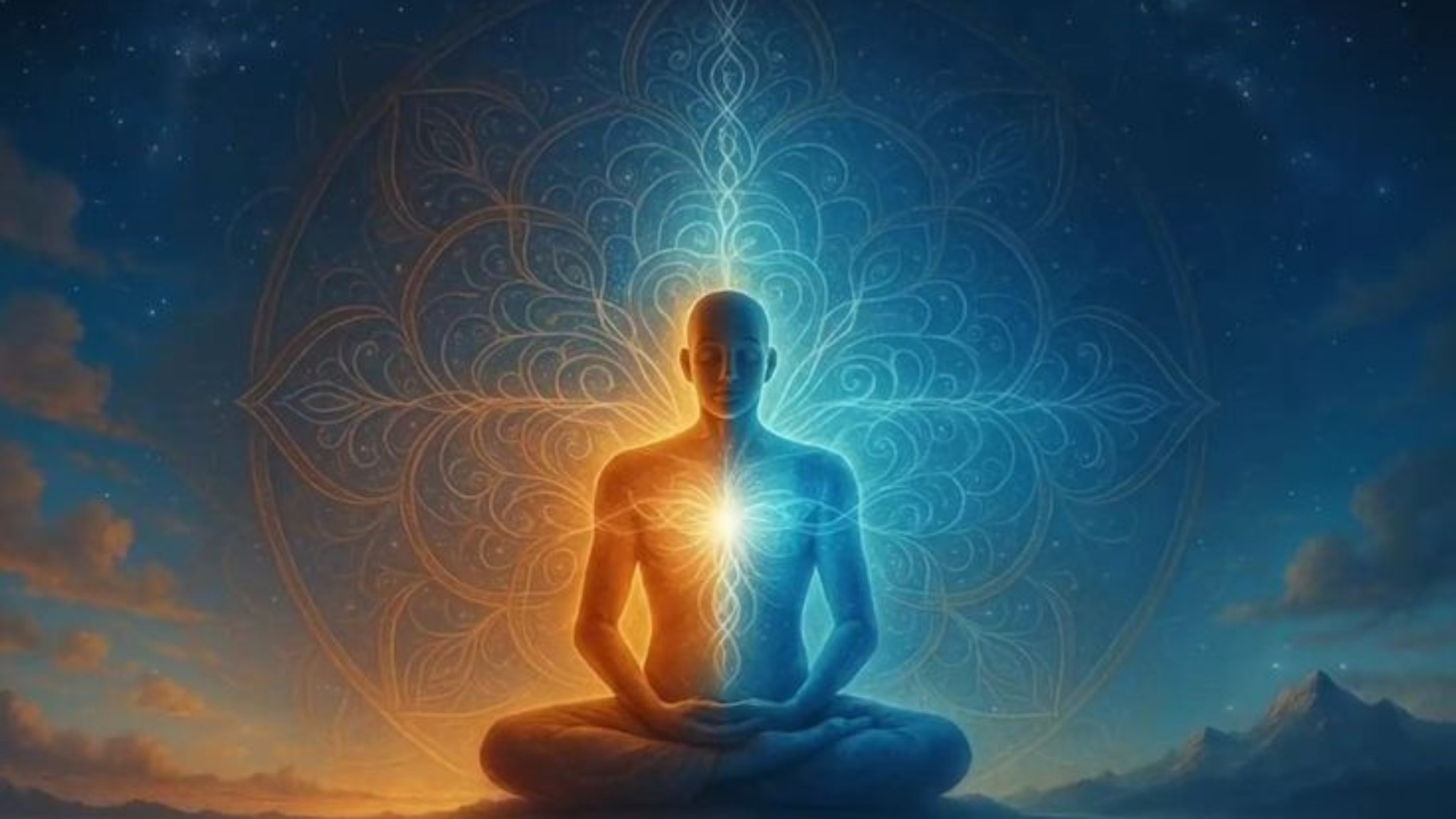
Introduction – The Core Problem of Human Life
Śrī Ādi Śaṅkarācārya, after describing the qualifications of a seeker and the role of knowledge (Verses 1–5), now addresses the root cause of bondage—the fundamental error that perpetuates the cycle of birth, death, and suffering.
- The Self (Ātman) is infinite, conscious, and blissful.
- Due to Avidyā (ignorance), the Self is mistakenly identified with the body–mind complex.
- This false identification, called adhyāsa (superimposition), produces the jīva—the limited individual self.
- The world we perceive is not ultimately real but a projection (Māyā) on the background of pure consciousness.
Summary: Bondage is not a factual state; it is an illusion caused by misperception. Vedānta does not “create” freedom; it reveals that we were never truly bound. Click Here To Access more other text.
Benefits – Transforming Understanding and Life
Studying these verses produces transformative insights:
-
Clarity about the Cause of Suffering
Recognizing suffering as arising from ignorance shifts focus from external change to correcting perception. -
Deepening Dispassion (Vairāgya)
Awareness of the fleeting nature of worldly experiences fosters natural detachment and inner peace. -
Strengthening Mumukṣutva (Desire for Liberation)
Seeing the real problem—mistaken identity—cultivates a rational, intelligent desire for freedom. -
Psychological Freedom in Daily Life
Realizing “I am not the body, mind, or roles” reduces fear, anxiety, and attachment. -
Stabilizing Spiritual Practice (Sādhanā)
Other practices gain meaning when one understands they purify the mind for knowledge, not for external rewards. Click view PDF.
Verses 6–14
Verse 6
Sanskrit:
संसारः स्वप्नतुल्यो हि रागद्वेषादिसंकुलः ।
स्वकाले सत्यवद्भाति प्रबोधे सत्यसद्भवेत् ॥6॥
English:
“Samsāra (the cycle of birth‑and‑death) indeed is like a dream—filled with attachment, aversion, etc. While it lasts it shines as if real; when awakening comes, its true non‑being becomes evident.”
Verse 7
Sanskrit:
प्रबोधेऽपि तु तद्वत् रूपोद्भवो दृश्यते लोकः ।
मूढफलहतैवास्ति यत्तु विहाय स्वयमेव ॥7॥
English:
“When true wake‑awareness occurs, though the world appears just like that dream, its nature is as having no solid fruit for the deluded—in truth it drops away on its own.”
Verse 8
Sanskrit:
सा माया तु झलन्तीगुणवृत्तित्वेनानया ।
देहज्ञेयं परिगुणान् भूत्वा प्रतीयमानहेतुम् ॥8॥
English:
“That is Māyā, shimmering through the nature of qualities, by which the body‑knower takes on adjuncts (upādhis) and delights in them as causes (of his sense of self).” Click view PDF.
Verse 9
Sanskrit:
या कथञ्चिद् भित्वा प्रलयं प्राप्नुयाद्यथास्वप्नभंगः ।
तद्वत्कथञ्चिदस्माभिरन्तर्येति वर्तते जगत् ॥9॥
English:
“Just as something may be and then drop away at the end of dream‑waking, so likewise this world appears to us and then disappears.”
Verse 10
Sanskrit:
जातिवार्णाश्रमादयः पञ्चभूताद्योऽपि धृताः ।
आत्मन्यारोपिताः सन्तः रसवर्णाद्यभेदतः ॥10॥
English:
“Caste (jāti), varṇa, āśrama and all that, indeed the five elements etc., are supported by, and superimposed upon, the Self—distinctions like taste, colour, etc., (are) attributed thereon.” Click view PDF.

Verse 11
Sanskrit:
नानोपाधिवशादेव जातयश्च वर्णाश्रमाः ।
आत्मनि आरोपिताः तौ येभ्यः रसवर्णावभेदः ॥11॥
English:
“Because of the power of various upādhis the categories ‘jāti’, ‘varṇa’, ‘āśrama’ etc., are superimposed on the Self—just as in water there is variety of taste or colour by reason of mixture.”
Verse 12
Sanskrit:
पञ्चीकृतमहाभूतसंभवो कर्मसञ्चितः ।
शरीरं सुखदुःखानां भो‑गायतनमुच्यते ॥12॥
English:
“The body, which is composed of the five great‑elements gathering together, born of accumulated karma, is declared to be the field of pleasure and pain for the sake of enjoyment.” Click view PDF.
Verse 13
Sanskrit:
पञ्चप्राणमनोबुद्धिधश्च देहेन्द्रियसमन्वितः ।
अपञ्चीकृतभूतौतोऽङ्गं सूक्षमङ्गं भोगसाधनम् ॥13॥
English:
“The subtle body, having the five vital breaths, mind, intellect, and the ten sense‑organs along with the body‑limbs, arises from the subtle elements, and is the instrument for experience (bhoga‑sādhanam).”

Verse 14
Sanskrit:
पञ्चकोशादियोजनया तत् तन्मय इव स्थितः ।
शुद्धात्मा नीलवस्त्राद्यो योगेन स्पटिको यथा ॥14॥
English:
“In association with the five sheaths etc., the pure Self appears to be their nature, just as a crystal placed in a blue cloth appears blue (though the crystal remains pure).” Click view PDF.
How to Study – Vedāntic Method (Śravaṇa–Manana–Nididhyāsana)
Śravaṇam (Listening/Reading)
- Read each verse carefully with translation and commentary.
- Focus on terms: Ātman, Anātman, Ādhyāsa, Upādhi, Māyā, Jñāna, Saṃsāra.
- Understand metaphors: rope-snake illusion, mirage, reflection, etc., illustrating ignorance and superimposition.
Mananam (Reflection)
- Question: Where do I superimpose the non-Self on the Self?
- Example: Saying “I am sad” identifies the Self with a mental state; recognizing sadness as belonging to the mind dissolves false identification.
Nididhyāsanam (Meditative Assimilation)
- Sit quietly and internalize: “I am awareness, untouched by mind and body.”
- Notice identification when it arises; gently return to pure awareness.
Daily Application
- Recall: “Pleasure and pain exist in the mind, not in Me.”
- Observe identification in daily life; awareness itself is the Self.
Study with Guidance
-
Dialogue with a teacher or study group uncovers subtleties. Click view PDF.

How Many Times to Study – Integrating through Repetition
1st Reading
- Focus: Understand literal meaning and structure of the verses
- Frequency: Once thoroughly
2nd Reading
- Focus: Reflect on personal manifestations of ignorance
- Frequency: After 1 week
3rd Reading
- Focus: Internalize and experience detachment
- Frequency: After 1 month
Review Cycle
- Focus: Reinforce understanding and detachment
- Frequency: Weekly for 3–6 months, then quarterly
Lifelong Study
- Focus: Revisit whenever ego, fear, or attachment resurfaces
- Frequency: Continuous Click view PDF.
Vedānta is a mirror, not a book to be read once. Repeated study reveals the truth gradually.

Why Study – The Philosophical Necessity
- Understand the Mechanism of Bondage
Freedom is vague without knowing how ignorance binds. - Move from Ritual to Knowledge
External actions cannot remove ignorance; only understanding can. - Prevent Spiritual Misinterpretation
Emotional calm or ritual purity ≠ liberation; knowledge is the sole liberator. - Cultivate Non-Dual Vision (Advaita Darśana)
The world is seen as a projection of consciousness, not separate from it. - Live Fearlessly
Recognizing oneself as deathless and changeless dissolves the fear of loss and death. Click view PDF.
Conclusion – Transition from Preparation to Inquiry
Join Our Classes:
The Vichara Sagara are more than just ancient texts—they are timeless guides to living with clarity, balance, and inner peace. Our classes make their profound wisdom easy to understand and apply in everyday life. Join us to explore these teachings and discover a new way of seeing yourself and the world!