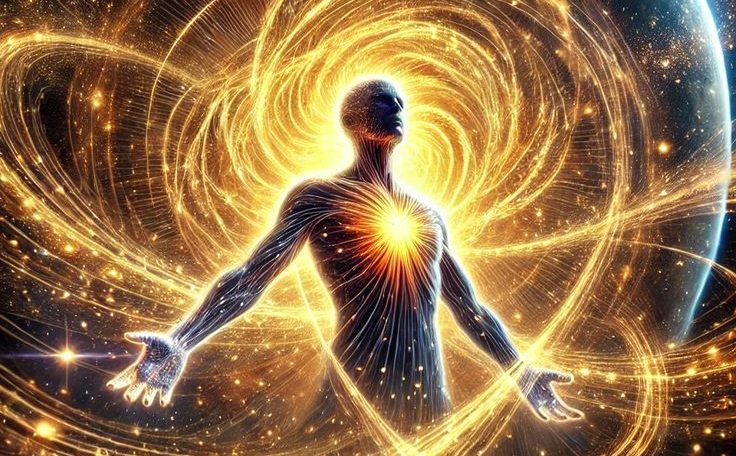
The Avadhuta: Embodiment of Liberation and Non‑Dual Realization
The Avadhuta Upanishad presents a profound vision of the Avadhuta—a fully liberated being who has entirely shaken off worldly bonds, identities, caste distinctions, and ritual prescriptions to abide solely in the Self. In a dialogue between Dattatreya and the sage Samkriti, the text explains that an Avadhuta is one who has realized Brahman, transcending social norms and attachments, and lives in effortless oneness with all without clinging to outcomes or identities. He is described as blissful, unconcerned with how the world perceives him, and engaged in inner offering rather than external rituals. The Upanishad’s major (Brihad) section defines this state of ultimate detachment and self‑knowledge, while its minor (Laghu) part outlines a yogic approach emphasizing inner discipline and samadhi as the path to such liberation. Overall, it celebrates the Avadhuta as the ideal exemplar of renunciation and non‑dual realization, where only the Self remains as reality. For More Information Click Here

Structure and Key Teachings of the Avadhuta Upanishad
The Avadhuta Upanishad is a relatively short Upanishad and is typically divided into two parts:
- Brihad (Major) Section – This part focuses on the nature and qualities of the Avadhuta, the liberated sage. It describes how he transcends social norms, attachments, and rituals, abiding entirely in the Self.
- Laghu (Minor) Section – This section gives practical guidance, emphasizing yogic practices, inner discipline, and meditation as the means to attain the Avadhuta state.
- Number of Chapters: 2 (Brihad and Laghu)
- Number of Verses: Approximately 36 verses, depending on the manuscript tradition.
Simple Explanation:
The first chapter (Brihad) philosophically defines the Avadhuta and his qualities, showing liberation and non-duality. The second chapter (Laghu) provides guidance for attaining this state through inner yoga and self-discipline, making it both descriptive and instructive.
Core Verses and Essential Teachings of the Avadhuta Upanishad
- Verse 1 (Brihad Section) – “He who is beyond dualities, untouched by joy and sorrow, is the Avadhuta.”
- Meaning: The Avadhuta transcends all opposites and remains established in the Self.
- Verse 3 (Brihad Section) – “The Avadhuta is free from all social rules, caste, and rituals; he abides in his own Self.”
- Meaning: True liberation comes from inner realization, not external observances.
- Verse 5 (Brihad Section) – “He does not cling to wealth, possessions, or body; he sees all beings as the Self.”
- Meaning: Detachment and universal vision are marks of the liberated sage.
- Verse 1 (Laghu Section) – “Through meditation and inner discipline, one attains the state of the Avadhuta.”
- Meaning: Yogic practices guide the seeker toward the ultimate non-dual realization.
- Verse 3 (Laghu Section) – “In stillness and contemplation, the Self shines; the Avadhuta abides in bliss.”
- Meaning: Samadhi and inner awareness reveal the eternal bliss of the Self.
These are some of the key verses that capture the essence of the Avadhuta Upanishad: liberation, non-duality, detachment, and yogic realization. For More Information Click Here

Core Teachings and Philosophy of the Avadhuta Upanishad
The Avadhuta Upanishad teaches the path and nature of the fully liberated sage, the Avadhuta, who has transcended all worldly attachments, social norms, and rituals. It emphasizes that true freedom lies in realizing the Self, which is beyond dualities of joy and sorrow, gain and loss. The Upanishad highlights detachment from material possessions, body, and identity, seeing all beings as manifestations of the same Self. It also outlines practical yogic guidance—meditation, inner discipline, and contemplation—as the means to attain this state of liberation. The Avadhuta lives effortlessly in bliss, free from fear, desires, and societal expectations. Ultimately, the text presents the Avadhuta as the ideal embodiment of non-dual awareness, eternal joy, and self-realization. For More Information Click Here

Conclusion
In conclusion, the Avadhuta Upanishad presents a profound vision of liberation through self-realization, portraying the Avadhuta as a being who has completely transcended worldly attachments and social conventions. It emphasizes that true freedom arises from recognizing the Self, which is eternal, blissful, and beyond all dualities. The text blends philosophical insight with practical guidance, showing that meditation, discipline, and inner contemplation are essential for attaining this state. By highlighting detachment, universal vision, and effortless bliss, it provides a timeless model of spiritual perfection. The Upanishad inspires seekers to move beyond external rituals and embrace the inner path of knowledge and realization. Ultimately, it celebrates the Avadhuta as the embodiment of non-dual awareness and supreme freedom.
Join Our Classes:
The Upanishads are more than just ancient texts—they are timeless guides to living with clarity, balance, and inner peace. Our classes make their profound wisdom easy to understand and apply in everyday life. Join us to explore these teachings and discover a new way of seeing yourself and the world!