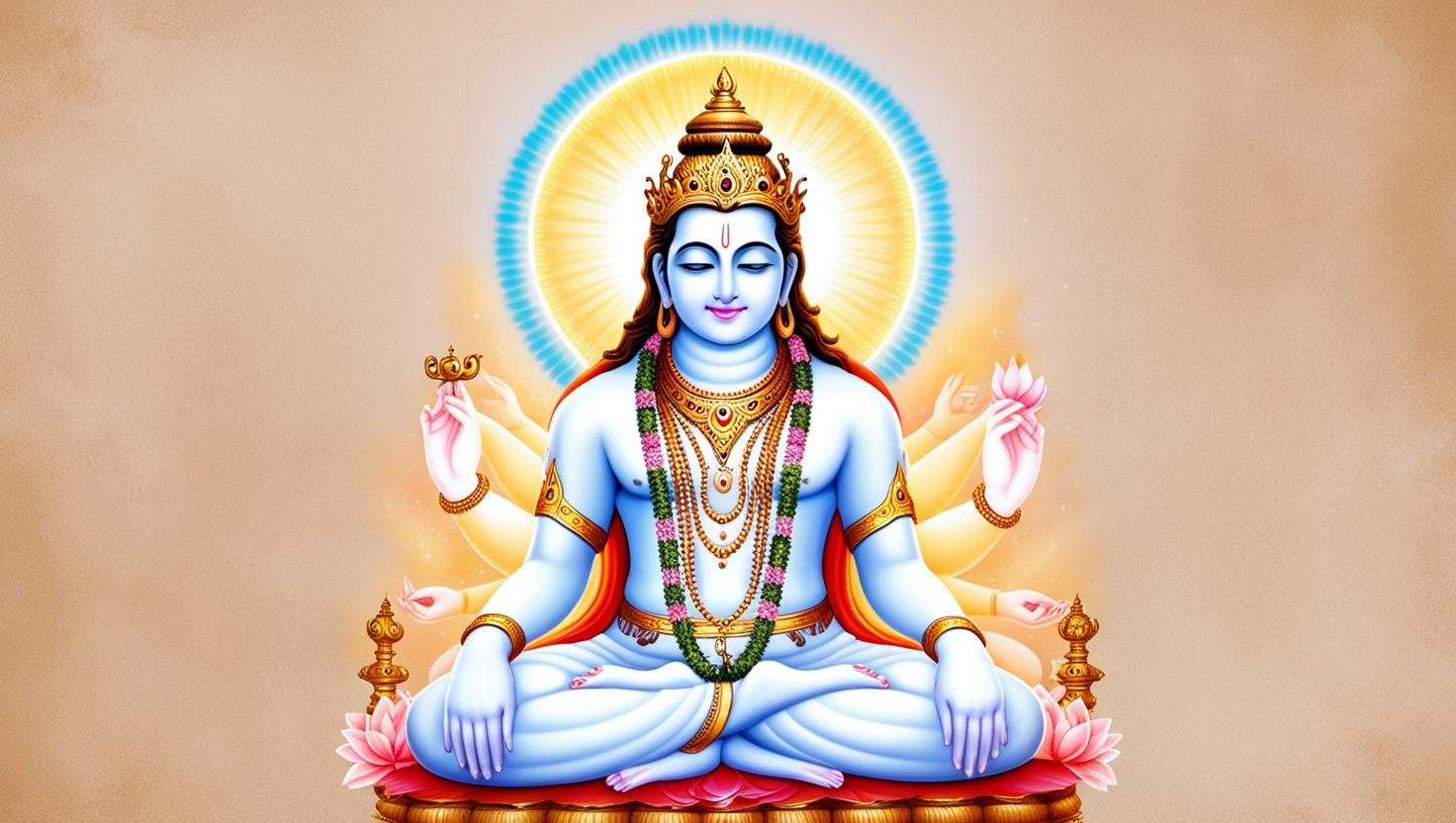
Chapter 4 – Jnana-Karma-Sanyāsa Yoga
Chapter 4 of the Bhagavad Gita contains 42 verses and presents Krishna’s teaching on the relationship between knowledge (jñāna), action (karma), and true renunciation (sanyāsa). This chapter reconciles the paths of wisdom and action by showing that action done in the light of knowledge and without attachment leads to liberation. Krishna explains how divine wisdom appears in the world through avatars (descents) and how seekers can transcend ignorance while living fully engaged in life. Click Here To Access more other text.

Meaning of Jñāna-Karma-Sanyāsa Yoga
The phrase Jñāna-Karma-Sanyāsa signifies the integration of knowledge, action, and renunciation:
-
Jñāna — spiritual wisdom about the self and the nature of reality
-
Karma — action performed in the world
-
Sanyāsa — renunciation of attachment, not abandonment of duty
Krishna teaches that true renunciation is not withdrawal from action, but the renunciation of attachment to its fruits, grounded in spiritual knowledge. This yoga shows how to act wisely, without ego and desire, and thereby attain liberation. Click view PDF.
Significance of Chapter 4 in the Bhagavad Gita
Chapter 4 is significant because it:
-
Reveals the origin of spiritual knowledge in the world
-
Explains why and how Krishna incarnates as an avatar
-
Teaches how to perform pure, selfless action
-
Clarifies the difference between external renunciation and inner renunciation
-
Unites the paths of knowledge and action into one approach to liberation
This chapter deepens the seeker’s understanding of both theory and practice of spiritual life, showing how knowledge empowers action and how action purifies knowledge. Click view PDF.

Key Concepts & Teachings
1. Krishna’s Eternal Wisdom (Verses 1–3)
Krishna begins by stating that He taught this supreme wisdom long ago to saints and sages. Over time, this knowledge was forgotten and therefore needed to be revealed again. This sets the tone that spiritual wisdom is timeless and must be rediscovered through practice and realisation.
2. Divine Descent (Avatāra) (Verses 4–9)
Krishna explains His divine function: whenever righteousness declines and unrighteousness rises, He incarnates to protect the good, destroy evil, and restore dharma. This is the doctrine of avatsāra — the descent of the Divine in different eras, forms, and personalities, all to uplift consciousness.
This teaches that divine aid appears in the world whenever needed, but the seeker’s responsibility is to remain receptive to it through purity, discipline, and devotion.
3. The Nature of Sacrifice and Action (Verses 10–16)
Krishna explains that action done with devotion and without selfish motive becomes a sacrifice (yajña). Those who worship Him with faith attains peace and harmony. He describes the mechanics of how action rooted in knowledge purifies the mind, whereas action done out of desire and ego creates bondage.
Here Krishna introduces the essential principle that action itself is not the issue — attachment to its results is.
4. Real and Unreal Renunciation (Verses 17–25)
Arjuna asks how renunciation of action (sanyāsa) is superior to the yoga of action. Krishna clarifies:
-
External renunciation — giving up duties without changing motives — is inferior
-
Internal renunciation (tyāga) — giving up attachment to the fruit of action — is superior
True renunciation arises from the understanding that the Self is not the body, senses, or mind, but pure consciousness beyond them. Renunciation is psychological — letting go of ego and desire, not abandoning life’s duties.
Krishna explains the qualities of:
-
The wise person — sees all beings with equal vision
-
The unwise person — remains bound by desire and action
Thus, Karma Yoga and Jñāna Yoga become integrated — action performed with the wisdom of the Self liberates. Click view PDF.
5. Ways to Act without Bondage (Verses 26–32)
Krishna provides practical guidance:
-
Act with self-control and detachment
-
Surrender actions to the Divine with devotion
-
Act without craving or fear
He explains how one who acts with the understanding that the Self is beyond doership remains unattached and unaffected by outcomes. When action is done as an offering to the Divine, it purifies the mind and leads to realisation.

6. The Goal: Liberation through Renunciation (Verses 33–42)
In the concluding verses, Krishna teaches that a person who knows the supreme truth — that the Self is beyond action, beyond qualities, and beyond change — remains unattached even while performing duties.
The supreme goal is realisation of the Self as pure consciousness — free from birth, death, pleasure, and pain. Krishna reminds Arjuna that this wisdom, when practised with faith, leads to lasting inner peace and liberation (mokṣa).
Psychological and Spiritual Dimensions
Chapter 4 brings out key psychological insights:
-
Knowledge without action is inert
-
Action without wisdom is blind
-
Wisdom that transforms action purifies character
-
Renunciation is internal detachment, not physical withdrawal
-
The wise remain peaceful regardless of life’s events
This chapter bridges the gap between theory and practice, showing how purified action leads to self-realisation. Click view PDF.

Practical Applications
Action as Sacrifice
Every daily action — work, service, responsibility — can become a sacred act if performed without ego and with devotion to the Divine.
Mindful Living
By focusing on motives rather than results, one cultivates emotional balance and deep contentment.
Spiritual Discipline
Combined meditation, selfless service, and study of wisdom leads to clarity and liberation. Click view PDF.
Conclusion
Chapter 4 – Jñāna-Karma-Sanyāsa Yoga synthesises the teachings of wisdom and action. Krishna shows that true freedom lies not in renouncing life’s responsibilities, but in renouncing the ego-centered attachment to outcomes while living and acting in the world. With knowledge as the guiding light, action becomes liberation — a path to inner freedom, peace, and realisation of the Supreme.