
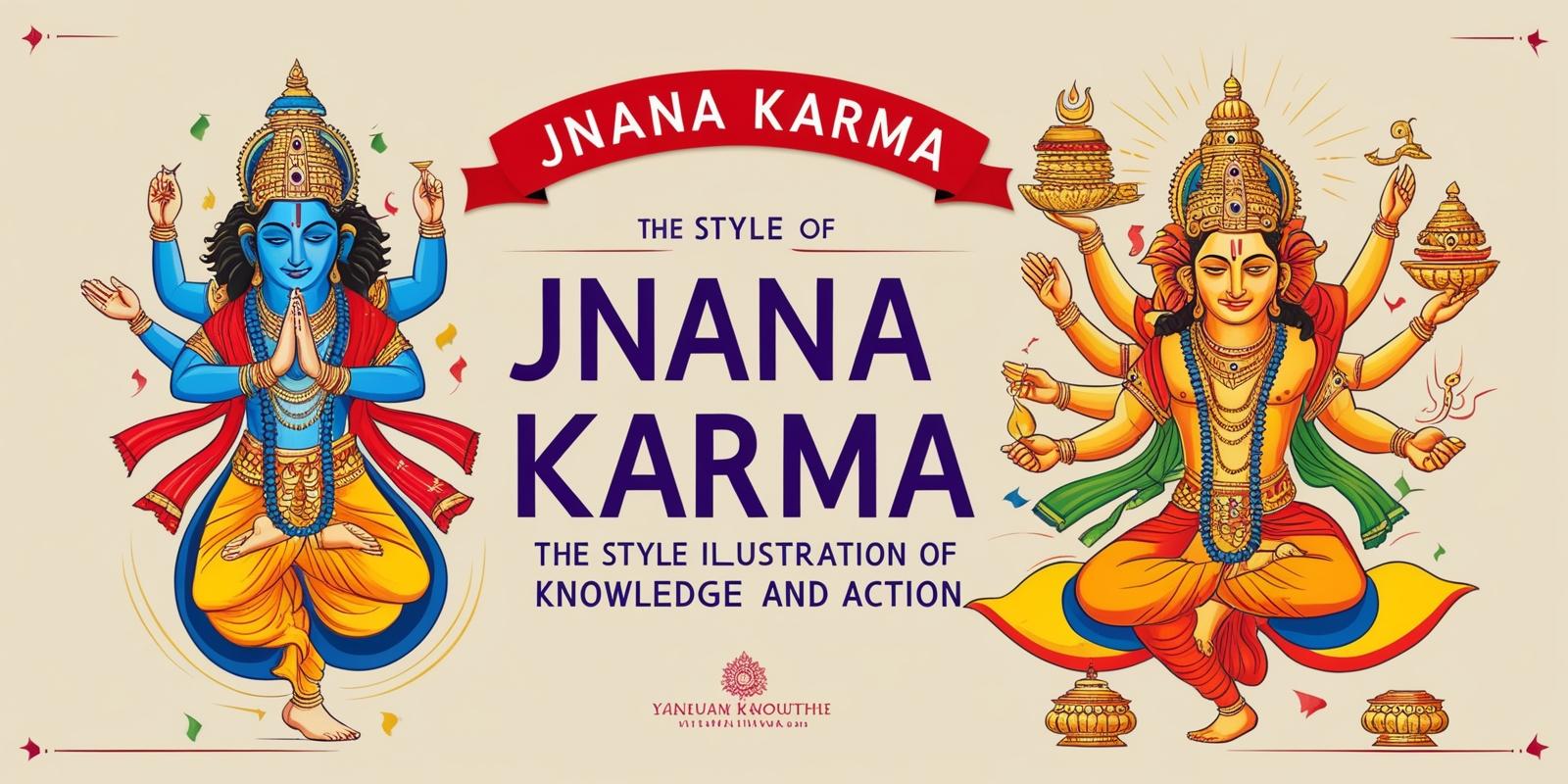
Jnana Karma Sannyasa Yoga (The Yoga of Knowledge and Renunciation of Action) – Chapter 4 of the Bhagavad Gita
Introduction:
Chapter 4 of the Bhagavad Gita, known as Jnana Karma Sannyasa Yoga, explains how true knowledge (Jnana) leads to selfless action (Karma Yoga) and ultimately to liberation (Moksha). Krishna teaches that performing actions with wisdom, detachment, and devotion leads to the highest realization. Click Here To Access Bhagavad Gita Notes & Summary.
Key Themes of Chapter 4: Jnana Karma Sannyasa Yoga
1. The Divine Origin of the Gita (Verses 1-10)
- Krishna reveals that he has taught this eternal wisdom to the Sun God (Vivasvan) and great sages.
- Arjuna questions how Krishna, who appears human, could have taught this knowledge earlier.
- Krishna explains that he incarnates in every age (Yuga) to restore dharma.
- Famous Verse (4.7-8):
“Whenever righteousness declines and unrighteousness rises, I manifest myself to protect the virtuous, destroy evil, and restore dharma.”
2. The Science of Action and Renunciation (Verses 11-24)
- Krishna emphasizes that all paths lead to Him if they are pursued with sincerity.
- True renunciation is not the abandonment of action but detachment from its results.
- Action performed with knowledge and devotion leads to liberation.
- Key Teaching: “Offering everything as a sacrifice (Yajna) purifies the soul and frees one from bondage.”
3. The Power of Knowledge (Verses 25-42)
- Jnana (Spiritual Knowledge) burns away karma, just as fire burns wood.
- Ignorance leads to attachment and suffering, while knowledge liberates the soul.
- Krishna advises Arjuna to approach a guru (spiritual teacher) to gain wisdom.
- Famous Verse (4.34):
“Learn the truth from those who have realized it. Approach them with humility, ask questions, and serve them; the wise will impart knowledge to you.”

Slokas and Meaning
1. Krishna’s Divine Manifestation (4.7-8)
Sanskrit:
“Yada yada hi dharmasya glanir bhavati bharata,
Abhyutthanam adharmasya tadatmanam srjamyaham. (4.7)”
“Paritranaya sadhunam vinashaya cha dushkritam,
Dharma-samsthapanarthaya sambhavami yuge yuge. (4.8)”
Translation:
“Whenever there is a decline in righteousness and an increase in unrighteousness, I manifest myself. I incarnate in every age to protect the virtuous, destroy the wicked, and restore dharma.” Click Here For Chapter-4.
2. Importance of Spiritual Knowledge (4.34)
Sanskrit:
“Tad viddhi pranipatena pariprashnena sevaya,
Upadekshyanti te jnanam jnaninas tattva-darshinah.”
Translation:
“Seek knowledge from the enlightened ones through humility, inquiry, and service. The wise who have realized the truth will impart this knowledge to you.” Click Here For Chapter-4.

Practical Application of Jnana Karma Sannyasa Yoga
- Perform selfless actions with awareness and devotion.
- Cultivate wisdom through study, reflection, and guidance from a guru.
- Renounce the ego and attachment to the fruits of action.
- Understand that true renunciation is not abandoning duties but acting with detachment.
Chapter 4 of the Bhagavad Gita, Jnana Karma Sannyasa Yoga (The Yoga of Knowledge and Renunciation of Action), delves into the profound relationship between knowledge, action, and renunciation. Building upon previous discussions, this chapter emphasizes the significance of performing actions with the right understanding and attitude.
Key Themes:
-
Eternal Transmission of Knowledge:
- Krishna begins by highlighting the ancient lineage through which this sacred knowledge has been transmitted, underscoring its timeless relevance.
-
Divine Incarnations:
- He elucidates the concept of divine incarnations (avatars) that manifest to restore righteousness whenever there is a decline in virtue and an upsurge in vice.
-
Nature of Action and Inaction:
- Krishna introduces the subtle understanding of action in inaction and inaction in action, emphasizing the importance of discerning the true essence of karma.
-
Sacrificial Spirit in Actions:
- The chapter elaborates on various forms of sacrifices (yajnas), encouraging the performance of duties with a spirit of selflessness and dedication.
-
Role of Knowledge:
- It emphasizes that actions performed with the wisdom of the self do not bind the individual, leading to liberation.
Practical Implications:
-
Performing Duties with Detachment:
- Engage in one’s responsibilities without attachment to outcomes, maintaining equanimity in success and failure.
-
Seeking Knowledge:
- Approach enlightened beings with humility and a genuine desire to learn, as acquiring true knowledge dispels ignorance.
-
Integrating Wisdom into Action:
- Recognize that true renunciation is not the mere abandonment of actions but performing them with the right understanding and without selfish desires.

References for Jnana Karma Sannyasa Yoga (Chapter 4 of Bhagavad Gita)
Primary Texts:
- Bhagavad Gita – Various translations and commentaries, including:
- Swami Sivananda – The Bhagavad Gita
- Swami Vivekananda – Commentary on the Bhagavad Gita
- Srila Prabhupada – Bhagavad Gita As It Is
- Adi Shankaracharya – Bhagavad Gita Bhashya
Commentaries & Interpretations:
- Swami Chinmayananda – The Holy Geeta
- Eknath Easwaran – The Bhagavad Gita for Daily Living
- Paramahansa Yogananda – The Essence of the Bhagavad Gita
- Radhakrishnan, S. – The Bhagavad Gita (Philosophical commentary)
- A.C. Bhaktivedanta Swami Prabhupada – Bhagavad Gita As It Is
Scholarly Works & Analysis:
- Radhakrishnan & Moore – Indian Philosophy
- Sri Aurobindo – Essays on the Gita
- Dr. Rameshwar Prasad – Philosophy of Bhagavad Gita
Online Resources & PDFs:
-
- Vedanta Students: Click Here For Chapter-4.
- Do You want More Info : Online Course.
Hindu Scriptures & Supporting Texts:
- Upanishads (e.g., Katha Upanishad, Mundaka Upanishad) – Discuss the nature of knowledge and renunciation.
- Mahabharata (of which the Bhagavad Gita is a part) – Provides historical and contextual background.
- Brahma Sutras – Commentary on the philosophy of karma and knowledge.
These references provide authentic scriptural insights, philosophical depth, and practical applications of Jnana Karma Sannyasa Yoga.

Benefits of Jnana Karma Sannyasa Yoga (The Yoga of Knowledge and Renunciation of Action)
Jnana Karma Sannyasa Yoga (Chapter 4 of the Bhagavad Gita) offers a transformative approach to life, combining wisdom (Jnana), action (Karma), and renunciation (Sannyasa). Practicing this yoga leads to spiritual growth, mental clarity, and liberation (Moksha) while enabling one to live effectively in the world.
1. Attainment of True Knowledge (Jnana)
- Develops spiritual wisdom and helps in understanding the eternal nature of the Self (Atman).
- Removes ignorance (Avidya), which is the root cause of suffering.
- Allows one to see beyond material illusions and realize the imperishable truth (Brahman).
2. Freedom from Karma’s Bondage
- Teaches selfless action (Nishkama Karma), leading to freedom from the cycle of birth and death (Samsara).
- Burns past karma through the fire of knowledge, just as fire burns wood to ashes (4.37).
- Encourages performing duties without attachment to results, leading to inner peace and contentment.
3. Overcoming Desire and Ego
- Reduces selfishness, greed, and attachments by cultivating detachment (Vairagya).
- Helps in controlling desires and subduing the ego, which are major obstacles to peace.
- Promotes humility and surrender, as Krishna advises approaching a spiritual teacher with reverence (4.34).
4. Mental Clarity and Inner Peace
- Eliminates confusion (Moha) and leads to clear thinking and decision-making.
- Teaches how to act wisely in difficult situations without emotional turmoil.
- Helps in maintaining equanimity by not getting affected by success or failure.
5. Divine Protection and Guidance
- Krishna assures that those who surrender to Him are protected and guided (4.11).
- Aligning with divine wisdom brings inner strength, courage, and faith.
- Reduces fears and anxieties, as one understands that God’s will is supreme.
6. Leading a Balanced Life
- Teaches how to integrate spirituality and worldly responsibilities effectively.
- Encourages a life of discipline, devotion, and service, leading to harmony in personal and professional life.
- Helps in achieving success without stress, as actions are performed without attachment.
7. Path to Liberation (Moksha)
- Removes the false identification with the body and mind.
- Leads to self-realization and union with the Divine (Brahman).
- One attains eternal bliss (Ananda), transcending the limitations of material existence.
Conclusion
Jnana Karma Sannyasa Yoga is not about rejecting action but about performing duty with wisdom, selflessness, and devotion. It offers a practical and powerful path to attaining mental peace, spiritual wisdom, and ultimate liberation (Moksha).
Join Our Classes:
The Bhagavad Gita is more than just a book—it’s a guide to living with balance and peace. Our classes make its deep wisdom easy to understand and apply in everyday life. Join us to explore the teachings and see the world in a new light!
Explore More Text Join Our Classes