
Introduction to Isavasya Upanishad with Sankara Bhasya – Volume 1
The Isavasya Upanishad is one of the shortest yet most profound Upanishads, consisting of just eighteen mantras. It opens with the powerful idea that the entire universe is pervaded by the Supreme Being, teaching renunciation amidst action. In this first volume, Sri Adi Sankaracharya’s Bhasya (commentary) carefully unpacks the deeper meaning of the opening mantras. He emphasizes the essence of advaita, the unity of the Self with Brahman, while addressing apparent conflicts between renunciation and action. The Santi Mantra introduces the vision of wholeness, setting the tone for the teachings. Together, the text and commentary form a foundation for seekers to understand the harmony between karma and jnana. For More Information Click Here
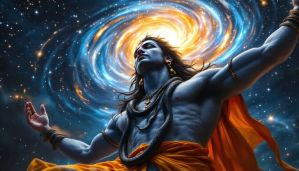
Explanation of Verses 1 to 3 – Isavasya Upanishad with Sankara Bhasya (Volume 1)
Verse 1 – All is Pervaded by the Lord
Mantra: Isavasyam idam sarvam…
This opening verse declares that the entire universe is pervaded by the Supreme Being. It urges one to live with detachment, renouncing possessiveness while enjoying life. Sankara’s commentary clarifies that true renunciation is not abandoning duties but relinquishing the false sense of ownership. He stresses that freedom comes through inner detachment and recognition of the Self as Brahman.
Verse 2 – Duty and Longevity
Mantra: Kurvann eveha karmani…
This verse reconciles karma (action) and jnana (knowledge). It advises performing duties selflessly for a hundred years, without attachment to results. Sankara explains that action, when performed with the right attitude, does not bind a seeker; instead, it purifies the mind and prepares it for Self-knowledge. The emphasis is on karma as a support until realization dawns.
Verse 3 – Consequence of Ignorance
Mantra: Asurya nama te loka…
This verse warns that those who live in ignorance, clinging to selfishness and materialism, fall into dark worlds after death. Sankara highlights that ignorance of the Self is the root of suffering. To avoid this fate, one must turn inward, seek knowledge, and align with dharma. Thus, the verse contrasts the destiny of the ignorant with the path of the wise. For More Information Click Here
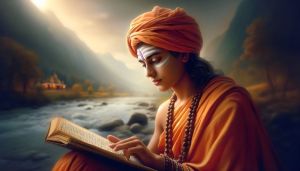
Adi Sankaracharya’s Core Message in the Isavasya Upanishad
Adi Sankaracharya, through his Bhasya on the Isavasya Upanishad, emphasizes the non-dual vision of reality. He explains that the entire universe is pervaded by the Self, and liberation is attained not through mere abandonment of duties but through renunciation of ego and ownership. Action (karma) has its place in purifying the mind, but ultimate freedom comes only from Self-knowledge (jnana). He warns against ignorance, which binds beings to cycles of birth and death, and points seekers towards a life of inner detachment, dharma, and contemplation. His central teaching is that the Self and Brahman are one, and realizing this truth leads to liberation (moksa). For More Information Click Here

Importance of Isavasya Upanishad with Sankara Bhasyam – Volume 8
Volume 8 of the Isavasya Upanishad with Sankara Bhasya carries deep significance for seekers of truth. It explores the relationship between renunciation and action, showing how one can live in the world without being bound by it. Sankaracharya resolves the apparent conflict between karma (duties) and jnana (knowledge), guiding the seeker toward Self-realization. This volume stresses the dangers of ignorance, the necessity of inner detachment, and the liberating vision of oneness. For students of Vedanta, it is both a philosophical guide and a practical manual, combining scriptural authority with subtle reasoning. Studying this volume opens the way to understanding the transformative vision of Advaita Vedanta.
“Freedom is not in abandoning action, but in knowing the Self that is ever free amidst all action.”

Conclusion
The Isavasya Upaniṣad with Sankara Bhasya – Volume 1 (Verses 1 to 3) offers a timeless message for seekers. Through its profound mantras and Sankaracharya’s insightful commentary, it teaches the harmony of renunciation and action, the importance of Self-knowledge, and the dangers of ignorance. By recognizing the universe as pervaded by the Supreme, one learns to live with detachment, responsibility, and inner freedom. This study is not merely intellectual but a guide to liberation, inspiring seekers to walk the path of Advaita Vedanta with clarity and conviction.
“The Self alone is real; knowing this, one is free while living.”