What is Katho Upanishad?
The Katho Upanishad is one of the major ancient Indian spiritual texts, belonging to the Krishna Yajurveda. It presents a profound dialogue between the young seeker Nachiketa and Yama, the Lord of Death, exploring the mysteries of life, death, and the soul. The Upanishad teaches about the nature of the Atman (Self), the impermanence of worldly pleasures, and the path to Moksha (liberation). It emphasizes choosing Shreyas (the good) over Preyas (the pleasant) and highlights the importance of self-realization through knowledge and inner discipline. The famous analogy of the chariot in this text illustrates the relationship between the body, mind, senses, intellect, and the Self. The Katho Upanishad remains a timeless guide for understanding the deeper purpose of life and the journey of the soul toward ultimate freedom. For More Information Click Here
Key Themes of Katho Upanishad
-
The Nature of the Atman (Self):
The Upanishad teaches that the Atman is eternal, beyond birth and death, and distinct from the body and mind. Realizing the Atman leads to liberation (Moksha). -
Life After Death and the Mystery of Existence:
Nachiketa’s questions to Yama revolve around what happens after death and the ultimate truth beyond physical existence. -
Shreyas vs. Preyas (The Good vs. The Pleasant):
Yama explains the difference between Shreyas (the path of the good, leading to liberation) and Preyas (the path of pleasure, which keeps one in bondage). -
The Chariot Analogy (Self-Control and Inner Discipline):
The body is described as a chariot, the intellect as the charioteer, the mind as the reins, and the senses as the horses. This highlights the need for control and wisdom to reach the ultimate goal. -
Knowledge (Vidya) vs. Ignorance (Avidya):
Ignorance leads to attachment and suffering, while true knowledge of the Self brings freedom and immortality. -
The Importance of a Guru and Inner Purity:
Spiritual knowledge cannot be gained by intellect or learning alone. It requires guidance from a realized teacher (Guru) and purity of heart.
Adi Shankaracharya’s Interpretation of the Katho Upanishad
Adi Shankaracharya’s teachings on the Katho Upanishad emphasize the realization of the Atman as the ultimate truth and the key to liberation. In his commentary (Bhashya), he explains that ignorance (Avidya) causes attachment to the body and worldly pleasures, keeping beings trapped in the cycle of birth and death. Shankara highlights the importance of self-knowledge (Atma Jnana) and inner discipline, as taught by Yama to Nachiketa. He clarifies that liberation (Moksha) is attained not through rituals or material pursuits but by understanding the eternal, unchanging Self.

Nachiketa: The Seeker Who Questioned Death
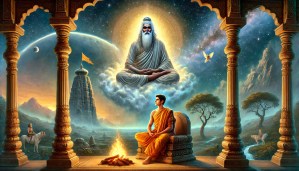
Nachiketa was a young, sincere seeker of truth and wisdom. After witnessing his father’s insincere sacrifices, he questioned the true meaning of dharma and willingly approached Yama, the lord of death. Waiting patiently for three days without hospitality, Nachiketa was granted three boons by Yama.
For his first boon, Nachiketa asked for his father’s anger to be calmed and to be received lovingly when he returned. For the second boon, he requested knowledge of the sacred fire ritual (Nachiketa Agni) that leads to heaven. For the third and most important boon, he asked Yama to reveal the truth of what happens after death—whether the Self exists beyond death or not.
This final question led to Yama teaching Nachiketa the profound wisdom of the immortal Self (Atman), the nature of reality, and the path to liberation (Moksha).
Summary of 119 Verses in Katho Upanishad
The Katho Upanishad, consisting of 119 verses, presents a profound dialogue between Nachiketa, a young seeker, and Yama, the Lord of Death. Through their conversation, the Upanishad explores deep philosophical questions about life, death, and the nature of the Self (Atman). It teaches that the Atman is eternal, beyond birth and death, and realizing this truth leads to liberation (Moksha). The text emphasizes the importance of choosing Shreyas (the good) over Preyas (the pleasant) and explains the path of self-discipline and knowledge. The famous chariot analogy illustrates the control of the senses and mind in the spiritual journey. Overall, the 119 verses guide seekers toward self-realization and the ultimate freedom from the cycle of birth and death. For More Information Click Here
Verses
- Vajasravasa performed a sacrificial ritual, giving away all his possessions. His son Nachiketa observed and questioned the merit and sincerity of his father’s offerings.
- Nachiketa saw his father donating old, unproductive cows. Concerned about the lack of true charity, he wondered about the consequences of these hollow gifts.
- Determined to correct his father, Nachiketa repeatedly asked, “To whom will you give me?” Angered by his persistence, Vajasravasa exclaimed, “I give you to Yama!”…To know more Click Here
Why Katho Upanishad Important?
The Katha Upanishad is important because it addresses some of the deepest questions of human existence, such as what happens after death, the nature of the Self (Atman), and the path to liberation (Moksha). It teaches that true happiness and immortality come not from material pleasures, but from Self-knowledge and inner realization. Through the dialogue between Nachiketa and Yama, it emphasizes the importance of choosing Shreyas (the good and lasting) over Preyas (the pleasant and temporary). The Upanishad also presents the famous chariot analogy, explaining how controlling the mind and senses leads to spiritual awakening. Its teachings have inspired many philosophers, including Adi Shankaracharya, and continue to guide spiritual seekers toward freedom and enlightenment.

Conclusion
The Katho Upanishad beautifully explores the profound dialogue between Nachiketa and Yama, delving into the nature of the Self, life, death, and immortality. It teaches that true wisdom lies in choosing the eternal good (Shreyas) over fleeting pleasures (Preyas). Through self-discipline, meditation, and inner purity, one realizes the Atman—eternal, unchanging, and beyond birth or death. The Upanishad emphasizes that liberation (Moksha) comes from understanding the unity of the individual soul with Brahman, the ultimate reality. Nachiketa’s unwavering quest for truth highlights the importance of faith, determination, and discrimination. Ultimately, the Katho Upanishad guides seekers toward self-realization and freedom from the cycle of rebirth.
“Brahma satyam jagat mithya, jivo brahmaiva na aparah.”
“Brahman alone is real, the world is illusory, and the individual self is none other than Brahman.”
This captures Shankaracharya’s Advaita Vedanta philosophy, which resonates with the Katha Upanishad’s message of realizing the oneness of the Self and Brahman for liberation.
Join Our Classes:
The Upanishads are more than just ancient texts—they are timeless guides to living with clarity, balance, and inner peace. Our classes make their profound wisdom easy to understand and apply in everyday life. Join us to explore these teachings and discover a new way of seeing yourself and the world!