Chapter 2 – Section 1 Overview
In this section, Yama begins deeper instruction on the nature of the Self and the path to liberation. He explains how the senses and mind attach to objects, leading to bondage, while control and detachment bring freedom. The discussion introduces the subtle body and the layers of existence, emphasizing discernment between the eternal Self and transient phenomena. Yama highlights the importance of meditation and inner reflection as the means to realize the immortal Atman. He teaches that the Self cannot be attained through external rituals or desires but through knowledge and discipline. This section sets the stage for understanding the means of liberation and the characteristics of the liberated soul. For More Information Click Here

Theme and Importance of Chapter 2 – Section 1
The main theme of this section is self-realization through detachment and discernment. It emphasizes that attachment to sense objects binds the soul, while control over the senses and mind leads to freedom. The importance lies in teaching the seeker how to distinguish the eternal Self (Atman) from the transient body and external phenomena. Meditation, self-discipline, and inner reflection are shown as the essential practices to attain knowledge of the Self. This section lays the philosophical and practical foundation for liberation, illustrating that true moksa comes not from rituals or material pursuits but from wisdom and disciplined awareness.

Chapter 2 – Section 1: Verse-by-Verse Summary (15 Verses)
- Yama begins instructing Nachiketa on the nature of the Self.
- He explains that most people are attached to sense pleasures.
- Such attachment binds the soul to the cycle of birth and death.
- Control over the senses brings inner freedom and clarity.
- The Self is eternal, unchanging, and distinct from the body.
- The body and senses are instruments; the Self is the experiencer.
- Ignorance makes people mistake the body for the Self.
- Desire and craving are chains that bind the soul.
- Meditation and reflection help discern the eternal from the temporary.
- The wise focus on the Self, ignoring fleeting pleasures.
- Yama emphasizes discrimination between the real (Self) and the unreal (worldly objects).
- Knowledge of the Self leads to detachment and inner peace.
- The immortal Self is untouched by decay or sorrow.
- Only the disciplined mind can grasp the subtle Self.
- Understanding the Self is the ultimate goal of human life, leading to liberation. For More Information Click Here
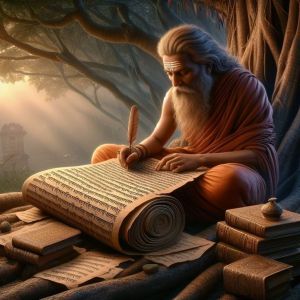
Shankaracharya’s Insights on Chapter 2 – Section 1
Shankaracharya explains that this section emphasizes discrimination between the eternal Self and transient worldly objects. Attachment to sense pleasures binds the soul, while control of senses and mind leads to liberation. He highlights that the Self is unchanging, subtle, and beyond the body, and cannot be realized through rituals or desires alone. Meditation, reflection, and inner discipline are essential to perceive the immortal Self. Ignorance of the Self causes suffering and entanglement in samsara. The wise, by focusing inward, attain clarity, detachment, and inner peace. Knowledge of the Self destroys fear of death and leads to eternal bliss. Shankara underscores that understanding the Self is the ultimate aim of human life and the path to moksa. For More Information Click Here

Conclusion
Chapter 2 – Section 1 of the Katha Upanishad emphasizes self-realization through detachment, discrimination, and control of the senses. Yama teaches that attachment to fleeting pleasures binds the soul to the cycle of birth and death, while meditation, reflection, and disciplined awareness reveal the eternal Self. The Self is subtle, unchanging, and distinct from the body, and recognizing it leads to liberation. This section underscores that moksa is attained not through rituals or external pursuits but through inner knowledge, self-discipline, and discernment. It lays the foundation for understanding the means of liberation and prepares the seeker for deeper teachings in subsequent sections.
Join Our Classes:
The Upanishads are more than just ancient texts—they are timeless guides to living with clarity, balance, and inner peace. Our classes make their profound wisdom easy to understand and apply in everyday life. Join us to explore these teachings and discover a new way of seeing yourself and the world!