Essence of the Maitreya Upanishad: The Path of Renunciation and Self-Realization
The Maitreya Upanishad is a minor Upanishad of the Yajur Veda that teaches renunciation and Self-realization as the path to liberation. It features a dialogue between Sage Maitreya and Lord Shiva, emphasizing the illusory nature of the world (Maya) and the need to transcend ego and desires. True knowledge arises when one realizes the Self as distinct from the body and mind. The Upanishad advocates for inner detachment and meditative inquiry. Liberation (moksha) is described as the state of abiding in pure, unchanging awareness. Ultimately, it conveys that freedom comes not through rituals, but through the direct realization of the non-dual Self. For More Information Click Here

What is the Maitreya Upanishad?
The Maitreya Upanishad is a minor Upanishad affiliated with the Sama Veda. It presents a spiritual dialogue between Sage Maitreya and Lord Shiva, focusing on the path of renunciation (sannyasa) and the realization of the Self (Atman) as the only reality.
This Upanishad teaches that the world is an illusion (Maya) and emphasizes non-dual awareness (Advaita) as the means to attain moksha (liberation). It strongly advocates inner renunciation, dispassion, and the abandonment of ego, attachment, and worldly identity in pursuit of the Self.
Structure:
- The Maitreya Upanishad has 3 chapters (adhyāyas).
- It contains a total of 73 verses.
The Upanishad’s essence lies in its bold assertion that true liberation is attained only through Self-knowledge, not through rituals, pilgrimages, or external acts, making it a strong supporter of Advaita Vedanta philosophy.
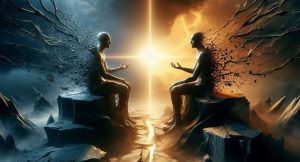
Core Teachings of the Maitreya Upanishad: Realization Through Renunciation
The core teaching of the Maitreya Upanishad is that liberation (moksha) is attained through Self-realization and complete renunciation of ego, desires, and attachment to the material world. It asserts that the world is an illusion (Maya) and that the only eternal reality is the Self (Atman), which is identical with Brahman, the Supreme Consciousness.
The Upanishad emphasizes:
- Renunciation (Sannyasa): True renunciation is not just physical withdrawal but the inner abandonment of identification with the body, mind, and senses.
- Non-dual Awareness: The highest state is the realization that there is no “I” or “you,” no duality, only the Self as pure, undivided consciousness.
- Dispassion (Vairagya): Detachment from worldly pleasures, relationships, and even scriptural duties is necessary to attain inner peace and Self-knowledge.
- Silence and Stillness: A realized person lives in deep silence, absorbed in the Self, beyond rituals, caste, or societal identity.
Ultimately, the Maitreya Upanishad declares that freedom is achieved not by action or worship, but by realizing the non-dual, ever-liberated nature of the Self. For More Information Click Here

Authorship and Spiritual Vision of the Maitreya Upanishad
Like most Upanishads, the Maitreya Upanishad does not have a known individual author. It is considered apauruṣeya—”not of human origin”—and is believed to be a revelation received by ancient sages (ṛṣis) through deep spiritual insight. The teachings are expressed in the form of a dialogue between Sage Maitreya and Lord Shiva, giving it scriptural and divine authority.
Philosophical Perspective in the Upanishad:
Although the text is anonymous, its inner voice reflects strong Advaita Vedanta influence, and the following views are clearly presented:
- Liberation through Self-Realization:
The ultimate goal of life is moksha (liberation), which can only be attained through knowledge of the Self—not through rituals, scriptures, or religious identity. - World as Illusion (Maya):
The Upanishad treats the phenomenal world as unreal, emphasizing that clinging to it causes bondage. - Renunciation as the Highest Path:
True sannyasa (renunciation) is internal—abandoning attachment to the ego, body, and desires, and dwelling in the pure awareness of the Self. - Non-duality (Advaita):
The teaching centers around the non-dual Self, asserting that there is no distinction between the individual soul and the Supreme. - Rejection of Social and Scriptural Roles:
The enlightened being transcends varna (caste), ashrama (life stage), and religious duties, living in a state of detached stillness.
Though the author is unknown, the Maitreya Upanishad’s spiritual insight clearly reflects the voice of a deeply realized seer who urges seekers to move beyond superficial religion and identity, and to realize their own Self as Brahman, the boundless, eternal truth.
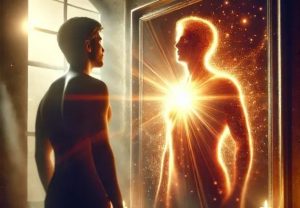
Significance of the Maitreya Upanishad in the Path of Liberation
The Maitreya Upanishad holds a significant place among the minor Upanishads for its bold and uncompromising message on renunciation and Self-realization. Though brief, it conveys deep spiritual truths that resonate strongly with seekers of Advaita Vedanta.
Here’s why it is important:
- Emphasis on Inner Renunciation:
It goes beyond external rituals and social duties, emphasizing that true liberation is found through detachment from ego, desires, and identity. - Clarity on Non-duality (Advaita):
The Upanishad teaches that the Self (Atman) is Brahman, the only reality, and that realizing this truth leads to freedom from all bondage. - Freedom from Religious Formalities:
It boldly declares that scriptural study, caste, and religious identity are irrelevant once the Self is realized—pointing to a universal and direct path to moksha. - Encourages Dispassion and Stillness:
The text honors the inner silence and detachment of a realized sage as the highest spiritual state. - Accessible Wisdom for Sincere Seekers:
Its direct, poetic language and concise format make it a powerful text for reflection and meditation, especially for those already grounded in Vedantic knowledge.
In essence, the Maitreya Upanishad stands as a radical and liberating scripture, reminding seekers that freedom lies within, and that true renunciation is the dropping of all illusions to abide in the Self alone. For More Information Click Here

Conclusion
The Maitreya Upanishad presents a profound vision of spiritual liberation rooted in self-inquiry, inner renunciation, and non-dual realization. Through its dialogue between Sage Maitreya and Lord Shiva, it strips away the outer layers of ritual, identity, and societal roles, revealing the eternal Self (Atman) as the only truth. The Upanishad boldly declares that moksha is not achieved through external means, but through direct realization of one’s own true nature as Brahman. With its clear, uncompromising message, the Maitreya Upanishad remains a timeless guide for sincere seekers on the path to ultimate freedom.
Join Our Classes:
The Upanishads are more than just ancient texts—they are timeless guides to living with clarity, balance, and inner peace. Our classes make their profound wisdom easy to understand and apply in everyday life. Join us to explore these teachings and discover a new way of seeing yourself and the world!