Essence of the Skanda Upanishad: Unity of Deities and the Path to Self-Realization
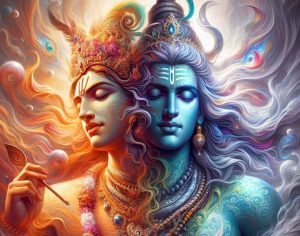
The Skanda Upanishad emphasizes the essential oneness of Shiva and Vishnu, asserting that all deities are expressions of the same supreme Brahman. It teaches the doctrine of non-duality (Advaita) and highlights the importance of self-realization as the path to liberation. The Upanishad declares that true knowledge lies in knowing the Self as pure consciousness, beyond body and ego. Devotion (bhakti), knowledge (jnana), and detachment are encouraged as supports for spiritual growth. Rituals and external practices are considered secondary to inner awareness and wisdom. Ultimately, the text conveys that liberation (moksha) is achieved by realizing one’s identity with the eternal, formless Brahman. For More Information Click Here

What is the Skanda Upanishad and Its Structure
The Skanda Upanishad is a minor Upanishad belonging to the Krishna Yajurveda and is one of the Shaiva Upanishads, which focus on the worship and philosophy of Lord Shiva and his manifestations. Despite being named after Lord Skanda (Murugan/Kartikeya), the text emphasizes the non-dual nature of reality, asserting the oneness of Shiva, Vishnu, and Brahman.
Structure:
- The Skanda Upanishad consists of a single chapter.
- It contains 15 verses.
Though short, the Upanishad conveys a profound message rooted in Advaita Vedanta, highlighting inner purity, self-realization, and the illusory nature of duality. It guides the seeker to understand that liberation comes not from external worship alone, but through knowing the Self as non-different from Brahman, the one supreme reality.
Core Teachings of the Skanda Upanishad: Realizing Oneness through Self-Knowledge
The Skanda Upanishad presents a profound Advaitic vision that emphasizes the essential unity of all deities and the supremacy of Self-knowledge. Though brief, it offers powerful insights into the nature of reality and the means to liberation.
Here are the core teachings:
- Unity of Shiva and Vishnu:
The Upanishad teaches that Shiva and Vishnu are not separate, but two aspects of the same Supreme Brahman. This non-sectarian message promotes spiritual harmony. - Brahman is the Only Reality:
It declares that Brahman alone is real, and the world of names and forms is illusory (maya). The Self (Atman) is none other than this formless Brahman. - Self-Realization as Liberation:
True moksha (liberation) is achieved not through ritual, but through realizing the Self as identical with Brahman, beyond body and mind. - Importance of Detachment and Discrimination:
The seeker must cultivate viveka (discrimination) and vairagya (detachment) to transcend the illusion of duality and attain inner clarity. - Inner Purity over Outer Ritual:
While external worship is acknowledged, the Upanishad emphasizes that inner purity, control of the mind, and knowledge of the Self are far superior and essential.
In essence, the Skanda Upanishad encourages seekers to look beyond names and forms, and realize their true divine nature as one with the universal, eternal consciousness. For More Information Click Here
Authorship and Philosophical Vision of the Skanda Upanishad
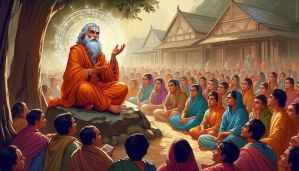
Like most Upanishads, the Skanda Upanishad is considered apauruṣeya—meaning it is not authored by any individual, but rather revealed to ancient sages (ṛṣis) during deep meditative states. Therefore, the text has no known human author. It is traditionally attributed to the Vedic seers, who received these spiritual insights directly through inner realization and transmitted them orally.
Philosophical Perspective in the Text:
Though not authored by a single person, the vision and thoughts reflected in the Skanda Upanishad are deeply rooted in Advaita Vedanta, with some unique Shaiva influences:
- Oneness of Divine Forms:
The Upanishad emphasizes that Shiva and Vishnu are one, presenting a non-sectarian view that all deities are expressions of the same Supreme Reality (Brahman). - Focus on Self-Realization:
The central teaching is that true liberation comes through Self-knowledge, not through ritual worship alone. It places jnana (knowledge) above karma (action). - Rejection of Duality:
The text dismisses any notion of duality between soul and God, or between different deities, upholding the non-dual truth that only Brahman is real. - Inner Purity as the Path:
It reflects the idea that spiritual progress lies in purifying the mind and heart, and in turning inward to discover one’s true nature as consciousness.
In summary, while the Skanda Upanishad has no identified author, the sage behind its revelation presents a unifying and non-dualistic worldview, affirming that all gods, paths, and practices ultimately lead to Self-realization and unity with Brahman.
Importance of the Skanda Upanishad: A Message of Oneness and Inner Realization
The Skanda Upanishad holds a special place among the minor Upanishads for its clear expression of Advaita (non-dualism) and its emphasis on unity among deities and inner spiritual knowledge. Though concise, it conveys timeless wisdom with profound significance:
- Promotes Religious Harmony
By asserting the oneness of Shiva and Vishnu, the Upanishad dissolves sectarian divisions and encourages a unified spiritual perspective, fostering harmony among various traditions. - Advocates Self-Knowledge as the Highest Path
The Upanishad declares that real liberation (moksha) comes through Self-realization, not through ritualistic worship or dogma. This makes it a guide for all seekers regardless of background. - Emphasizes the Inner over the Outer
It shifts the focus from external rituals to internal purification, wisdom, and meditation, offering a practical approach to spiritual growth. - Supports Detachment and Discrimination
Teachings on viveka (discrimination) and vairagya (detachment) empower individuals to transcend worldly attachments and pursue truth. - Affirms the Oneness of All Beings
By upholding the identity of the Self (Atman) with Brahman, the Upanishad presents a universal message of non-duality and inner divinity.
In essence, the Skanda Upanishad is a spiritually potent text that transcends sects, simplifies the path to liberation, and reinforces the eternal message of oneness and inner realization. For More Information Click Here

Join Our Classes:
The Upanishads are more than just ancient texts—they are timeless guides to living with clarity, balance, and inner peace. Our classes make their profound wisdom easy to understand and apply in everyday life. Join us to explore these teachings and discover a new way of seeing yourself and the world!