The Origin of Creation and the Nature of Supreme Reality
Chapter 1 of the Paingala Upanishad opens with the disciple Paingala approaching the sage Yajnavalkya with humility, seeking the highest knowledge that leads to liberation. Yajnavalkya begins by describing the Supreme Reality—Brahman—as pure existence, consciousness, and bliss, eternal and unchanging, from which all creation arises. He explains that the universe first appeared as Sat (Being) alone, and through its inherent power, the primordial nature (Mulaprakṛti) manifested. From this subtle principle evolved the five elements and the entire cosmos. The guru clarifies that Brahman pervades everything, yet remains untouched by creation, just as space remains unaffected by the objects within it. The chapter concludes by affirming that realization of this Brahman as one’s own Self is the sole means to transcend ignorance and attain liberation. For More Information Click Here

Dialogue on Brahman, Creation, and the Path to Liberation
Verse 1: Paingala humbly approaches Sage Yajnavalkya, seeking the supreme knowledge that destroys ignorance and leads to liberation.
Verse 2: Yajnavalkya praises Paingala’s sincerity and readiness for truth, affirming that only the pure-minded can grasp Brahman’s essence.
Verse 3: He declares Brahman as eternal existence, consciousness, and bliss—self-luminous, changeless, infinite, and the source and support of the universe.
Verse 4: Before creation, only Brahman existed as pure Being (Sat), one without a second, beyond name, form, or activity.
Verse 5: From Brahman’s inherent power emerged Mulaprakṛti (primordial nature), containing the three gunas—sattva, rajas, and tamas—in perfect balance.
Verse 6: Through disturbance of Mulaprakṛti, cosmic evolution began, producing Mahat (intellect), Ahamkara (ego), and subtle elements that form the universe.
Verse 7: The five subtle elements—ether, air, fire, water, and earth—combine to create gross forms and living beings.
Verse 8: Brahman, as Isvara, governs creation and dissolution, remaining ever detached, like a spider projecting and withdrawing its web.
Verse 9: All beings arise from Brahman, exist in Brahman, and ultimately merge back into it at the time of dissolution.
Verse 10: Though pervading everything, Brahman remains unaffected, just as space is untouched by the objects it contains.
Verse 11: The ignorant perceive multiplicity, but the wise realize oneness, seeing no distinction between the Self and the Supreme.
Verse 12: Realizing Brahman as one’s own Self dispels illusion, ending bondage and leading to the bliss of liberation (moksa).

Non-Dual Reality and the Path to Liberation
Chapter 1 teaches that the ultimate reality, Brahman, is eternal, unchanging, and the source of all creation. It explains that the universe arises from primordial nature (Mulaprakṛti) under Brahman’s power, evolving through intellect, ego, and the five elements. Despite pervading everything, Brahman remains untouched and beyond all distinctions. Ignorance creates the perception of multiplicity, while wisdom reveals the essential oneness of the Self and Brahman. Realization of this non-duality dissolves attachment, fear, and bondage. Ultimately, liberation (moksa) is attained through direct knowledge of one’s own identity with Brahman. For More Information Click Here
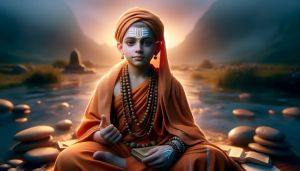
Shankaracharya’s Commentary on Brahman and Liberation
Shankaracharya interprets Chapter 1 as a profound exposition of Advaita Vedanta, emphasizing that Brahman alone is real (sat), changeless, and the substratum of the universe. He explains that the creation described—from Mulaprakṛti to Mahat, Ahamkara, and the five elements—is phenomenal, not ultimately real, serving only to illustrate the play of maya. The Jiva, bound by ignorance, identifies with the body-mind complex, whereas the wise recognize their true nature as non-different from Brahman. Shankara highlights that knowledge (jnana) alone destroys avidya (ignorance) and dispels the illusion of multiplicity. Rituals and external acts, while prescribed for beginners, are ultimately subordinate to self-knowledge. Liberation (moksa) arises when one realizes the identity of Atman and Brahman, transcending all dualities and achieving blissful, eternal freedom. For More Information Click Here
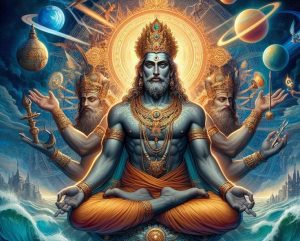
Conclusion
Chapter 1 of the Paingala Upanishad establishes the foundational truth of non-dual Brahman as the eternal, changeless source of all existence. It explains creation as a manifestation of primordial nature while emphasizing that ultimate reality remains untouched and beyond all distinctions. The chapter teaches that ignorance causes the perception of multiplicity, and only through self-knowledge can one realize the unity of Jiva and Brahman. Shankaracharya’s insights reinforce that liberation (moksa) is attained not through rituals or external actions but through direct realization of one’s identity with Brahman. This chapter sets the stage for the seeker to pursue knowledge, meditation, and discernment on the path to ultimate freedom.
Join Our Classes:
The Upanishads are more than just ancient texts—they are timeless guides to living with clarity, balance, and inner peace. Our classes make their profound wisdom easy to understand and apply in everyday life. Join us to explore these teachings and discover a new way of seeing yourself and the world!