Part 2 — DEEPA PANCHAKAM (Chapters 6–10)
Chapter list & verse counts (from the text):
6. Chitra Deepa — 290 verses
7. Trupti Jīva — 298 verses
8. Kūṭasta Deepa — 76 verses
9. Dhyāna Deepa — 158 verses
10. Nataka Deepa — 21 verses. Click Here To PDF.
Below I give for each chapter: aim → stepwise structure → practice pointers.
Chapter 6 — Chitra-Deepa Prakaraṇam — 290 verses
Aim: A detailed elaboration of how the light of consciousness (chitra = “variegated / pictorial”) illuminates objects. The chapter uses analogies and logical proof to show consciousness is self-luminous and not produced by the mind.
Study & practice steps:
- Understand self-luminosity (svaprakāśa): Consciousness illuminates itself and others; analyze the impossibility of consciousness being produced by insentient causes.
- Discriminate between light and lit: Practice seeing the difference between the seeing principle and the seen content.
- Contemplation: Use concrete meditations where you hold attention on the “I-awareness” and note the mode in which objects appear illuminated.
Result: Strengthening the intuitive recognition of pure awareness as the only coherent source of illumination. Click Here To PDF.
Chapter 7 — Trupti-Jīva Prakaraṇam — 298 verses
Aim: Investigate the notion of “satisfaction” (trupti) of the living being and show how the Atman’s satisfaction is different from sense gratification. It contrasts worldly ‘pleasure’ with abiding non-dual bliss.
Practice path:
- Observe appetite & satiation: See how objects satisfy for a time but do not remove the sense of lack.
- Contrast with ānanda: Discern the difference between conditional (object-borne) satisfactions and the unconditional bliss of the Self.
- Stabilize in satisfaction: Through vichāra, rest in the Self as the true source of fulfillment. Click Here To PDF.
Chapter 8 — Kūṭasta-Deepa Prakaraṇam — 76 verses
Aim: (Kūṭasta — the term in this context describes a specific light-analogy and a crystalline, unbroken lamp of awareness.) Develops subtleties of the “lamp” metaphor and how the mind can be made a steady reflector of pure consciousness.
Practice: Exercises to steady attention, remove flicker of vṛttis, and maintain continuous witnessing. Click Here To PDF.

Chapter 9 — Dhyāna-Deepa Prakaraṇam — 158 verses
Aim: Practical instructions and philosophical justification for meditation (dhyāna) as the means for transforming intellect and attaining abiding knowledge.
How to practice (stepwise):
- Adopt correct view (the Self alone is real).
- Employ disciplined meditation: one-pointedness → observation of thoughts → abidance in the witness.
- Use Mahāvākya vichāra as meditation seed (e.g., breathe with the thought “Tat…Tvam…”).
Result: Deepening of nididhyāsana and reduction of mental perturbations. Click Here To PDF.
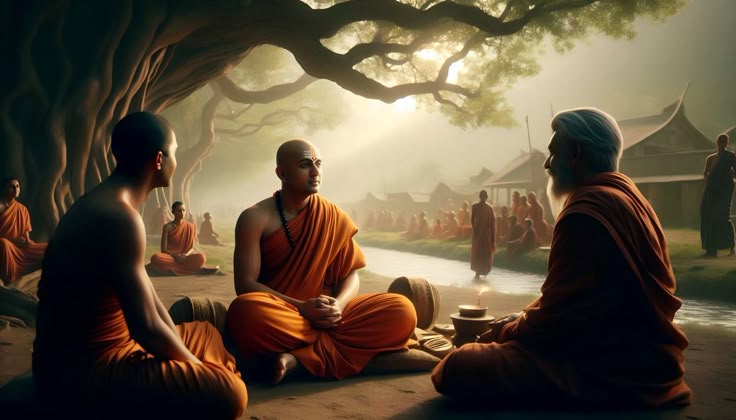
Chapter 10 — Nataka-Deepa Prakaraṇam — 21 verses
Aim: Short concluding chapter that treats the world as a “play/drama” (nātaka) and explains how that play is to be known without getting entangled.
Practice: Maintain equanimity while acting in the world — perform duties (dharma) but rest as the non-doer witness. Click Here To PDF.
Part 1 — VIVEKA PANCHAKAM (Chapters 1–5)
Part 2 — DEEPA PANCHAKAM (Chapters 6–10)
Part 3 — ANANDA PANCHAKAM (Chapters 11–15, Lecture 13) — 429 verses total
Panchadasi – by Swami Vidyaranya Part-4
Join Our Classes:
The Panchadasi are more than just ancient texts—they are timeless guides to living with clarity, balance, and inner peace. Our classes make their profound wisdom easy to understand and apply in everyday life. Join us to explore these teachings and discover a new way of seeing yourself and the world!