Introduction
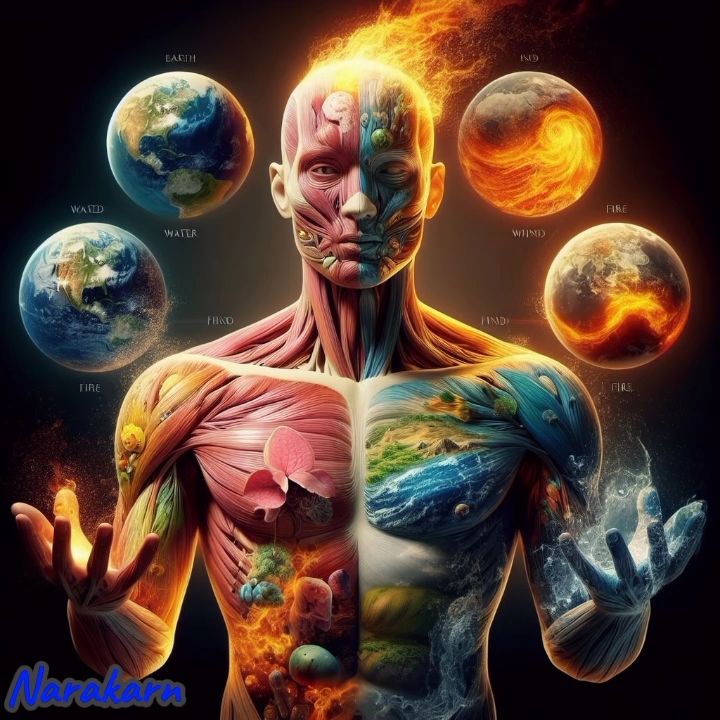
Verses 48-72 in Chapter 2 (the “Pañcabhūta-Viveka” section) turn to the doctrine of Māyā / Shakti and the power of the Absolute. After establishing that the five elements, name-form and plurality are not the real Self, this portion examines how the appearance of the world arises through the subtle power of the Self, how that power is neither fully real nor fully unreal, and how by discriminative knowledge one transcends all apparent power and remains as the undivided Self. The emphasis moves from “what this is” (elements) to “how this appears” (power, Māyā) and thus is pivotal for inner transformation. Click Here To Access more other text.

Benefits
Studying verses 48-72 yields several important benefits:
- A deeper understanding of how the world and powers (shakti) are related to the Self, thus dissolving the sense of separation.
- Clarification of the status of Māyā–power: how it functions, how it is apparent, how it’s neither totally real nor totally unreal, thereby reducing confusion about creation and reality.
- Strengthened discrimination: examining how subtle powers, abilities, change, agency relate to the unchanging Self—so one recognises “I am not the power, I am the Self”.
- Psychological relief: seeing that one’s sense of agency, weakness, power, limitation, is a temporary appearance helps reduce ego-anxiety, fear of loss or failure.
- A more grounded practice: with an overview of shakti and ignorance one can meditate with greater clarity, avoiding superficial identification with power or lack of it. Click view PDF.

All Verses 48-72 (Translation + Commentary)
Here is a summary list of verses 48 through 72 with translation + capsule commentary. (Note: For full Sanskrit and extended commentary refer to your PDF notes.)
Verse 48
Translation: “The power (shakti) of the Real is not the Real itself, just as the power to burn is not fire itself.”
Commentary: Distinguishes the substance (Sat) and the power (shakti). See metaphor of fire + burning. Important: power doesn’t equal essence.
Verse 49
Translation: “If the power were different from its possessor, then where would the possessor of power dwell? Where the power?”
Commentary: Logic used to show that shakti and the Self are not two separate independent entities; else infinite regress. Click view PDF.
Verse 50
Translation: “Never is the power found apart from its possessor; nor does the possessor exist without power.”
Commentary: Non-division of possessor and power: illustrates non-duality of substratum + adjunct.

Verse 51
Translation: “If power were separate then increase and diminution of power would bring increase/diminution in the possessor — impossibility.”
Commentary: Argues against treating shakti as an independent variable that affects the Self.
Verse 52
Translation: “Advantages such as longer life, greater vigor cannot be attributed to additional power independent of the Self.”
Commentary: Demonstrates that worldly changes are not evidence of self’s change; self remains constant.
Verse 53
Translation: “What grounds are there to count power separately when before creation no effects existed?”
Commentary: Highlights that power’s effects (creation, change) depend on the Self; reveals power’s dependence. Click view PDF.
Verse 54
Translation: “Therefore power must be mithyā (apparently real) because it cannot be fully real (sat) nor non-real (asat).”
Commentary: Clear statement of Māyā-status: neither absolutely real nor absolutely unreal but dependent.
Verse 55
Translation: “When knowledge dawns, the sense of possession of power disappears, like dream-objects vanish on waking.”
Commentary: Practical insight: identification with power dissolves when knowledge of the Self arises. Click view PDF.

Verse 56
Translation: “Power exists only while the mind identifies with body-mind; when the Self is established, power is no longer seen as other.”
Commentary: Points to integration: the realized one sees himself not as doer/enjoyer (shakti bearer) but as the Self.
Verse 57
Translation: “Those who are established in the Self act without doership, remain unaffected by results though actions remain.”
Commentary: Jīvanmukti teaching: action persists, but identification with action/power disappears. Click view PDF.
Verse 58
Translation: “Like space in a pot is not limited by the pot when the pot is broken — similarly the Self is never limited by the body-mind though apparently so.”
Commentary: Classic pot-space analogy used to illustrate removal of limitation via knowledge.
Verse 59
Translation: “The Self being unconditioned, needs no adjuncts; power is only conditioned, needs adjuncts to manifest.”
Commentary: Helps differentiate the evergreen identity (Self) vs transient identifications (power/roles).
Verse 60
Translation: “Since the Self is prior to all powers and remains after their cessation, one should know the Self as the eternal witness.”
Commentary: Encourages focus on the unchanging watcher rather than changing powers/functions. Click view PDF.

Verse 61
Translation: “Power arises only when ignorance veils the Self; when knowledge shines, the veil is removed and only the Self remains.”
Commentary: Reinforces method: ignorance removal leads to recognition.
Verse 62
Translation: “Therefore hear the teachings, reflect deeply, withdraw inward — then discrimination dawns, power disappears and the Self alone shines.”
Commentary: Re-emphasizes the method of śravaṇa-manana-nididhyāsana tailored to this section. Click view PDF.
Verse 63
Translation: “The wise do not boast of powers or claim doership; they remain as the Self, unattached amidst action and inaction.”
Commentary: Ethical/practical dimension: inner humility and freedom.
Verse 64
Translation: “All powers, forms, limitations, and names are but passing shadows; the Self remains as the luminous, infinite ground.”
Commentary: Summary of earlier teachings: everything finite dissolves into the infinite.
Verse 65
Translation: “If one abides as the Self, unaffected by results, pleasures and pains, then the great light of Jñāna dawns.”
Commentary: Promise of realization: freedom, peace, clarity.

Verse 66
Translation: “Attachment to powers is the root of bondage; surrender to the Self is the root of liberation.”
Commentary: Cause and remedy succinctly stated. Click view PDF.
Verse 67
Translation: “When the mind is free of the sense ‘I am the power’, there is no duality; only the Self remains.”
Commentary: Duality ceases when doership-sense ceases.
Verse 68
Translation: “Although the world and powers appear, they neither bind nor disturb the one who knows his own true Self.”
Commentary: Non‐dual lived reality: appearance remains but doesn’t affect.
Verse 69
Translation: “In the presence of the Self, all fears cease; for whom should the Self fear what?”
Commentary: Ultimate freedom: fearlessness arises from Self-knowledge. Click view PDF.
Verse 70
Translation: “Acting or not acting — for the Self it makes no difference; but for the body-mind world it appears as action.”
Commentary: Underscores that actions are surface-events; underlying reality unaffected.
Verse 71
Translation: “Be steady thus, abandoning the sense ‘I do this’, resting as the Self — then supreme peace is attained.”
Commentary: Final practical injunction on living.
Verse 72
Translation: “Thus ends for the wise the differentiation of power; may they abide in the Self as the ever-free, ever-full truth.”
Commentary: Concluding benediction of the section. Click view PDF.
Why Study
- To comprehend the nature of Māyā/power and how the world-appearance arises, which is crucial for non-dual realisation.
- To resolve deep objections about creation, limitation, doership and agency – addressing what usually blocks insight.
- To internalize the freedom of the Self not merely as a concept but as lived reality: knowledge of powerlessness as power.
- To ground spiritual practice: once the mechanics of power are clear, one can practice without being overtaken by ego, ambition, or fear.
- To live actively yet unattached: this section provides a roadmap for remaining in the Self while doing what life demands. Click view PDF.

How to Study
- Śravaṇa: Read verses 48-72 slowly with commentary. Highlight key terms: shakti, mithyā, upādhi, śruti, jñāna, doer-enjoyer.
- Manana: For each verse ask: Where am I identifying with power or limitation? What is the evidence that I am independent of these? How does this verse shift my self-view? Use journaling.
- Nididhyāsana: Sit quietly 10-20 minutes focusing on a phrase like: “I am the ever-free Witness; all powers appear in me.” When thoughts of action/power arise, observe them as content and return to the Self.
- Repetition: First reading thorough; second after ~1 week; third after ~1 month; weekly reviews for 3-6 months; then quarterly.
- Discussion: Use a teacher or study group to clarify tricky points (e.g., “How can power be neither real nor unreal?”).
- Daily Application: Whenever you feel strong desire, frustration, fear of failure — recall verses 55-66. Ask: Am I the power or the Self? Shift identification. Click view PDF.
Conclusion
Verses 48-72 of Chapter 2 mark a pivotal shift from describing what the Self is (in earlier sections) to describing how the Self appears as the world-power and how one can transcend that appearance. They lay bare the mechanism of Māyā/shakti and the method of uprooting identification with it. When these teachings are assimilated, the seeker begins to live not as “I am the actor,” but “I am the ever-free Witness in whom all powers play.” This is the turning point from outer philosophical understanding to inner experiential freedom.