Prasno Upanishad – Chapter 6 Overview
Chapter 6 of the Prasno Upanishad begins with the seeker asking Sage Pippalada about the ultimate goal of life and the means to attain liberation. The sage explains that after understanding and meditating on Prana and the vital airs, the seeker must turn inward to realize the eternal Self (Atman). He emphasizes that the body, mind, senses, and life-force are all transient, and true liberation comes from recognizing the Self beyond these. The chapter describes meditation, self-awareness, and detachment as essential practices. It concludes by affirming that knowledge of the Self is the highest attainment, surpassing all ritualistic or external practices. For More Information Click Here
Theme of Chapter 6
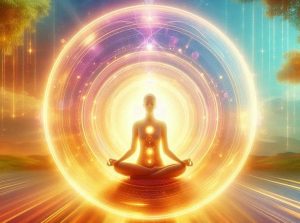
The central theme is Self-realization and liberation, showing that after mastering Prana and understanding the vital forces, the seeker must realize the eternal Self to attain moksha.
What Chapter 6 Teaches Us
Chapter 6 teaches that while Prana and vital airs sustain life and prepare the seeker, ultimate freedom is achieved through knowledge of the Self. Meditation, detachment, and inward focus lead to the realization that the Self is eternal, beyond body, mind, and senses. This chapter guides the seeker from understanding life-force to attaining liberation and inner peace.
Essence of Chapter 6
True liberation is attained through realization of the eternal Self, beyond the body, mind, and vital forces.
Verse-wise Summary of Chapter 6 (8 Verses)
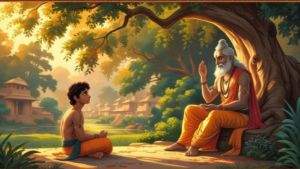
Verse 1 – The seeker asks Sage Pippalada about the ultimate goal of life and how to attain liberation.
Verse 2 – The sage explains that understanding Prana and the vital airs is essential, but they are preparatory, not the ultimate reality.
Verse 3 – The seeker is instructed to turn inward and meditate on the eternal Self (Atman), beyond body, mind, and senses.
Verse 4 – Meditation, self-awareness, and detachment are described as the means to realize the Self directly.
Verse 5 – Knowledge of the Self purifies the mind and leads to liberation, surpassing all external rituals and practices.
Verse 6 – The sage emphasizes that the Self is eternal, unchanging, and the source of all life and consciousness.
Verse 7 – Recognition of the Self brings freedom from fear, attachment, and the cycle of birth and death.
Verse 8 – Chapter 6 concludes by affirming that the highest attainment is Self-realization, leading to eternal peace and liberation. For More Information Click Here
Shankaracharya’s Insights
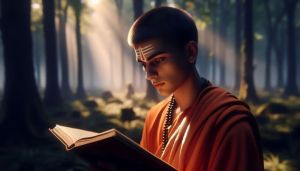
Shankaracharya interprets Chapter 6 as the culmination of the Prasno Upanishad, guiding the seeker from the study of Prana and vital airs to realization of the eternal Self. He emphasizes that while understanding life-force is preparatory, liberation arises only from recognizing the Self as distinct from body, mind, and senses. Meditation, detachment, and inward focus purify the seeker’s consciousness, enabling direct experience of Brahman. This chapter reinforces the non-dual teaching that ultimate knowledge and moksha lie beyond all transient phenomena.
Conclusion
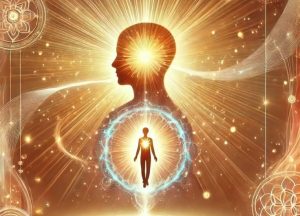
Chapter 6 highlights Self-realization as the ultimate goal of human life. It teaches that while Prana and vital airs sustain life and guide preparation, true liberation is attained through knowledge of the eternal Self. Shankaracharya clarifies that meditation, detachment, and inward focus lead the seeker beyond body, mind, and senses to Brahman. This chapter completes the journey of the Prasno Upanishad, moving from understanding the life-force to attaining the highest spiritual knowledge and eternal freedom.
Join Our Classes:
The Upanishads are more than just ancient texts—they are timeless guides to living with clarity, balance, and inner peace. Our classes make their profound wisdom easy to understand and apply in everyday life. Join us to explore these teachings and discover a new way of seeing yourself and the world!