
Complete Guide to Śāṇḍilya Upanishad
The Śāṇḍilya Upanishad is a minor Upanishad but holds profound spiritual significance, primarily focusing on the practice of devotion (Bhakti), meditation (Dhyana), and knowledge (Jnana). It is often attached to the Yajurveda and provides practical instructions on spiritual practice. Click Here To Access more other text.
Overview of Śāṇḍilya Upanishad
The Śāṇḍilya Upanishad emphasizes:
-
The unity of the individual soul (Atman) with the Supreme Reality (Brahman).
-
Bhakti (devotion) and meditation as means to realize truth.
-
The importance of ethical living, truthfulness, self-discipline, and spiritual knowledge.
Key Concept:
“Through devotion and meditation, one attains liberation (Moksha), transcending worldly suffering.”
It integrates Jnana (knowledge), Karma (action), and Bhakti (devotion), making it suitable for both seekers of knowledge and devotees. Click view PDF.

Step-by-Step Guide to Studying Śāṇḍilya Upanishad
Step 1: Preparation
Before reading or chanting:
-
Choose a quiet, clean place.
-
Sit in a comfortable meditative posture (like Sukhasana or Padmasana).
-
Calm the mind with a few deep breaths.
-
Offer mental respect to the teacher or deity (Gurudev or Ishta Devata).
Purpose: Creates receptivity and focus in your mind.
Step 2: Recitation (Shravana)
-
Recite the Upanishad slowly and clearly.
-
Understand each verse rather than just chanting.
-
If possible, use a Sanskrit version with translation.
Tip:
Focus on verses that emphasize the oneness of Atman and Brahman, and meditate on their meaning. Click view PDF.
Step 3: Contemplation (Manana)
After reciting:
-
Reflect on the meaning of the verse.
-
Ask:
-
“How does this verse relate to my mind, body, and soul?”
-
“How can I practice this in daily life?”
-
Example:
If a verse speaks about detachment from material possessions, contemplate ways you can simplify your desires.
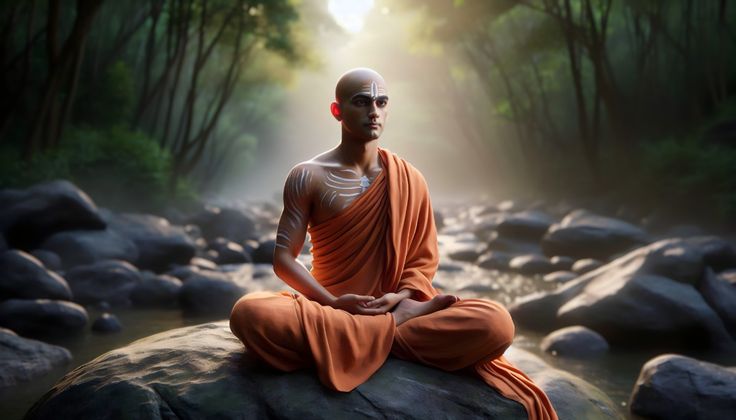
Step 4: Meditation (Nididhyasana)
-
Sit in silence and absorb the essence of the Upanishad.
-
Visualize the Supreme Self (Brahman) in your heart.
-
Meditate on unity, peace, and liberation.
Duration: Start with 10–15 minutes daily, increasing gradually. Click view PDF.
Benefits of Studying Śāṇḍilya Upanishad
-
Spiritual Wisdom: Enhances understanding of the Atman and Brahman.
-
Inner Peace: Reduces mental unrest and promotes calmness.
-
Devotional Strength: Strengthens faith and love towards the Divine.
-
Ethical Guidance: Encourages truthfulness, self-discipline, and detachment.
-
Liberation (Moksha): Helps the seeker realize freedom from worldly attachments.
Special Note:
It’s said that reading this Upanishad with devotion purifies the mind and heart, preparing one for higher meditation and spiritual experiences. Click view PDF.
How Many Times Should It Be Studied
-
Daily Practice: 1–3 times in the morning or evening is ideal.
-
During Special Occasions:
-
Upanishad can be recited on Ekadashi, full moon (Purnima), or Guru Purnima for heightened spiritual benefits.
-
-
Complete Mastery: Regular study over weeks and months with contemplation deepens understanding.
Rule of Thumb:
-
Even once a day with focus is better than multiple times without understanding.

Why Study Śāṇḍilya Upanishad
-
Connect with your Higher Self: Understand your eternal nature.
-
Purify Mind and Heart: Develop virtues and detach from ego.
-
Path to Liberation: It provides a practical spiritual roadmap.
-
Balance in Life: Integrates knowledge, action, and devotion.
-
Spiritual Protection: Creates a mental shield against negativity and stress.
Key Philosophy:
“Knowledge without practice is incomplete. Devotion without understanding is superficial.”
Śāṇḍilya Upanishad teaches the balance of wisdom, devotion, and action. Click view PDF.
Conclusion
The Śāṇḍilya Upanishad serves as a profound bridge between knowledge (Jnana), devotion (Bhakti), and disciplined action (Karma), guiding the seeker toward ultimate self-realization. Its teachings emphasize that the Atman—the inner Self—is identical with Brahman, the Supreme Reality, and that recognizing this truth is the key to liberation (Moksha). By regularly studying, contemplating, and meditating on its verses, one cultivates inner peace, detachment from material distractions, and a heart filled with love and devotion. The Upanishad also highlights ethical living, truthfulness, and self-discipline as essential foundations for spiritual progress. When practiced sincerely, it transforms ordinary life into a spiritual journey, allowing the seeker to experience clarity, bliss, and unity with the Divine. Ultimately, the Śāṇḍilya Upanishad is not merely a scripture to be read—it is a guide to living with wisdom, devotion, and profound awareness of the eternal Self.