Foundations of Self-Knowledge: Summary of Sri Rama Gita Verses 1–34
In the opening verses of the Sri Rama Gita, Lord Rama imparts the highest knowledge of the Self to Lakshmana. He emphasizes that the true Self (Atman) is beyond body, mind, and intellect—eternal, unchanging, and pure consciousness. Rama teaches that liberation (moksha) comes not through rituals, but through discrimination, detachment, and deep inquiry into one’s true nature. The world is a projection of ignorance (avidya), and only Self-realization dissolves this illusion. He urges the seeker to meditate upon the Self as formless, blissful, and non-dual. These verses lay the foundation for Advaitic wisdom through Rama’s compassionate instruction. For More Information Click Here

What is Sri Rama Gita?
The Sri Rama Gita is a profound philosophical discourse found in the Adhyatma Ramayana, a spiritual and Advaitic retelling of the Ramayana attributed to Sage Vyasa. In this sacred dialogue, Lord Rama teaches his brother Lakshmana the ultimate knowledge of the Self (Atma Jnana), the nature of reality, and the path to liberation (moksha). Unlike the warrior-prince image often associated with Rama, this text reveals him as a supreme spiritual teacher and embodiment of Brahman, the Absolute.
The teachings of the Sri Rama Gita are rooted in Advaita Vedanta, emphasizing the non-duality of the individual soul (jiva) and the Supreme Self (Paramatma), asserting that realization of one’s true nature leads to liberation.
Chapters and Verses
The Sri Rama Gita appears in the Adhyatma Ramayana, specifically in the Uttara Kanda (the final section), and consists of:
- 6 Topics
- 62 Verses
These verses form a compact yet profound exposition of Vedantic philosophy, similar in tone and intent to other Upanishadic texts and the Bhagavad Gita, but in the unique voice of Lord Rama.

The Six Topics of the Sri Rama Gita:
- Jiva-Svarupa (Nature of the Individual Soul)
– Discusses the essential nature of the jiva (individual self) as distinct from the body and mind. - Jagat-Svarupa (Nature of the World)
– Explains the illusory and transient nature of the world (jagat) and its dependence on ignorance (avidya). - Ishvara-Svarupa (Nature of God / the Supreme Lord)
– Reveals the true nature of Ishvara (God) as non-different from Brahman, the substratum of all. - Jiva-Ishvara-Aikya (Unity of Jiva and Ishvara)
– Establishes the identity of the individual self (jiva) and the Supreme Self (Ishvara) through Advaita (non-duality). - Moksha-Svarupa (Nature of Liberation)
– Defines moksha as realization of the Self, freedom from bondage, and the cessation of ignorance. - Sadhana (Spiritual Discipline or Practice)
– Describes the means to liberation, including discrimination (viveka), renunciation (vairagya), devotion, and Self-inquiry.
These topics unfold through verses 1–62, offering a structured and concise spiritual teaching suitable for seekers following the path of Advaita Vedanta. For More Information Click Here

The Supreme Truth of Non-Duality: Core Teaching of the Sri Rama Gita
The core teaching of the Sri Rama Gita is the non-dual realization of the Self (Atman) as identical with Brahman, the ultimate reality. Lord Rama instructs that liberation (moksha) is attained not through rituals or external actions, but through Self-inquiry, detachment, and meditative knowledge. The world is seen as a projection of ignorance (avidya), and only through the clear knowledge of the Self as formless, eternal, pure consciousness, can one transcend suffering and duality. The seeker must rise above ego and illusion, realizing that their true nature is unchanging, blissful, and beyond birth and death.
The Divine Teacher: Author of Sri Rama Gita and His Vision
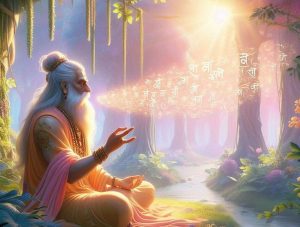
The Sri Rama Gita is found within the Adhyatma Ramayana, a spiritual and philosophical version of the Ramayana attributed to Sage Vyasa, the legendary compiler of the Vedas and author of the Mahabharata. While Sage Vyasa is traditionally credited as the compiler, the teachings themselves are delivered by Lord Rama, making him the speaker and the ultimate teacher in this scripture.
Sage Vyasa’s intent in presenting the Sri Rama Gita is to portray Lord Rama not just as an ideal king or hero, but as Brahman incarnate, the Supreme Self who guides seekers toward liberation. Through Rama’s dialogue with Lakshmana, Vyasa emphasizes Advaita Vedanta—the non-dual truth that the individual self (Atman) is identical with the infinite reality (Brahman). He upholds that true freedom lies in Self-knowledge, and devotion to Lord Rama is a path to realizing that non-dual truth. For More Information Click Here

Spiritual Significance and Relevance of the Sri Rama Gita
The Sri Rama Gita holds a significant place in Vedantic literature as a concise yet powerful exposition of Advaita Vedanta. Spoken by Lord Rama to Lakshmana, it reveals Rama not just as an avatar, but as the Supreme Brahman imparting the highest wisdom. The text bridges devotion (bhakti) and knowledge (jnana), showing that true devotion culminates in Self-realization. It emphasizes that liberation is attained not through rituals, but through discrimination, renunciation, and meditation on the Self. The Sri Rama Gita serves as a guide for sincere seekers, presenting eternal truths in a clear and devotional tone, making it both philosophically profound and spiritually accessible.
Conclusion
The Sri Rama Gita is a luminous guide for spiritual aspirants, where Lord Rama unveils the essence of non-dual truth through simple yet profound instruction. It emphasizes that Self-realization alone is the path to liberation, transcending rituals, dogma, and external practices. Rooted in Advaita Vedanta, yet delivered in a deeply devotional context, it harmonizes knowledge and devotion, making it accessible to seekers of all temperaments. Studying and meditating upon its teachings can lead one toward inner freedom, peace, and the direct experience of the eternal Self.