Self-Knowledge and Liberation: Teachings from Sri Rama Gita (Verses 35–62)
In these verses, Sri Rama expounds the essence of Jnana Yoga—the path of knowledge—as the highest means to liberation. He explains that the Self is ever-pure, formless, and untouched by actions, beyond all dualities. The world, born of ignorance, is a projection of the mind and not ultimately real. True detachment arises from clear understanding of the impermanent nature of all things. Rama emphasizes inner renunciation, not just external abandonment, as the key to freedom. Liberation (moksha) is attained through deep contemplation on the Self and steadfast abidance in non-dual awareness. For More Information Click Here
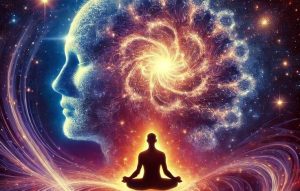
The Path of Self-Knowledge and Inner Freedom in Sri Rama Gita (Verses 35–62)
In verses 35 to 62 of the Sri Rama Gita, Lord Rama delves deep into Jnana Yoga, the path of self-knowledge, and explains the true nature of the Self (Atman) and the illusion of the world (Maya). Here’s the core message and meaning of these verses:
1. The Self is Pure and Untouched
Rama teaches that the true Self (Atman) is formless, actionless, eternal, and unchanging. It is untouched by karma or worldly actions. Just as the sun remains unaffected by the impurities of the earth, the Self remains untouched by bodily or mental experiences.
2. The World is an Illusion
What appears as the world is due to ignorance (avidya). It is a projection, like a mirage or dream, caused by the superimposition of names and forms upon the formless Self. This illusion binds the soul into samsara (cycle of birth and death).
3. Knowledge is the Only Way to Liberation
Moksha (liberation) comes not through rituals or external renunciation, but through discrimination (viveka) and direct realization of one’s true nature as the Self. Right knowledge removes ignorance, just as light removes darkness.

4. Renunciation Must Be Internal
True renunciation (vairagya) is the detachment from ego and desire, not mere abandonment of worldly life. A wise person may live amidst the world but remain inwardly free, always established in the Self. For More Information Click Here
5. Mind is the Cause of Bondage and Freedom
It is the mind that creates bondage by identifying with the body and world. But the same mind, when purified and made steady through knowledge, becomes the instrument of freedom.
6. Abide in the Self
The highest teaching is to abide in the Self with unwavering awareness. When the ego dissolves and duality vanishes, the Self alone shines in its non-dual blissful nature—this is liberation while living (jivanmukti).
Summary:
These verses are a clear exposition of Advaita Vedanta. They point out that Self-knowledge is the key to liberation, and that freedom lies within, not in any outer ritual or act. Lord Rama guides the seeker toward inner awakening, detachment, and firm abidance in the truth of the Self.
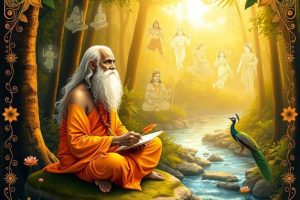
Author’s Vision: Realizing the Self through Knowledge and Detachment (Verses 35–62)
In verses 35 to 62 of the Sri Rama Gita, the author—Sage Valmiki, through the voice of Lord Rama—offers profound philosophical insight rooted in Advaita Vedanta. These teachings are intended not merely as abstract philosophy but as practical guidance for the sincere spiritual seeker.
The author is trying to tell us that our true nature is not the body or the mind, but the eternal, unchanging Self (Atman), which is pure consciousness. Due to ignorance (avidya), we wrongly identify with the ego and the material world, resulting in bondage, suffering, and the cycle of rebirth. This delusion can only be removed through direct knowledge (Jnana) and inner renunciation, not by outer rituals or mere abandonment of duties.
He emphasizes that liberation (moksha) is not something to be attained in the future, but rather the recognition of what we always are—the infinite Self. The mind, when attached, is the source of bondage; when purified through knowledge, it becomes the means of liberation.
Ultimately, the author urges us to turn inward, discriminate between the real and unreal, and abide in the Self with detachment and equanimity. His message is clear: Know thyself, and be free.
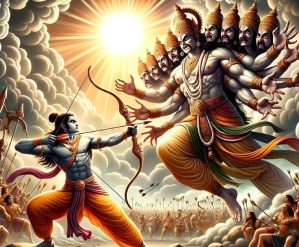
Significance of Verses 35–62: The Heart of Self-Knowledge in Sri Rama Gita
Verses 35 to 62 of the Sri Rama Gita hold immense spiritual significance as they present the core teachings of Advaita Vedanta in a concise and direct manner. These verses highlight the true nature of the Self as eternal, formless, and beyond all actions, reminding the seeker that liberation is not achieved through external means but through Self-realization.
The importance lies in their practical guidance: they teach how to overcome ignorance, detach from the unreal, and rest in the awareness of the Self. These teachings are especially valuable for sincere aspirants seeking inner peace, clarity, and freedom from the cycle of birth and death.
In essence, these verses serve as a roadmap to liberation (moksha)—emphasizing inner renunciation, the falsity of worldly appearances, and the transformative power of self-knowledge. For More Information Click Here

Conclusion
Verses 35 to 62 of the Sri Rama Gita serve as a profound spiritual guide, emphasizing that true freedom lies in recognizing the Self as pure consciousness, untouched by the world. Through clear knowledge, inner detachment, and deep contemplation, one transcends illusion and abides in the eternal truth. These teachings inspire the seeker to turn inward, realize their divine nature, and attain liberation here and now.