Introduction to Sruti Sara Samudharana
Sruti Sara Samudharana is a profound Vedantic text composed by Sri Totakacharya, one of the four chief disciples of Adi Shankaracharya. The title means “Essence of the Upanishads brought out like pearls from the ocean,” symbolizing its role in distilling the core teachings of the Vedas. This work is written in simple yet powerful verses, making subtle truths of Advaita Vedanta accessible to seekers. It presents the essence of Brahman, Atman, and liberation in a concise and structured manner. Through logical reasoning and scriptural authority, it removes misconceptions and guides the aspirant towards self-realization. Thus, it serves as a practical bridge between deep Upanishadic wisdom and the seeker’s journey to truth. For More Information Click Here

Key Verses and Their Explanations from Sruti Sara Samudharana
The verses of Sruti Sara Samudharana beautifully summarize the essence of Advaita Vedanta in concise poetic form. Each verse presents a clear teaching drawn from the Upanishads, focusing on the nature of the Self, the illusory play of Maya, and the realization of Brahman as the only reality. For example, one important verse declares that the Atman is ever pure, changeless, and untouched by worldly actions, stressing that bondage is only due to ignorance. Another highlights the illusory nature of duality, explaining that just as rope mistaken for a snake creates fear, ignorance of Brahman creates samsara. These verses act as guiding lamps, leading seekers from confusion to clarity.
Key Verses
1. Verse 2 – The Nature of the Self
“The Atman is ever pure, eternal, formless, and beyond all limitations.”
This verse teaches that the Self is not touched by sin or merit, joy or sorrow. It is the substratum of all, unchanging and infinite.
2. Verse 9 – Illusion of the World
“Just as a rope is mistaken for a snake, the world is mistaken as real due to ignorance.”
The world appears real only because of avidya (ignorance). Realizing Brahman as the rope removes fear and delusion, restoring clarity.
3. Verse 13 – Brahman Alone Exists
“All names and forms are mere superimpositions; Brahman alone is the one reality.”
Diversity is only an appearance; the underlying essence of everything is Brahman, the non-dual truth revealed by the Upanishads.
4. Verse 22 – The False Ego
“The body, mind, and senses are not the Self; the ego is a mistaken identity.”
Liberation comes when one understands that the real ‘I’ is pure consciousness, not the body or the changing mind.
5. Verse 33 – Liberation through Knowledge
“Ignorance binds, knowledge liberates; the realized one abides as Brahman here and now.”
Moksha is not attained elsewhere but is the recognition of one’s true nature, attained through Vedantic inquiry and self-realization.
These verses capture the essence of Advaita Vedanta in simple yet powerful ways, making the text a treasure for seekers. For More Information Click Here
The Life and Legacy of Sri Totakacharya
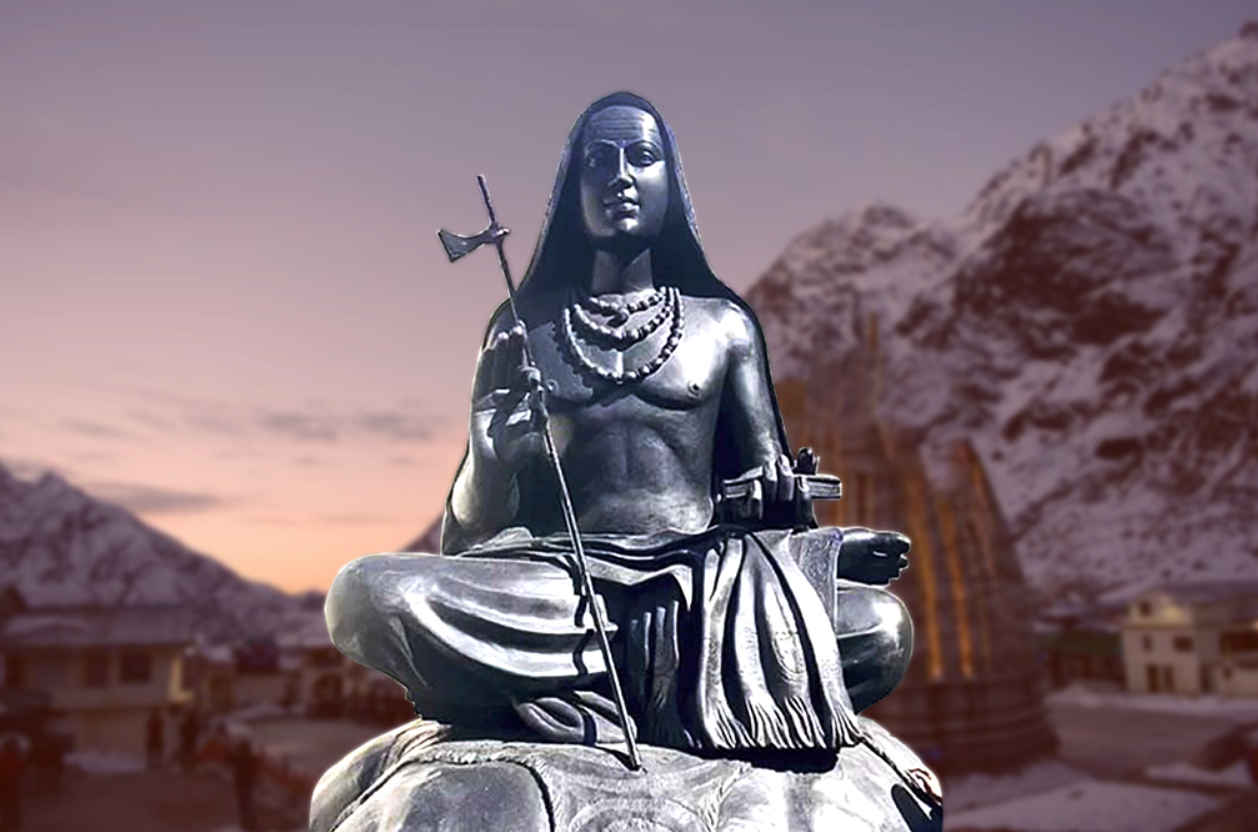
Sri Totakacharya, born as Giri, is remembered as one of the four shining pillars of Adi Shankaracharya’s spiritual mission. Unlike his fellow disciples who were already scholars, Giri was known for his humility, devotion, and tireless service to his Guru. His deep faith often made him seem slow in grasping scriptural learning, but his heart was steeped in surrender. One day, seeing his disciple’s unshakable devotion, Adi Shankaracharya blessed him with divine knowledge. In that instant, Giri’s intellect blossomed, and he composed exquisite verses in the intricate Totaka meter, astonishing everyone. From that day, he came to be known as Totakacharya.
Totakacharya’s work, Sruti Sara Samudharana, reflects this divine transformation. It distills the profound truths of the Upanishads into simple, lucid verses that even a seeker without vast scriptural study can grasp. His life shows that spiritual realization is not merely the fruit of scholarship but also of devotion, humility, and grace. Later, he was entrusted with the Jyotir Math in Badrinath, one of the four great monasteries founded by Shankaracharya, where he continued teaching Advaita Vedanta. His legacy stands as an inspiration to seekers—that steadfast devotion and surrender to the Guru can open the door to the highest wisdom. For More Information Click Here
As Totakacharya himself declares in Sruti Sara Samudharana:
“The Self is ever pure, untouched, and beyond all actions—realizing this alone frees one from the bondage of birth and death.”

Importance of Sruti Sara Samudharana
Sruti Sara Samudharana holds a special place in Vedantic literature as it condenses the vast ocean of Upanishadic wisdom into simple yet powerful verses. Unlike lengthy commentaries, this text captures the core essence (sara) of the scriptures in a way that is both accessible to beginners and profound for advanced seekers. It emphasizes the non-dual truth that Brahman alone exists, while the world of multiplicity is an illusion born of ignorance. The text guides aspirants to shed false identification with the body and mind and realize the Self as pure consciousness. By presenting the heart of Advaita Vedanta in crisp poetic form, Totakacharya created a practical manual for liberation. For More Information Click Here
A significant verse declares:
“Knowledge alone is liberation; ignorance alone is bondage. When the Self is known as Brahman, nothing else remains to bind.”

Conclusion
Sruti Sara Samudharana stands as a timeless jewel in the Advaita Vedanta tradition, offering seekers a clear pathway from ignorance to realization. Its verses remind us that the true Self is ever-pure, untouched, and free, while bondage exists only in the mind’s misidentification. Totakacharya’s work distills the wisdom of the Upanishads into a form that is not only intellectually satisfying but also deeply practical for meditation and self-inquiry. For modern readers, it serves as both a guide and an inspiration, showing that the highest knowledge is within reach when approached with faith, devotion, and inquiry.
A concluding verse beautifully states:
“When one realizes the Self as Brahman, eternal and infinite, there is nothing more to know, nothing more to attain.”