Introduction
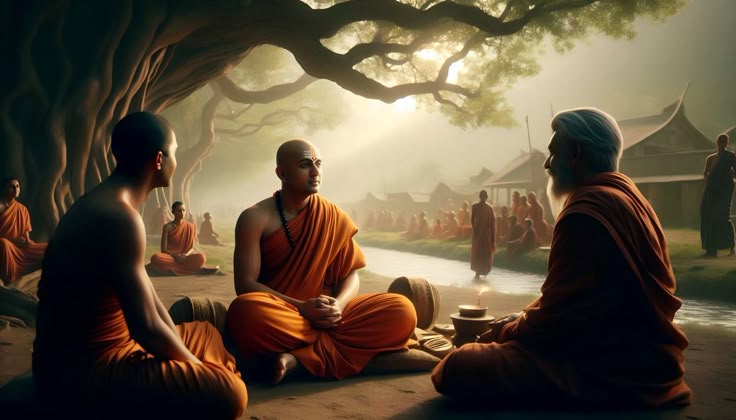
The Nārada Parivrājaka Upaniṣad is a minor Upanishad of the Atharva Veda, belonging to the group of Sannyasa Upanishads. It provides detailed guidance on the life of renunciation (sannyasa), especially for wandering ascetics (parivrājaka). Presented in the form of teachings attributed to the sage Nārada, it describes the ideals, conduct, and ultimate goal of those who renounce worldly life in pursuit of liberation (moksha). This text is considered a practical manual for renouncers, laying down ethical rules, mental attitudes, and contemplative practices. Though not as widely known as some other Upanishads, it has had deep influence on monastic traditions within Vedanta. Click Here To More Detail.

Themes
The Ideal of Renunciation
The Upanishad highlights the transition from household life to renunciation, where one gives up all possessions, social ties, and duties to seek the Self alone.
The Conduct of a Parivrājaka
Detailed instructions are given for the behavior of a wandering ascetic — simplicity, self-restraint, non-violence, detachment, and humility are emphasized.
The Inner Attitude
The renouncer is to cultivate equanimity, seeing all beings as the Self, abandoning pride, and living free from attachment to rituals, wealth, or social recognition.
Liberation through Knowledge
Unlike ritualistic texts, this Upanishad stresses that true freedom comes from realizing the Self, not from external actions. Renunciation is meaningful only when coupled with knowledge of Brahman.
Universality of the Path
Though socially distinct from householders, the renouncer’s path is portrayed as open to anyone who feels the call to seek truth beyond worldly ties. Click Here To NaradaparivrajakaUpanishad.

How to Study It
Read traditional commentaries
Explore Advaita Vedanta and other schools’ interpretations, noting how they see renunciation as either the supreme duty or one stage on the path to liberation.
Reflect on detachment
Consider the meaning of giving up not only material possessions but also ego and desire.
Study alongside other Sannyasa Upanishads
Compare it with texts like the Jabala or Paramahamsa Upanishads to see variations in the ideals of renunciation.
Apply practically (with caution)
While full renunciation is not for everyone, reflecting on simplicity, non-attachment, and self-control can enrich spiritual practice in daily life. Click Here To NaradaparivrajakaUpanishad.
Meditate on the Self
Use the teachings as inspiration to cultivate direct inner awareness of Brahman beyond roles and identities.
Why Study It
- It presents one of the clearest ancient guidelines for the life of a wandering monk.
- It emphasizes that true renunciation is inward, not merely external.
- It shows how Upanishadic wisdom moves from household duties to the ultimate freedom of sannyasa.
- It offers timeless lessons in detachment, humility, and simplicity, relevant even for seekers who remain in society.
- Historically, it shaped renunciate traditions in Advaita Vedanta and broader Hindu monastic life. Click Here To NaradaparivrajakaUpanishad.

Conclusion
The Nārada Parivrājaka Upaniṣad serves as a spiritual charter for the wandering monk, presenting renunciation as both a discipline and a realization. It teaches that liberation is attained not through rituals or possessions but through knowledge of the Self, lived out in detachment and simplicity. By describing the lifestyle, ethics, and vision of a true renouncer, it links the ancient Upanishadic quest for Brahman to the practical life of asceticism. For both monks and householders, its message stands as a reminder that freedom comes through inner renunciation, equanimity, and realization of the eternal Self.
Join Our Classes:
The Upanishads are more than just ancient texts—they are timeless guides to living with clarity, balance, and inner peace. Our classes make their profound wisdom easy to understand and apply in everyday life. Join us to explore these teachings and discover a new way of seeing yourself and the world!