Introduction
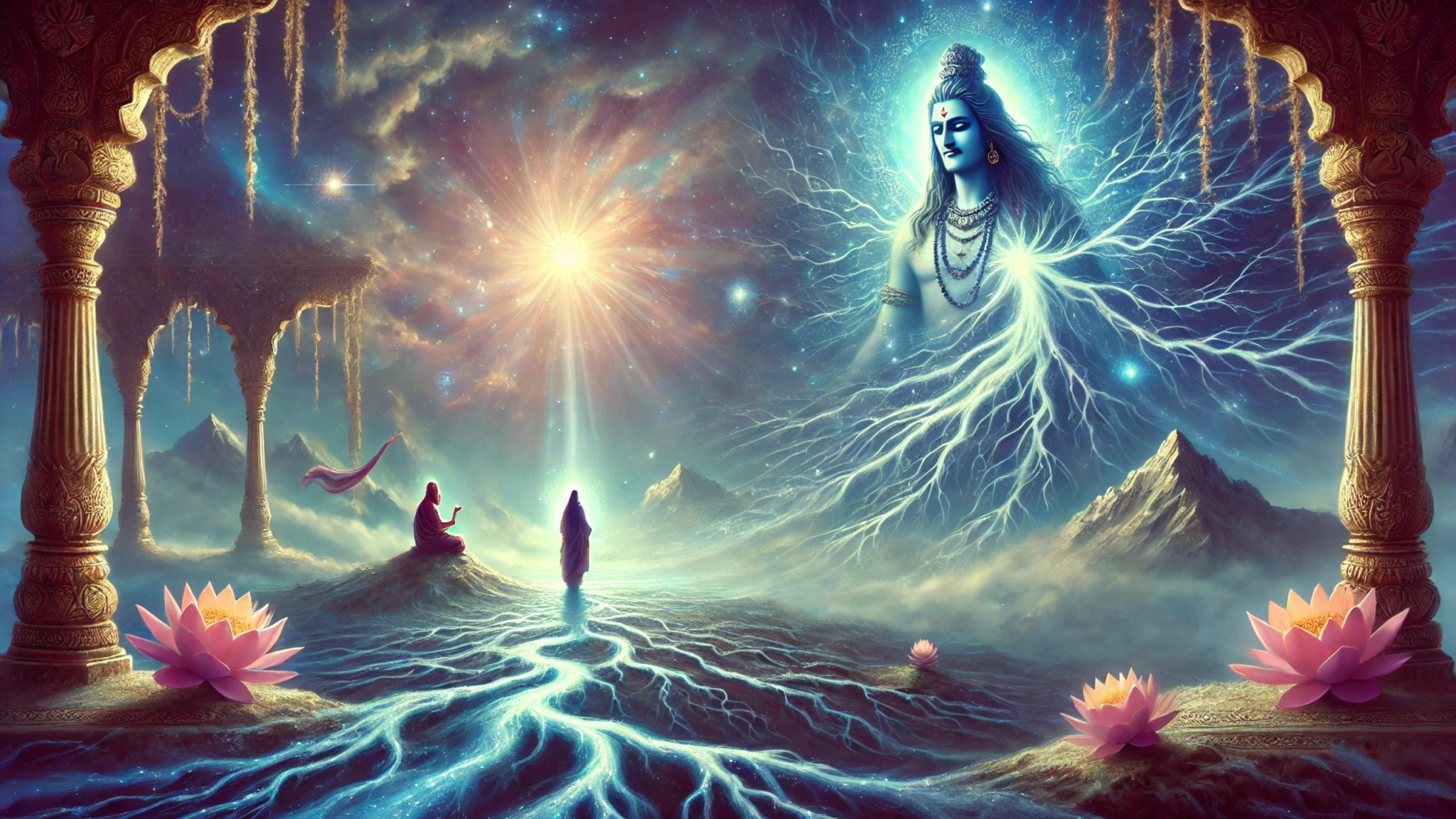
The Paingala Upanishad is a minor Upanishad associated with the Sama Veda and belongs to the group of Vedantic texts that elaborate on the nature of Brahman, the Self, and liberation. It is framed as a dialogue between Yajnavalkya, the great sage, and Paingala, his disciple. This Upanishad explains in detail the relationship between the individual self (jīva) and the Supreme Self (Brahman), the stages of spiritual practice, and the ultimate realization of non-duality (Advaita). Unlike the concise Īśa Upanishad, the Paingala Upanishad is more explanatory, clarifying the metaphysical principles of Vedānta through a guru–śiṣya (teacher–student) dialogue. It emphasizes meditation, renunciation, and the understanding that Brahman alone is real while the world is ultimately illusory (māyā). Click Here To More Detail.
Themes
From the teachings of the Paingala Upanishad, the main themes include:
Unity of Jīva and Brahman
The Upanishad declares that the individual self is none other than the Supreme Self when stripped of ignorance. Liberation arises when one realizes this non-duality.
The Role of Māyā
It describes māyā as the cause of bondage, making the jīva identify with body and mind. Overcoming māyā through knowledge leads to freedom.
Renunciation and Detachment
Like many Vedantic texts, it stresses renunciation (sannyāsa) — not necessarily physical withdrawal but an inner detachment from worldly entanglements and desires.
Meditation and Knowledge
The text underscores the necessity of śravaṇa (listening), manana (reflection), and nididhyāsana (deep meditation) on Vedantic truths for realizing Brahman. Both meditation and inquiry are presented as essential tools.
Liberation (Mokṣa)
The Upanishad teaches that mokṣa is attained not by ritual action but by Self-knowledge. The liberated soul is free from birth and death, abiding as pure consciousness. Click Here To Paingala Upanishad.

How to Study It
To study the Paingala Upanishad effectively:
- Read translations with commentaries
Compare interpretations from Advaita Vedānta and other traditions that use this Upanishad to support their philosophies. - Reflect on the guru–śiṣya dialogue
Study how Yajnavalkya gradually leads Paingala to deeper truths, moving from theory to direct realization. - Meditate on key teachings
Ponder on statements of non-duality, such as “the jīva is not different from Brahman.” Use them in meditation. - Compare with major Upanishads
Contrast its detailed Advaitic explanations with shorter Upanishads like the Īśa or Māṇḍūkya, which are more aphoristic. - Apply in daily life
Cultivate detachment, practice self-inquiry (“Who am I?”), and see through the play of māyā while engaging in worldly duties. Click Here To Paingala Upanishad.

Why Study It
Studying the Paingala Upanishad is valuable because:
- It gives a systematic Advaitic explanation of the relationship between jīva, Brahman, and māyā.
- It emphasizes the practical steps of listening, reflection, and meditation for Self-realization.
- It highlights renunciation not as rejection of life but as inner freedom from bondage.
- It deepens one’s understanding of liberation beyond ritual, showing that knowledge alone is the path to immortality.
- Philosophically, it strengthens the Vedāntic vision of non-duality and complements other Upanishads by elaborating on key metaphysical ideas. Click Here To Paingala Upanishad.
Conclusion
The Paingala Upanishad, though classified as a minor Upanishad, carries profound Advaitic wisdom. Through the dialogue of Yajnavalkya and Paingala, it sets forth the truths of Brahman as the sole reality and the means to transcend māyā through knowledge and renunciation. It bridges philosophy and practice by guiding the seeker from conceptual understanding to meditative realization. Its message is timeless: awaken to the unity of the Self and Brahman, renounce bondage, and live in the freedom of non-dual awareness.
Join Our Classes:
The Upanishads are more than just ancient texts—they are timeless guides to living with clarity, balance, and inner peace. Our classes make their profound wisdom easy to understand and apply in everyday life. Join us to explore these teachings and discover a new way of seeing yourself and the world!