The True Meaning of Understanding Atma
Understanding Atma means realizing the true Self, which is beyond the body, mind, and intellect. It is the innermost essence that is eternal, pure, and unchanging. Unlike the physical body that perishes and the mind that fluctuates, Atma remains as the constant witness to all experiences. Scriptures describe it as Sat-Chit-Ananda—existence, consciousness, and bliss absolute. To understand Atma is to shift awareness from the temporary outer layers (gross, subtle, causal bodies and five sheaths) to the Self that illumines them. True self-knowledge is recognizing this Atma as not different from Brahman, the infinite reality. For More Information Click Here

The Three States of Atma
The three states of Atma are waking (jagrat), dream (svapna), and deep sleep (suṣupti). In the waking state, the Self identifies with the gross body and experiences the external world through the senses. In the dream state, it identifies with the subtle body and projects an inner world created by the mind. In deep sleep, the Self rests in the causal body, where there is no duality or awareness of the external or internal world. Yet, in all these states, Atma itself remains unchanged as the witness. The Upanishads emphasize that realizing this unchanging witness leads to the understanding of Turiya, the fourth state beyond all three. For More Information Click Here
Adi Shankaracharya’s Vision of Atma
Adi Shankaracharya explains that Atma is the ever-present, self-luminous reality distinct from the body, mind, and senses. He emphasizes that ignorance (avidya) makes us falsely identify with the perishable body and fleeting experiences, creating bondage and suffering. Through discrimination (viveka), detachment (vairagya), and self-inquiry (atma-vichra), one realizes the Self as pure consciousness, untouched by birth and death. Shankara describes Atma as nirguna (without attributes), nitya (eternal), and identical with Brahman—the infinite reality. Liberation (mokṣa) is not gaining something new, but recognizing one’s own true nature as limitless existence-consciousness-bliss. Thus, for Shankara, understanding Atma is the heart of Advaita Vedanta. For More Information Click Here
The Path to Realizing Atma
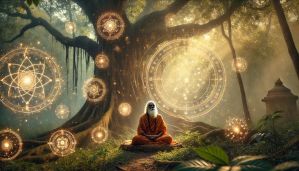
Atma is not something to be newly attained, because it is our very own true nature. What is required is the removal of ignorance that hides it. The scriptures teach that realization comes through sravana (listening to the Upanishadic truth), manana (deep reflection to remove doubts), and nididhyasana (constant meditation to internalize the truth). By discriminating between the eternal and the non-eternal, and detaching from worldly illusions, the seeker recognizes that the Self is not the body or mind, but pure consciousness. Realizing Atma means awakening to the fact that “I am Brahman” (Aham Brahmasmi), the infinite reality beyond birth and death. In this realization lies true freedom and bliss. For More Information Click Here

Conclusion
Understanding Atma is the essence of all spiritual pursuit, for it reveals our true identity beyond body, mind, and worldly roles. The Upanishads and Adi Shankaracharya affirm that Atma is eternal, pure consciousness—ever free and blissful. By removing ignorance through knowledge, reflection, and meditation, one realizes that the Self and Brahman are one. This realization liberates us from fear, sorrow, and the cycle of birth and death. Thus, the journey to know Atma is not about acquiring something new, but about awakening to what we already are—the infinite, undivided Self.