Upadesa Sahasri – Summary and Detailed Breakdown
1. Overview of the Upadesa Sahasri
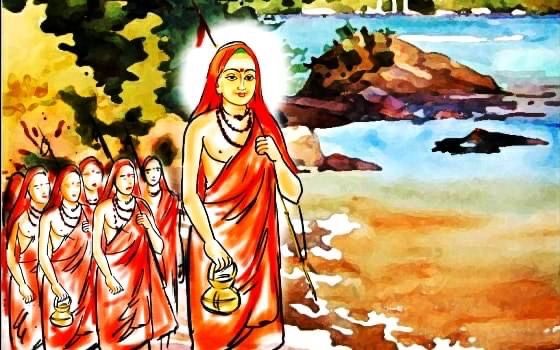
- Author: Ādi Śaṅkarācārya
- Nature: A lyrical, poetic treatise presenting core Advaita Vedānta teachings in concise aphoristic verses (slokas).
- Purpose: To guide spiritual aspirants on the path of Self-realization through direct knowledge (jñāna), emphasizing discrimination between the real and unreal and dispassion (vairāgya) Click Here To Access more other text.
2. Major Themes and Topics Covered
Discrimination (Viveka) – Knowing the Real from the Unreal
One of the central teachings of Upadeśa Sāhasrī is viveka, the power to discern between the eternal (nitya) and the non-eternal (anitya). Śaṅkara emphasizes that the ātman (Self) is changeless, ever-luminous, and beyond birth and death, while the body, mind, and sensory world are transient. This discrimination is the gateway to Self-knowledge. The seeker is urged to question all identifications with name, form, and function, realizing that the true “I” is untouched by worldly roles, experiences, or suffering.
Detachment (Vairāgya) – Cultivating Dispassion
Detachment is not escapism, but freedom from dependence on worldly objects. Upadeśa Sāhasrī instructs the aspirant to withdraw emotional investment from fleeting pleasures and pains. Vairāgya purifies the mind and prepares it to receive Self-knowledge. By understanding the impermanence of external pursuits, the seeker naturally turns inward. Śaṅkara presents vairāgya as a necessary condition for clarity, urging the mind to detach from both gross enjoyments and subtle identifications like pride, memory, and intellectual arrogance.
Qualities of the Seeker – The Prepared Mind (Adhikāritva)
The text outlines the qualifications of an ideal student: humility (vinaya), faith (śraddhā), mental discipline (śama), and deep yearning for liberation (mumukṣutva). Mere academic study of Vedānta is not enough. Without these qualities, Self-knowledge does not take root. Śaṅkara insists that even brilliant intellects fail if the heart is clouded by ego, pride, or doubt. The seeker must approach the teaching with reverence, devotion, and a calm, one-pointed mind Click view PDF.
Guru and Sruti – The Role of Teacher and Scripture
A defining feature of Upadeśa Sāhasrī is its insistence on a qualified guru and authentic scriptures (śruti) as the only valid means to liberation. Śaṅkara compares the guru to a mirror that reveals the Self clearly, without distortion. Self-effort is important, but realization dawns only through the unfolding of mahāvākyas (“tat tvam asi,” etc.) taught by one who has already awakened. Without proper guidance, the mind falls prey to confusion or intellectual pride.

Self-Knowledge (Ātma-Jñāna) – Realizing One’s True Nature
The heart of the teaching is that the individual Self (jīva) is none other than Brahman, the infinite, non-dual reality. The illusion of separation arises only due to ignorance (avidyā). Through study, reflection, and meditation, this false sense of individuality is removed. Śaṅkara maintains that realization is not the result of action (karma) but direct, immediate knowledge (aparokṣa jñāna)—knowing oneself as untouched awareness, beyond time, space, and causality.
Renunciation and Meditation – Inner Freedom
Upadeśa Sāhasrī promotes inner renunciation over mere external withdrawal. What must be renounced is not action itself, but the identification with the actor. Meditation (nididhyāsana) on the Self as pure consciousness is prescribed to internalize this truth. The goal is not altered states but clarity and stability of awareness. Liberation (mokṣa) is recognizing that one was never bound. Śaṅkara advises deep, sustained contemplation on the mahāvākyas to dissolve residual ignorance Click view PDF.
Discrimination (Viveka)
Śaṅkara stresses that spiritual progress begins with viveka, the firm discrimination between what is eternal (the Self, Brahman) and what is transient (body, mind, senses). This discrimination removes the confusion caused by ignorance (avidyā) and helps the seeker detach from false identifications, paving the way for deeper insight into one’s true nature.
Detachment (Vairāgya)
True detachment is not mere physical renunciation but an inner turning away from attachment to sensory objects and fleeting pleasures. Śaṅkara teaches that vairāgya is essential because it calms the restless mind, making it fit for the absorption of Self-knowledge. Without vairāgya, the seeker remains entangled in the cycle of birth and death (saṃsāra).
Qualities of the Seeker
Humility, faith in the guru and scriptures, perseverance, and a calm, balanced mind are repeatedly underscored. These qualities prepare the aspirant to receive the subtle teachings and prevent intellectual arrogance or skepticism from blocking realization.
Role of Guru and Scriptures
Śaṅkara highlights that knowledge arises only through the transmission of the guru and study of the Upaniṣads, Bhagavad Gītā, and Brahma Sūtras. The guru dispels doubts, gives clarifications, and imparts the correct understanding of non-duality.

Self-Knowledge and Realization
The heart of the Upadesa Sahasri is the assertion that liberation (mokṣa) is attained solely by direct, intuitive realization of the Self as Brahman. This realization is beyond words and intellect and is the end of all duality, sorrow, and bondage.
Renunciation and Meditation
Śaṅkara advocates for internal renunciation, where desires and egoistic notions are relinquished through meditation. The meditative practice focuses on the ātman as pure consciousness, beyond all attributes and phenomena Click view PDF.
4. Suggested Study Plan for Upadesa Sahasri
In-Depth Study (30–40 Days) – Line-by-Line Engagement
This is the heart of textual engagement. Study the verses systematically, preferably with a traditional commentary such as that of Śaṅkara himself. Spend time unpacking Sanskrit terms like ātman, avidyā, jñāna, and adhyāsa. The goal here is intellectual clarity. After each verse, pause to reflect or journal what the verse is revealing about your identity, the nature of reality, and the path to liberation. Daily meditation on selected verses is highly recommended to digest the teaching Click view PDF.
Reflective Contemplation (2–3 Months) – Deepening Insight
Having gained conceptual clarity, now shift from intellectual understanding to introspective contemplation (manana and nididhyāsana). Observe how the themes of viveka and vairāgya interplay in your own daily life. Challenge the lingering assumptions of duality. Practice observing your mind, identifying the misidentification with body and thoughts, and repeatedly affirming the non-dual vision—“I am not the doer; I am pure awareness.” This stage is transformative and demands sincere inner work.
Mastery Stage (6+ Months) – Stabilizing Realization
At this level, Upadeśa Sāhasrī becomes less a book and more a living mirror of the Self. Daily life becomes the practice. With or without the text in hand, one engages in constant Self-inquiry—“Who am I?” One may revisit verses periodically, but the emphasis is now on internalization (nididhyāsana) and living the truth with the guidance of a guru or senior sādhaka. This phase is lifelong for most seekers and culminates in stable abidance in Brahman, the Self Click view PDF.
5. Significance and Spiritual Impact
- Bridges philosophy and practice: The text is both philosophical and practical, guiding seekers on how to integrate Advaita wisdom into daily life.
- Emphasizes direct experience: It cuts through rituals and theoretical speculation to focus on immediate Self-realization.
- Universal relevance: Though rooted in Vedānta, its principles of discrimination and detachment apply broadly to spiritual aspirants across traditions.
- Foundation for Advaita study: Essential reading for any serious student wanting a clear, systematic approach to Advaita Vedānta.

Why Study the Upadesa Sahasri?
Upadeśa Sāhasrī is a practical spiritual guide blending philosophy and practice, offering clear steps toward Self-realization. It emphasizes discrimination (viveka), detachment (vairāgya), and meditation (nididhyāsana), helping seekers dissolve ignorance and realize the Self. Its concise verses, rooted in Ādi Śaṅkara’s Advaita Vedānta, are ideal for deepening non-dual understanding and guiding sincere aspirants toward liberation. Click view PDF.
Suggested Study Duration
- Introductory Level (7–10 days):
Read summaries or simplified commentaries to get a broad overview of key themes such as discrimination, detachment, and Self-knowledge. This phase builds foundational familiarity. - In-Depth Study (30–40 days):
Study the text verse-by-verse alongside classical commentaries or explanations. Reflect deeply on each concept, cross-referencing with other Vedānta scriptures like the Upaniṣads and Bhagavad Gītā. - Reflective Phase (2–3 months):
Contemplate the teachings in daily life, practice meditation and self-inquiry, and work on integrating discrimination and detachment into your mindset. This phase solidifies understanding. - Mastery and Internalization (6+ months or ongoing):
Continuous study and practice, preferably under a guru’s guidance. Engage in nididhyāsana (profound meditation), spiritual discussions, and teaching others, allowing the wisdom to permeate your being.
Conclusion
The Upadesa Sahasri stands as a timeless beacon illuminating the path to liberation. Its teachings clarify that liberation is not a distant goal achieved through external rituals or intellectual exercises but the direct, immediate recognition of one’s true nature as infinite consciousness. By studying this text diligently, aspirants gain the necessary tools to overcome ignorance and false identifications, cultivate unwavering dispassion, and embrace the eternal Self within. Whether one is a beginner seeking clarity or an advanced practitioner deepening realization, the Upadesa Sahasri remains a pivotal guide, encapsulating the essence of Ādi Śaṅkarācārya’s Advaita Vedānta in a form that is both accessible and transformative.