Introduction
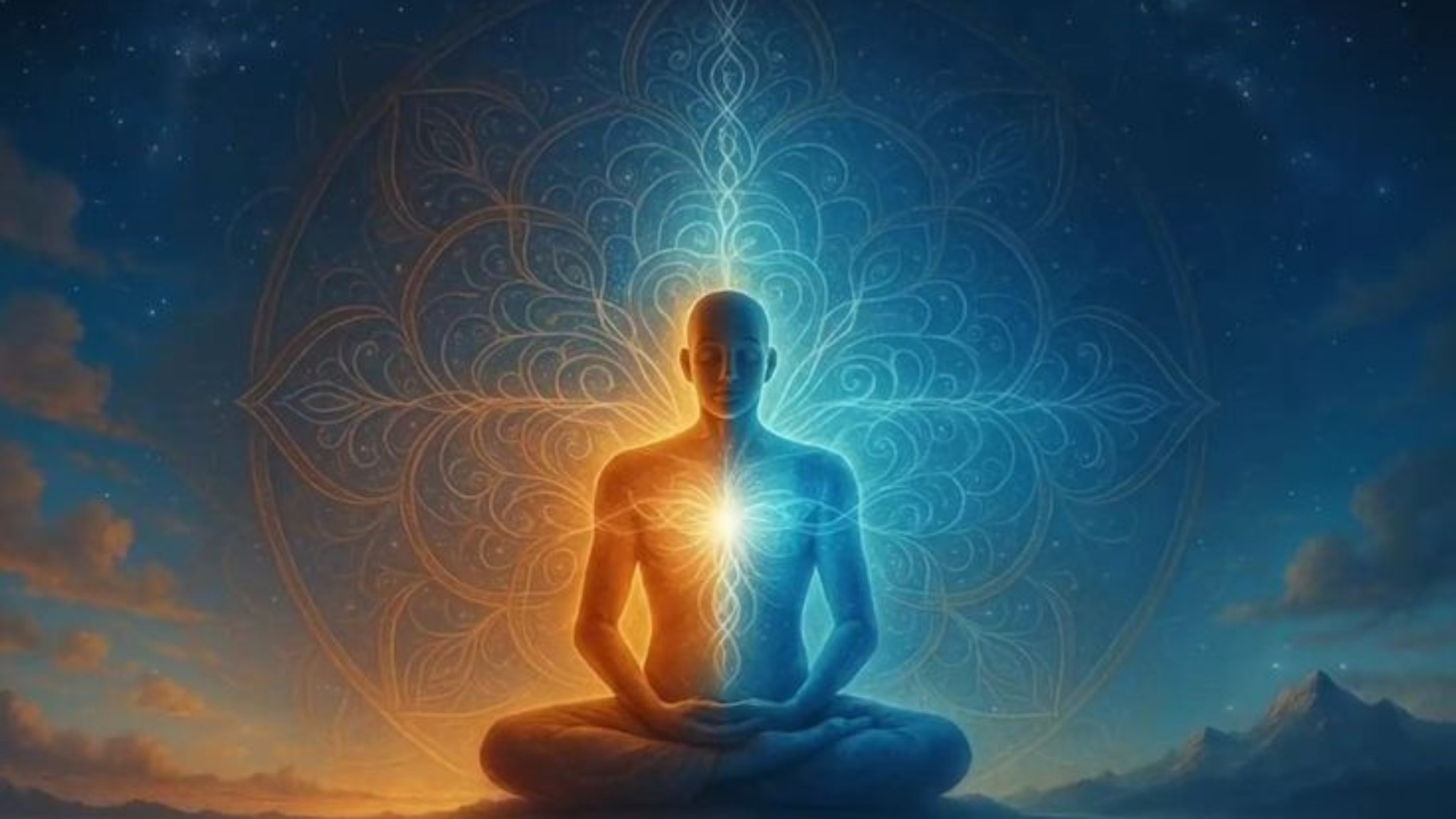
The Kop Nishad Mantra meditation is a profound teaching on the eternal nature of consciousness (Atma) and its relationship with the universal Brahman. In this mantra, Lord Yama uses powerful analogies—such as fire hidden within wood and a fetus concealed in the womb—to illustrate that consciousness is always present but not directly visible to the senses. Just as hidden fire sustains warmth and life when revealed, Brahman underlies the universe as its eternal substratum. The meditation emphasizes that the mind and senses obscure the true self, while the Atma remains immutable, eternal, and untouched by worldly fluctuations. By practicing this meditation, seekers can transcend identification with body and mind, realizing their true nature as pure consciousness, one with Brahman. Click Here To More Detail.

Themes
- Hidden Consciousness: Analogies of fire and fetus show the concealed yet ever-present Atma.
- Sun as Symbol: The cosmic cycle of creation, sustenance, and dissolution reflects Brahman’s presence.
- Hierarchy of Control: Senses → governed by devatas → ultimately governed by Brahman.
- Atma vs Mind/Senses: The distinction between transient faculties and the eternal witness.
- Meditation & Mantra: Repetition as a tool to internalize spiritual truths.
- Peace as Fruit: Realization of Atma leads to harmony at physical, mental, and spiritual levels.
Keywords
- Atma – Eternal self, pure consciousness.
- Brahman – Universal substratum, supreme reality.
- Devatas – Deities governing sense organs.
- Sakshi – Witness consciousness.
- Avidya – Ignorance or obscuration of true self.
- Pratibimba – Reflection or hidden presence of consciousness.
- Om Shanti – Invocation of peace at three levels (body, mind, soul). Click To Access For Video.
Why Study This Teaching?
Studying this mantra is vital because it provides a map of existence: the senses are governed by devatas, yet devatas themselves depend on Brahman. It teaches us to shift focus inward, recognizing that the ultimate power is not external rituals or sensory dominance but the eternal consciousness within. By reflecting on these analogies, one gains the clarity that our essence is immortal, untouched by decay or death. This knowledge dissolves fear, transforms our worldview, and aligns us with the eternal truth.
Benefits of Study & Practice
- Spiritual clarity: Understanding the difference between body, senses, and Atma.
- Fearlessness: Realizing consciousness is indestructible.
- Inner peace: Mantra repetition quiets the restless mind.
- Detachment from illusion: Recognizing that worldly experiences are transient.
- Direct self-realization: Internalizing Brahman as the substratum of existence.
- Harmony: “Om Shanti Shanti Shanti” fosters peace on physical, mental, and spiritual levels. Click To Access For Video.
How Many Times to Study Per Day?
- Morning (dawn) – Aligning with rising sun; ideal for invoking consciousness as source of light.
- Evening (sunset) – Reflecting on dissolution and returning to Atma.
- Before Sleep – To detach from sensory distractions and rest in awareness.
👉 Recommended: 2–3 times daily with 3 mantra repetitions each session. Consistency is more important than duration—the aim is to let the truth penetrate the subconscious. Click To Access For Video.
Conclusion
The Kop Nishad Mantra reveals that consciousness is eternal, concealed only by ignorance and the play of senses. Just as fire hidden in wood waits to be discovered, the Atma shines eternally within. Meditation on this mantra guides seekers to move beyond mind and senses, realizing themselves as the immutable witness, one with Brahman. The analogies of fire, fetus, and the sun connect the cosmic and individual, showing the unity of microcosm and macrocosm. Regular study and mantra repetition lead to fearlessness, detachment, peace, and ultimate liberation (moksha). The final invocation of “Om Shanti Shanti Shanti” reminds us that realization brings harmony across all levels of existence.