Introduction
Volume 21, Chapter 6 of Vichāra Sāgara undertakes a penetrating examination of the dream state (svapna), memory (smṛti), and the movement of the subtle body (sūkṣma śarīra) within consciousness. It inquires: What is the ontological status of dream-experience in relation to waking reality? Is memory a valid means of knowledge or merely a reflection of past cognition? The chapter addresses seekers whose intellect is active and discerning — the “manda-adhikārī” of the contemplative type, not dull, but inclined to excessive conceptualization. It refines their understanding by revealing how both dream and memory belong to subtler planes of mental projection, and how realization dawns only when the Witness (sākṣī) is discerned as distinct from all states of mind. Click Here To Access more other text.

Purpose of Study
This chapter is indispensable for aspirants who wish to:
- Comprehend the subtle distinctions between dream, waking, and memory, and their respective degrees of validity.
- Perceive how the mind becomes both the projector and perceiver of its own creations, binding itself within illusion.
- Cultivate the still intelligence that recognizes the Witness-Consciousness as ever-unchanged amidst the flow of experience.
It serves as a bridge between philosophical subtlety and meditative insight, guiding the seeker from intellectual restlessness toward poised Self-abidance. Click view PDF.
Recommended Approach to Study
1. Guided Reflection
Study under a teacher grounded in Advaita epistemology, who can indicate how svapna and smṛti differ not merely phenomenally but ontologically.
2. Contemplative Inquiry
After each passage, pause to ask:
- “Which state of consciousness is being illuminated — waking, dream, or memory?”
- “Am I identifying with the thought that remembers, or the Awareness that observes remembering?”
3. Meditative Assimilation
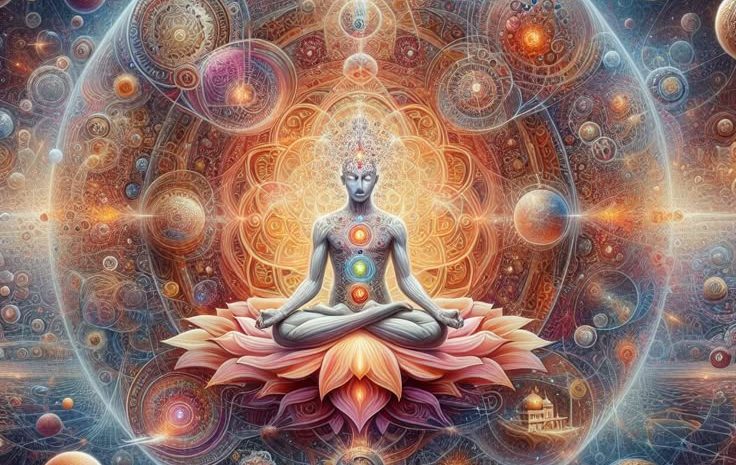
Rest inwardly in the intuition “I am the Witness of all states.” Observe how dream-images, waking perceptions, and recollections arise and dissolve within the same luminous background of awareness.
4. Reflective Journaling
- “When did I mistake memory for present perception?”
- “How does recognizing the witness behind remembrance alter my sense of identity?” Click view PDF.
Key Verses and Insights
On Dream and Memory
The text elucidates that the dream world is not mere fancy but a projection within the subtle body, arising when the senses are withdrawn. Though vivid, it holds no independent reality apart from the waking mind.
Memory, by contrast, is a re-presentation — a faint echo of prior perception sustained by latent impressions (vāsanās). It is not direct cognition (pratyakṣa), but a reflection of it, dependent upon the same consciousness that illumines both perception and recollection.
On Subtle-Body Movement
During sleep, the subtle body appears to travel, perceive, and experience; yet this “movement” is only apparent — a play of consciousness within itself. The Ātman never moves, never travels; it merely witnesses.
On the Method of Resolution (Anuvāda and Laya)
Through Anuvāda — re-statement and discrimination — each state is acknowledged as transient: “This is but memory, not present reality.”
Through Laya — dissolution — the identification with each state is gently withdrawn, until the mind subsides into the still Witness, which alone persists through waking, dream, and deep sleep. Click view PDF.
Vereses in 317
(३७१) उपोद्घातः — चतुर्थतरङ्गे उत्तमाधिकाऱिण उपदेशप्रकारो वर्णितः। पञ्चमतरङ्गे मध्यमाधिकाऱिण उपदेशप्रकारः कथितः। अस्मिन्तु तरङ्गे कनिष्ठाधिकाऱिण उपदेशप्रकारः निरूप्यते। यस्य तु संशया बहवो जायन्ते स तीक्ष्णबुद्धेः कनिष्ठाधिकाऱिणो भवति। संशया हि पापात्मानः। “संशयात्मा विनश्यति” (भ. गी. ४.४०) इति स्मृतिः। अथ तस्मिन् संशययुक्तिचातनतया यथायोग्यं गुरुमुखाच्छ्रुतेर्डेववेद्यं कृतकृत्यं उपजायते तस्मायां तरङ्गेऽयमुपपद्यते। कृतकृत्यबुद्धिः कनिष्ठाधिकारी। तस्मायोपदेशप्रकारोऽयमस्मिन् तरङ्गे वर्ण्यते। पञ्चमे तरङ्गे प्रणवोपासनानुगुणद्वैतिनिष्ठिनोपमिदमिदमुक्तम् — “चैतन्यं द्रविणं ज्ञानं तत्त्वमेव च ज्ञायते” इत्यादि।
आनन्दपदवाक्यः — “सर्वोपाधि समर्पणमेव” इति। तस्मिन्गुरोः रूपेण श्रुत्वा प्रश्नानुपूर्वतः ज्येष्ठो भ्रातरो ह्रस्वतर्कदृष्टः पृच्छति —
Transliteration
(371) Upodghātaḥ — Caturtha-taraṅge uttamādhikāriṇa upadeśa-prakāro varṇitaḥ; pañcama-taraṅge madhyamādhikāriṇa upadeśa-prakāraḥ kathitaḥ; asmin tu taraṅge kaniṣṭhādhikāriṇa upadeśa-prakāraḥ nirūpyate. Yasya tu saṁśayā bahavo jāyante, sa tīkṣṇabuddher kaniṣṭhādhikārī bhavati. Saṁśayā hi pāpātmānaḥ — “saṁśayātmā vinaśyati” (Bhagavad Gītā 4.40) iti smṛtiḥ. Atha tasmin saṁśaya-yukti-chālanatayā yathāyogyaṁ guru-mukhāt śruteḥ deva-vedyaṁ kṛtakṛtyaṁ upajāyate, tasmin taraṅge ’yam upapadyate. Kṛtakṛtya-buddhiḥ kaniṣṭhādhikārī. Tasmād upadeśa-prakāro ’yam asmin taraṅge varṇyate. Pañcame taraṅge praṇavopāsanānuguṇa-dvaitiniṣṭhino ’pi idam uktam — “chaitanyaṁ draviṇaṁ jñānaṁ tattvameva ca jñāyate” ityādi. Ānanda-pada-vākyaḥ — “sarvopādhi-samarpaṇam eva” iti. Tasmin guroḥ rūpeṇa śrutvā praśnānupūrva-taḥ jyaiṣṭho bhrātaraḥ hrasva-tarka-dṛṣṭaḥ pṛcchati —

Meaning (Explanation)
Introductory Overview (Upodghātaḥ):
- In the fourth wave (chapter) of Vichāra Sāgara, the method of instruction (upadeśa-prakāra) for the most qualified seeker (uttamādhikārī) was described.
- In the fifth wave, the method suitable for the intermediate seeker (madhyamādhikārī) was presented.
- Now, in this sixth wave (ṣaṣṭha-taraṅgaḥ), the teaching approach for the least qualified seeker (kaniṣṭha-adhikārī) is being elaborated. Click view PDF.
Who is the ‘Kaniṣṭha-adhikārī’?
The one who has many doubts and whose understanding is clouded by uncertainty is considered a lower-qualified aspirant. The scripture says:
“The man of doubt perishes.” — Bhagavad Gītā 4.40
Doubt (saṁśaya) is said to arise from an impure mind; thus, clarity and faith are the marks of spiritual maturity.
Purpose of this Chapter:
This section addresses how even such a seeker — through gradual clarification of reasoning and through the grace of the Guru’s instruction — can attain right understanding and inner fulfillment (kṛtakṛtya-buddhiḥ).
Hence, the methodology of instruction (upadeśa-prakāra) appropriate for such a student is detailed in this sixth chapter.
Reference to Previous Chapter:
In the previous (fifth) wave, which dealt with the madhyamādhikārī, it was said:
“Consciousness itself is wealth, knowledge, and reality — chaitanyaṁ draviṇaṁ jñānaṁ tattvam eva ca jñāyate.” Click view PDF.
In the Present Chapter:
The teaching for the lesser-qualified aspirant emphasizes surrender:
“Sarvopādhi-samarpaṇam eva” — True realization is the total surrender of all limiting adjuncts (upādhis).
Finally, the narrative voice shifts: the elder brother (symbolizing the higher intellect) responds to the younger brother’s question, representing the mind still attached to reasoning and partial understanding (tarka). Click view PDF.
Doctrinal Highlights
- Dream (Svapna) — A subtle projection within consciousness, real only to the dreamer.
- Memory (Smṛti) — A mental impression revived; dependent on past cognition, not a fresh act of knowing.
- Waking (Jāgrat) — The transactional order where the mind engages outwardly.
- Witness (Sākṣī) — The substratum of all states; changeless, self-luminous, untainted by the contents of mind.
Thus, cognition, remembrance, and imagination are merely waves upon the ocean of Consciousness; the Witness remains ever-still, untouched. Click view PDF.
Practical Contemplations
- Before study: Affirm silently — “I am the seer of all states; none of them define me.”
- After reading a section: Reflect — “In which state was my attention resting? Did I cling to the memory, or abide as its witness?”
- Meditation: Allow memories and thoughts to arise. Perceive their birth, subsistence, and dissolution in awareness — and rest as that Awareness itself. Click view PDF.
Benefits of Study
- Sharpens discrimination between the real and the reflected, between perception and memory.
- Dissolves subtle ego-identifications with the remembering mind.
- Stabilizes non-dual awareness by revealing the common Witness across all modes of cognition.
- Transforms over-intellectual inquiry into serene contemplation — jñāna ripened into nididhyāsana.
Relation to Other Volumes
Volume 20 disclosed the three orders of reality — transactional (vyāvahārika), apparent (pratibhāsika), and absolute (pāramārthika).
Volume 21, Chapter 6 advances this vision inwardly: rather than mapping cosmic orders, it analyses the inner theatre of consciousness, showing how dream and memory are lesser reflections of the waking state, and how all three are illumined by the same Turīya, the Fourth. Click view PDF.
Conclusion
Chapter 6 stands as a contemplative mirror for the subtle intellect. It invites the seeker to discern the ephemeral play of dream and memory, not to suppress them but to see them as waves within the unbroken expanse of Awareness.
When the distinction between the remembering mind and the witnessing consciousness is fully understood, thought becomes transparent, dream loses its spell, and the seeker rests effortlessly as the Self — the timeless, formless Turīya.
Join Our Classes:
The Vichara Sagara are more than just ancient texts—they are timeless guides to living with clarity, balance, and inner peace. Our classes make their profound wisdom easy to understand and apply in everyday life. Join us to explore these teachings and discover a new way of seeing yourself and the world!