Introduction
Tattva Bodha is a compact introductory prakarṇa-grantha attributed to Ādi Śaṅkara that lays out the basics of Vedānta: the qualifications for a student, discrimination of the real and unreal, and the means to realization. The opening chapter (Sādhana Chatuṣṭaya) lists the four essentials a seeker must cultivate before discriminative enquiry (tattva-viveka) can ripen. Click Here To More Detail.

Benefit of studying Sādhana-Chatuṣṭaya (very brief)
Studying these verses (and practising what they teach) gives: clearer discrimination between permanent and impermanent, inner stability and reduced attachment, readiness for śravaṇa-manana-nididhyāsana (hearing → reflection → deep meditation), and finally eligibility for jñāna (liberating knowledge).
The Eight (step-by-step)
Below I present the text broken into eight compact items (these correspond to the canonical lines and their immediate glosses).
1) Opening statement — context
Sanskrit (Devanagari)
साधनचतुष्टयसम्पन्नाधिकारिणां मोक्षसाधनभूतं तत्त्वविवेकप्रकारं वक्ष्यामः ।
IAST
sādhanachatuṣṭayasampannādhikāriṇāṃ mokṣasādhanabhūtaṃ tattvavivekaprakāraṃ vakṣyāmaḥ.
Literal gloss
“I shall explain the method of tattva-viveka (discrimination of Reality) — which is a means for liberation — to those qualified by the fourfold means (sādhana-chatuṣṭaya).”
Explanation (step-by-step)
• sādhanachatuṣṭaya-sampanna-adhikāriṇām — the teaching is for students possessing (sampanna) the four qualifications.
• mokṣa-sādhanabhūtam — the teaching is a means (sādhanam) to mokṣa.
• tattva-viveka-prakāram — the subject-matter is clear discriminative enquiry into what is real.
(Use this verse to set the intention: the chapter’s aim is practical liberation.) Click Here To Vyashti Vichara.

2) Question + list — the fourfold named
Sanskrit
साधनचतुष्टयं किम् ? — नित्यानित्यवस्तुविवेकः । इहामुत्रार्थफलभोगविरागः । शमादिषट्कसम्पत्तिः । मुमुक्षुत्वं चेति ।
IAST
sādhanachatuṣṭayaṁ kim? — nityā-anitya-vastu-vivekaḥ. ihāmutra-artha-phala-bhoga-virāgaḥ. śamādi-ṣaṭka-sampattiḥ. mumukṣutvaṃ cheti.
Translation (compact)
“What is the fourfold qualification? — (1) Viveka: discrimination of the eternal and non-eternal; (2) Vairāgya: dispassion about enjoyments here and beyond; (3) Śamādi-ṣaṭka-sampattiḥ: attainment of the six virtues beginning with śama; (4) Mumukṣutva: ardent desire for liberation.”
Explanation — phrase by phrase
• nitya-anitya-vastu-vivekaḥ — Viveka = clarity that one (nitya) Reality (Brahman) alone is permanent; all else is anitya (time-bound).
• iha-amutra-artha-phala-bhoga-virāgaḥ — Virāga = non-attachment to fruits/pleasures of action here (iha) and there (amutra = heavens); absence of desire for sense-rewards.
• śamādi-ṣaṭka-sampattiḥ — the set of six inner perfections: śama (calm), dama (self-control), uparati (withdrawal/dispassionate renunciation of secondary duties), titikṣā (forbearance), śraddhā (trust in teacher/Śāstra), samādhāna (mental one-pointedness).
• mumukṣutvam — burning aspiration “let me be free” (this desire pushes all other efforts). Click Here To Vyashti Vichara.

3) Viveka — definition & expansion
Sanskrit
नित्यानित्यवस्तुविवेकः — नित्यवस्त्वेकं ब्रह्म तद्व्यतिरिक्तं सर्वमनित्यम् । अयमेव नित्यानित्यवस्तुविवेकः ।
IAST
nityā-anitya-vastu-vivekaḥ — nityavastvekaṃ brahma tadvyatiriktaṃ sarvamanityam. ayameva nityā-anitya-vastu-vivekaḥ.
Translation
“Discrimination (viveka) is: The one permanent thing is Brahman; whatever is other than that is all impermanent — this alone is nitya-anitya viveka.”
Step-by-step
• nitya vastu ekam brahma — there is only one “eternal” (not many): Brahman.
• tad vyatiriktaṃ sarvam anityam — everything apart from That is impermanent (anitya).
• ayam eva … vivekaḥ — this realization — that only the Self/Brahman is permanent — is true discrimination.
Practical point: practising this means repeatedly asking, “Is this nitya (always present) or anitya (changing)?” — train the intellect to prefer the eternal. Click Here To Vyashti Vichara.

4) Vairāgya = dispassion
Sanskrit
विरागः कः ? — इह-स्वर्ग-भोगेषु इच्छाराहित्यम् ।
IAST
virāgaḥ kaḥ? — iha-svarga-bhogeṣu icchā-rahityam.
Translation
“What is dispassion? — Absence of desire for enjoyment in this world and in heavenly enjoyments.”
Step-by-step
• iha = here (the present life/world); amutra/svarga = the heavens or fruits in other worlds.
• icchā-rahityam = freedom from desire.
Note: True vairāgya arises from seeing the unsatisfactory, transient nature of pleasures (through viveka); it’s not mere coldness but a sober judgment that others things are not worth ultimate investment. Click Here To Vyashti Vichara.

5) Śama-ādi ṣaṭka — the six perfections; heading
Sanskrit
शमादिसाधनसम्पत्तिः — शमः दमः उपरमः तितिक्षा श्रद्धा समाधानञ्च इति ।
IAST
śamādisādhana-sampattiḥ — śamaḥ damaḥ uparamaḥ titikṣā śraddhā samādhānaṃ ca iti.
Translation
“Śamādi-sādhanasampattiḥ — the attainment of the six practices: śama, dama, uparati, titikṣā, śraddhā, samādhāna.”
Explanation, single-line for each virtue
• śamaḥ — control of mind (manonigraha).
• damaḥ — control of the external senses (indriya-niyantraṇa).
• uparati — withdrawal from occupations that distract from sādhanā; disinterest in secondary duties that bind.
• titikṣā — forbearance: endurance of heat/cold, pleasure/pain, praise/blame without being disturbed.
• śraddhā — trust (in the teacher and in Vedāntic statements) — an engaged confidence.
• samādhānaṃ — settled one-pointedness of mind (chitta-ekāgraṭā). Click Here To Vyashti Vichara.

6) Micro-definitions of the six — word-by-word
Sanskrit (collected lines)
शमः कः ? — मनोनिग्रहः । दमा कः ? — चक्षुरादि बाह्येन्द्रिय निग्रहः । उपरमः कः ? — स्वधर्मानुष्ठानमेव । तितिक्षा का ? — शीतोष्णसुखदुःखादिसहिष्णुत्वम् । श्रद्धा कीदृशी ? — गुरुवेदान्तवाक्यादिषु विश्वासः । समाधानं किम् ? — चित्तैकाग्रता ।
IAST
śamaḥ kaḥ? — manonigrahaḥ. damaḥ kaḥ? — cakṣurādi bāhya-indriya-nigrahaḥ. uparamaḥ kaḥ? — svadharmānuṣṭhānameva. titikṣā kā? — śītoṣṇa-sukha-duḥkha-ādi-sahiṣṇutvam. śraddhā kīdṛśī? — guru-vedānta-vākyādiṣu viśvāsaḥ. samādhānaṃ kim? — citta-ekāgratā.
Translation / step-by-step
• śama = manonigraha — calmness: subduing restless thoughts.
• dama = control of the sense-organs (cakṣurādi …) — do not let the senses run after their objects.
• uparati = svadharmānuṣṭhāna — withdrawal: keep to what is one’s duty in a way that supports sādhanā. (In some commentaries uparati is the relaxation of pursuit of enjoyments.)
• titikṣā = patience/endurance — bearing heat/cold, pleasure/pain without being tossed.
• śraddhā = faith — not blind belief but resolute trust in the śāstra and the guru’s instructions as the ladder to jñāna.
• samādhāna = single-pointedness — a mind settled on the teaching; avoids habitual mental oscillation.
Practice tip: Train these one at a time: first śama (observe thoughts), then dama (watch senses), then develop tolerance and steadiness. Click Here To Vyashti Vichara.

7) Mumukṣutva — the yearning
Sanskrit
मुमुक्षुत्वं किम् ? — मोक्षो मे भूयात् इति इच्छा ।
IAST
mumukṣutvaṃ kim? — mokṣo me bhūyāt iti icchā.
Translation
“What is the desire for liberation? — The wish: ‘May liberation (mokṣa) be mine.’”
Explanation
• mumukṣutvam is not a casual curiosity but an inward burning aspiration that pushes a seeker to persist in sādhanā. It energizes effort and makes the six virtues practicable. Without mumukṣutva, knowledge remains theoretical. Click Here To Vyashti Vichara.

8) Conclusion: result of this qualification
Sanskrit
एतत् साधनचतुष्टयम् । ततस्तत्त्वविवेकस्याधिकारिणो भवन्ति ।
IAST
etat sādhana-chatuṣṭayam. tatasta ttvaviveka-syādhikāriṇo bhavanti.
Translation
“This is the sādhana-chatuṣṭaya. Those who possess these become eligible (adhikārins) for tattva-viveka (discriminative enquiry).”
Explanation
The four (and the detailed six) together make a person mature for listening to, reflecting on, and realising the Brahman teachings. They are preparatory but essential: they remove the inner obstacles to jñāna. Click Here To Vyashti Vichara.
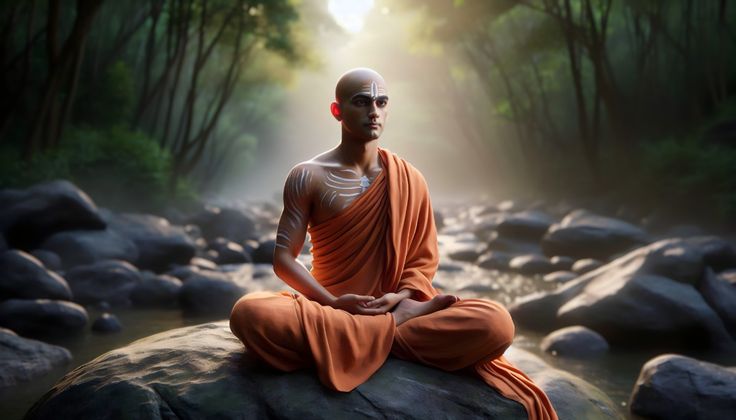
How to study these verses (practical step-by-step)
- Read Sanskrit + transliteration aloud (get comfortable with the sound). Use the Devanagari text above as primary.
- Understand word-by-word (use the glosses above). Don’t rush — one small phrase (e.g., nitya-anitya) can take weeks of reflection.
- Śravaṇa (hearing) — hear a competent teacher / trustworthy commentary (Chinmaya, Arsha, etc.).
- Manana (reflect) — test the statements against experience: where is permanence? Where are expectations frustrated?
- Nididhyāsana (contemplation/meditation) — repeatedly contemplate “I am not the body/mind; I am the witness” until identification loosens.
- Practice the sādhanas: daily short sessions to train śama/dama (breath awareness, restraining senses), cultivate titikṣā (face small discomforts without reacting), and foster mumukṣutva (set a clear intention).
- Memorize the eight lines (or at least the four main phrases) and recite them each morning; use them as a checklist for inner work. Click Here To Vyashti Vichara.

How often / how many times to study
- Daily: short reading (5–15 min) + one practical exercise (sense-withdrawal, forbearance) is better than rare long sessions.
- Cycle: repeat the chapter (read + reflect) for a month; then a second cycle deepen with commentary. Many students do 40 days of focused practice to form a habit, but quality > quantity. (Use steady repetition until the meaning “lands”.) Click Here To Vyashti Vichara.
Why study this (short)
Because these qualifications are the practical foundation: without discrimination, one chases impermanent goals; without dispassion and the six virtues, the mind remains scattered; without mumukṣutva the effort lacks intensity. Tattva Bodha gives a compact, logical ladder — the Sādhana Chatuṣṭaya is the ground floor. Click Here To Vyashti Vichara.
Conclusion
Learn the verses (Sanskrit + transliteration), sit with each phrase until it becomes a living practice, and combine hearing, reflection, and steady contemplative practice. These eight lines are small in text but vast in implication — they prepare the heart and mind to receive and embody jñāna.
Join Our Classes:
The Tattva Bodha are more than just ancient texts—they are timeless guides to living with clarity, balance, and inner peace. Our classes make their profound wisdom easy to understand and apply in everyday life. Join us to explore these teachings and discover a new way of seeing yourself and the world!