Chapter 3 – The Nature of the Supreme Self and Its Witnessing Presence
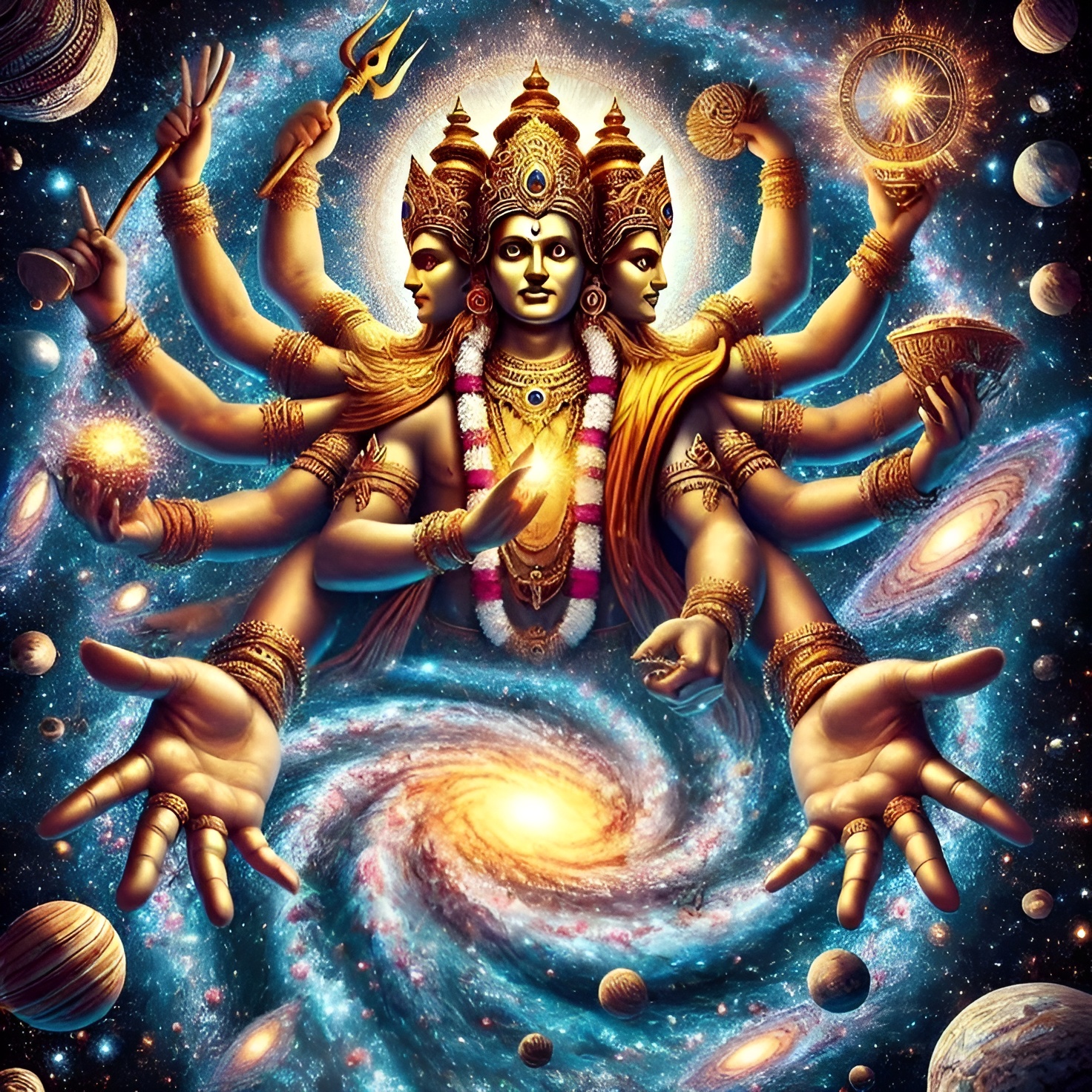
Chapter 3 of the Shvetashvatara Upanishad delves deeper into the nature of the supreme Self and its relation to the cosmos. It describes Brahman as omniscient, omnipotent, and beyond the reach of the senses and mind, yet immanent in all beings as the inner controller. The chapter emphasizes that the Self is the witness of all experiences, unaffected by actions, thoughts, or emotions. It also highlights the importance of renunciation, meditation, and knowledge in perceiving this subtle reality. By realizing the Self within, the seeker overcomes fear, ignorance, and bondage. Ultimately, Chapter 3 reinforces that the eternal Self is the source, sustainer, and witness of all existence, and its realization leads to liberation and supreme bliss. For More Information Click Here
Verse-by-Verse Single-Line Summary – Chapter 3
- Brahman is the supreme cause, beyond all material and natural forces.
- The Self pervades all beings as the inner ruler and witness.
- He is eternal, imperishable, and free from all dualities.
- The one who knows Brahman sees the Self in all and all in the Self.
- Meditation and devotion lead to direct realization of the supreme Self.
- The Self is subtle, beyond sensory perception, yet illuminates the mind.
- Brahman is the source of life, consciousness, and all creation.
- He is the cause of both bondage and liberation, guiding all beings.
- The wise recognize that the Self is untouched by action, desire, or ego.
- Controlling the senses and mind, the yogi perceives the Self within.
- Knowledge of Brahman destroys ignorance, fear, and worldly attachment.
- The Self is the eternal witness, remaining unchanged amid change.
- Those who meditate on the Self attain supreme peace and bliss.
- Brahman is the inner light that dispels darkness and illumines the heart.
- The yogi who realizes the Self transcends birth, death, and sorrow.
- Brahman is the ultimate refuge for all who seek liberation.
- Devotion, meditation, and ethical conduct prepare the mind for Self-knowledge.
- The Self is subtle, formless, and beyond all limiting conditions.
- Realizing the Self, one sees the unity of the individual soul and the universal Self.
- The knower of Brahman attains freedom from the cycle of birth and death.
- The chapter concludes that meditation and knowledge of the Self lead to immortality and liberation.

Shankaracharya’s Insights on Chapter 3 – Realization of the Supreme Self
Adi Shankaracharya interprets Chapter 3 of the Shvetashvatara Upanishad as a detailed exposition of Brahman’s omnipresence and subtle nature. He emphasizes that the Self is the inner controller (antaryamin) and witness (saksi) of all beings, remaining untouched by actions, desires, or the play of the mind. Shankara explains that though Brahman is beyond sensory perception and intellect, it is directly experienced through meditation, discrimination, and devotion, which purify the mind. He highlights the non-dual truth that the individual self (jiva) is identical with the universal Self, and realization of this unity destroys fear, ignorance, and bondage. Shankara also notes that ethical conduct, renunciation, and control of the senses prepare the aspirant for this knowledge. Ultimately, he teaches that perceiving Brahman as the eternal witness leads to liberation, supreme bliss, and freedom from the cycle of birth and death. For More Information Click Here
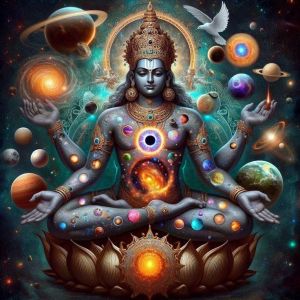
Importance of Chapter 3 – Realization of the Supreme Self
Chapter 3 of the Shvetashvatara Upanishad is important because it deepens the seeker’s understanding of Brahman as the omnipresent, omniscient, and subtle Self. It emphasizes the inner witnessing nature of the Self, showing that liberation arises not from external rituals but from recognizing the unity of the individual soul (jiva) with the universal Self (Brahman). The chapter highlights the role of meditation, devotion, ethical conduct, and sense control as essential disciplines to purify the mind for Self-realization. By revealing that the Self is unaffected by action, desire, or change, it reassures the aspirant of ultimate peace and freedom. It also clarifies that knowledge of Brahman destroys fear, ignorance, and bondage, making it a cornerstone for spiritual practice and liberation. For More Information Click Here

Conclusion – Essence of Chapter 3
Chapter 3 of the Shvetashvatara Upanishad emphasizes that the eternal Self is the omnipresent witness and inner controller of all beings. Through meditation, devotion, and disciplined living, the seeker realizes the identity of the individual soul with Brahman. This recognition dissolves ignorance, fear, and worldly attachment, leading to liberation and supreme bliss. The chapter reinforces that true knowledge of the Self is experiential, transcending intellect and senses, and that realizing the Self’s subtle, immutable nature is the key to freedom from the cycle of birth and death.
Join Our Classes:
The Upanishads are more than just ancient texts—they are timeless guides to living with clarity, balance, and inner peace. Our classes make their profound wisdom easy to understand and apply in everyday life. Join us to explore these teachings and discover a new way of seeing yourself and the world!