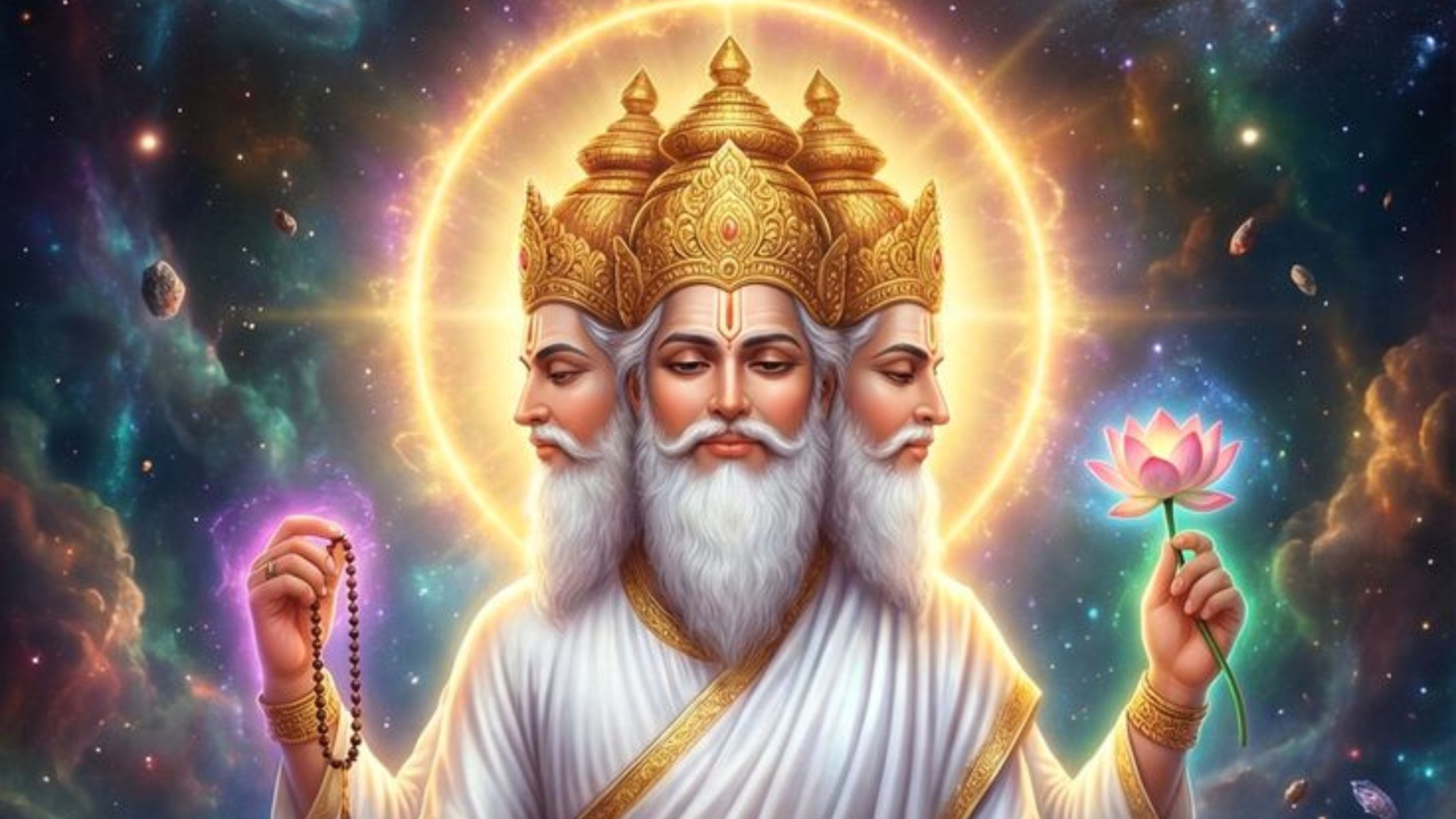
Aikya Vichāra – Enquiry into the Identity of Jīva and Brahman
Introduction
After discriminating between the real and the unreal (tattva-viveka) and understanding the constitution of the individual (jīva), the world (jagat) and the Lord (Īśvara), Tattva Bodha culminates in Aikya Vichāra — the investigation of their essential oneness. The term aikya means “unity” or “identity.” This enquiry reveals that what appears as the limited individual and the limitless Brahman are, in truth, not two different realities but the same Consciousness, seen under different limiting conditions (upādhi). Click Here To More Detail.
Benefit of studying Aikya Vichāra (very brief)
Studying these verses gives:
- Clear insight that the Self in you (ātman) and Brahman are one;
- Freedom from the sense of limitation and doership;
- Removal of ignorance (avidyā) that causes bondage;
- Abidance in peace — the natural state of liberation (mokṣa).
The Eight (step-by-step)
Below, the Aikya Vichāra portion is arranged into eight compact items following the canonical Tattva Bodha verses and glosses.
1) Opening declaration — statement of identity
Sanskrit
जीवब्र्ह्मणोः ऐक्यम् — उपाधिभेदात् जीवब्रह्मणोर्भेददर्शनम्, तत्त्वतो न भेदः।
IAST
jīva-brahmaṇoḥ aikyam — upādhi-bhedāt jīva-brahmaṇoḥ bheda-darśanam, tattvato na bhedaḥ.
Translation
“The identity of jīva and Brahman: because of difference in limiting adjuncts (upādhi-bheda), a difference appears between jīva and Brahman; in truth (tattvataḥ), there is no difference.”
Explanation (step-by-step)
• upādhi-bhedāt — difference appears because of the conditioning factors: body-mind for jīva, māyā for Brahman.
• bheda-darśanam — seeing difference is only an appearance.
• tattvato na bhedaḥ — essentially, there is no difference; both are pure Consciousness.
Practical reflection: Whenever “I” feels limited, recall that limitation belongs to the upādhi, not to the Consciousness that illumines it. Click Here To Aikya Vichara.
2) Analogy — space and pot
Sanskrit
यथा घटाकाशयोः भेदः उपाधिभेदेन एव, तथा जीवब्रह्मणोः भेदः उपाधिभेदेन।
IAST
yathā ghaṭa-ākāśayoḥ bhedaḥ upādhi-bhedena eva, tathā jīva-brahmaṇoḥ bhedaḥ upādhi-bhedena.
Translation
“As the apparent difference between pot-space and vast space is only due to the pot (the limiting adjunct), so too the difference between jīva and Brahman is due only to the adjuncts.”
Step-by-step
• The space in a pot seems separate from the sky but is never truly divided.
• The pot breaks — the apparent limitation ends — space was always one.
• Likewise, when the upādhi of body-mind is negated, only Brahman remains. Click Here To Aikya Vichara.

3) The upādhis distinguished
Sanskrit
जीवोपाधिः अविद्यामया सत्त्वगुणप्रधानाऽविद्या। ईश्वरस्य मायोपाधिः सत्त्वगुणप्रधानाऽमायाऽनाद्यविद्या त्रिगुणात्मिका।
IAST
jīvopādhiḥ avidyā-mayā sattva-guṇa-pradhānā avidyā; īśvarasya māyā-upādhiḥ sattva-guṇa-pradhānā anādi-avidyā triguṇātmikā.
Translation
“The limiting adjunct of the jīva is ignorance (avidyā), predominantly of sattva; that of Īśvara is māyā, beginningless ignorance composed of the three guṇas, also sattva-predominant.”
Step-by-step
• Both māyā and avidyā are forms of ignorance — one cosmic, one individual.
• Īśvara controls māyā; the jīva is controlled by avidyā.
• Remove the upādhis by knowledge, and only pure awareness remains — the same in both. Click Here To Aikya Vichara.

4) The identity statement — Mahāvākya
Sanskrit
तत्त्वमसि — स एव त्वम्, त्वमेव सः।
IAST
tat tvam asi — sa eva tvam, tvam eva saḥ.
Translation
“That Thou Art — Thou art indeed That; and That art thou.”
Explanation (step-by-step)
• tat = Brahman, the cause of the universe; tvam = the conscious Self in the individual.
• Through lakṣyārtha-viveka (implied meaning analysis), both reveal pure Consciousness once adjuncts are removed.
• Hence the Upaniṣadic sentence declares non-duality, not similarity.
Practice: Meditate on the mahāvākya, stripping away the adjuncts in thought:
“I am not body, not mind — I am That consciousness which is Brahman.” Click Here To Aikya Vichara.

5) Objection & resolution — apparent difference
Sanskrit
भेदः दृश्यते इति चेत्, सोपाधिकत्वात्। उपाधिनाशे भेदाभावः।
IAST
bhedaḥ dṛśyate iti cet, sopādhikatvāt; upādhi-nāśe bheda-abhāvaḥ.
Translation
“If it be said ‘But difference is seen,’ it is because of upādhis; when the upādhis are negated, no difference remains.”
Explanation
• Difference exists only in the empirical view (vyavahāra).
• Knowledge (jñāna) destroys the upādhi identification, revealing unity.
• Like mistaking waves as separate — realise they’re all ocean. Click Here To Aikya Vichara.

6) Analogy — sun reflected in many waters
Sanskrit
यथा एकः आदित्यः नानेव उदकपतलेषु प्रतिबिम्बति, तथैव एकः आत्मा नानेव जीवेषु प्रतिबिम्बति।
IAST
yathā ekaḥ ādityaḥ nāneva udaka-pataleṣu pratibimbati, tathaiva ekaḥ ātmā nāneva jīveṣu pratibimbati.
Translation
“As one sun appears as many reflections in various waters, so the one Self appears as many jīvas in different bodies.”
Step-by-step
• The sun = pure Consciousness.
• Waters = mind-intellects of individuals.
• Reflections appear many, but the sun is one; destroy the water-surface (ego-identification), the reflected limitation ends. Click Here To Aikya Vichara.

7) Fruit of Aikya-realization
Sanskrit
ऐक्यज्ञानात् अविद्यानाशः, अविद्यानाशात् बन्धनिवृत्तिः, तत् मोक्षः।
IAST
aikya-jñānāt avidyā-nāśaḥ, avidyā-nāśāt bandha-nivṛttiḥ, tat mokṣaḥ.
Translation
“From the knowledge of identity arises the destruction of ignorance; with ignorance gone, bondage ends — that is liberation.”
Explanation
• Knowledge directly removes ignorance, not action.
• When you know ‘I am Brahman,’ the sense of limitation ends.
• Freedom is recognition, not production. Click Here To Aikya Vichara.

8) Concluding verse — the vision of unity
Sanskrit
एवं जीवब्र्ह्मणोः अभेददर्शनं तत्त्वविवेकस्य परमपुरुषार्थः।
IAST
evaṃ jīva-brahmaṇoḥ abheda-darśanam tattva-vivekasya parama-puruṣārthaḥ.
Translation
“Thus, the realization of non-difference between jīva and Brahman is the supreme goal of tattva-viveka.”
Explanation
• All prior disciplines culminate here — seeing the One in all.
• It is not a merger of two things but recognition of the One that always was.
• This vision (darśana) itself is mokṣa. Click Here To Aikya Vichara.
How to Study These Verses (Practical Step-by-Step)
- Read the Sanskrit + transliteration aloud to internalize sound.
- Understand literal meanings; mark each analogy (pot-space, sun-reflection).
- Śravaṇa — listen to a teacher/commentary on Aikya Vichāra.
- Manana — reflect: “What changes? what is constant?” until unity is seen.
- Nididhyāsana — meditate daily on “Aham Brahmāsmi — I am Brahman.”
- Keep a journal noting moments of separation and consciously dissolve them in awareness.
How Often / How Many Times to Study
- Daily: read or chant one verse and dwell on its image (pot-space or sun).
- Cycle: complete the section weekly for four weeks — each cycle deepens assimilation.
- 40-day focus: many seekers keep a 40-day Aikya-dhyāna vrata — repeating mahāvākya meditation morning and evening.
- Continue until the feeling of separation naturally weakens — understanding must mature into anubhava (living experience). Click Here To Aikya Vichara.

Why Study Aikya Vichāra (Short)
Because all other enquiry — into body, mind, world, God — finds resolution only in this identity. Without Aikya-knowledge, the Self is still mistaken as limited; with it, you recognise the one consciousness as yourself.
Tattva Bodha therefore climaxes in Aikya Vichāra — it transforms philosophy into direct freedom.
Conclusion
Learn and reflect on these eight Aikya Vichāra verses until the intellect ceases to divide the One.
When upādhi-bheda is seen as mere appearance, the witness you are is Brahman itself.
This vision is immediate, not future: the Self is ever free.
Join Our Classes:
The Tattva Bodha are more than just ancient texts—they are timeless guides to living with clarity, balance, and inner peace. Our classes make their profound wisdom easy to understand and apply in everyday life. Join us to explore these teachings and discover a new way of seeing yourself and the world!