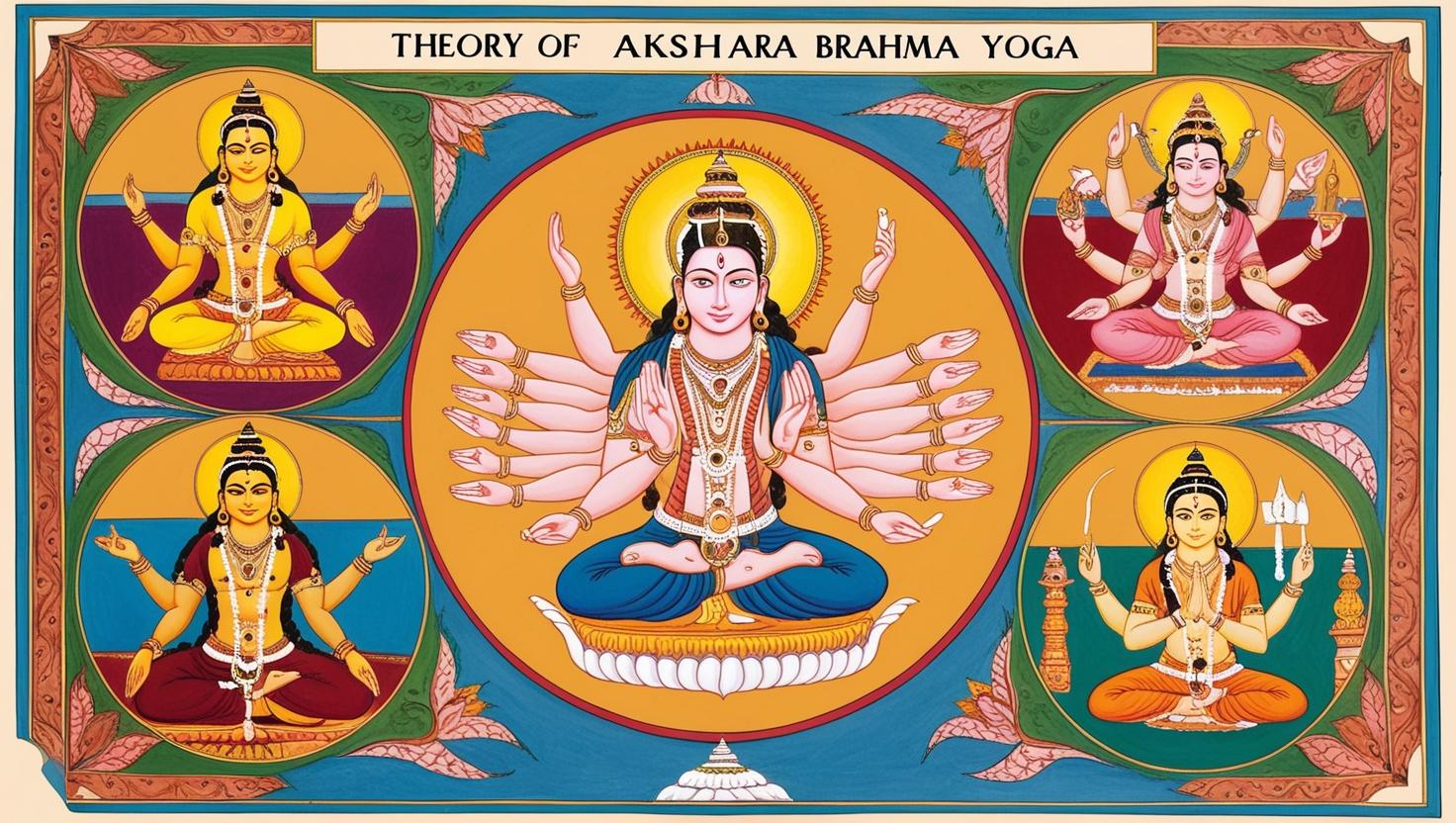
Overview and Meditative Philosophy of the Dhyanabindu Upanishad
The Dhyanabindu Upanishad is a Yoga Upanishad that focuses on the practice and philosophy of meditation (dhyana) as the path to realizing the Self and Brahman. It begins by highlighting the greatness of dhyana yoga, asserting that meditation can destroy even vast accumulated sin and lead to inner transformation. The text describes Om (the primal sound) as a central tool of meditation, representing the ultimate reality and a means to directly experience the soul (Atman). It uses vivid metaphors to explain that Atman is present in all beings—like fragrance in flowers or oil in seeds—urging the Yogi to understand both the part and the whole. The Upanishad discusses silence in meditation and the subtler aspects of Nada (spiritual sound) and Bindu (point of meditation) as gateways to the supreme state beyond sound. Overall, it blends practical meditation techniques with philosophical insight into the nature of consciousness and liberation. For More Information Click Here

Structure and Meditative Insights of the Dhyanabindu Upanishad
The Dhyanabindu Upanishad consists of 1 chapter with a total of 106 verses.
Simple Explanation of the Chapter:
The chapter emphasizes the transformative power of dhyana (meditation) as the path to purify the mind and attain liberation. It explains the use of Om as the central object of meditation, representing the ultimate reality and the Atman. The text also introduces subtle yogic concepts like Bindu (the focal point) and Nada (inner sound), guiding the meditator toward deeper concentration and transcendence of sensory distractions. It highlights that the Self pervades all beings, urging recognition of the unity of the inner and outer worlds. Practical instructions cover proper posture, breath control, and mental focus to enhance meditation. Overall, the Upanishad integrates philosophical insight with meditative practice, showing that disciplined meditation leads to self-realization and liberation.

Key Verses and Meditative Insights of the Dhyanabindu Upanishad
- Verse 1 – “Meditation is the supreme practice; it destroys all sins and purifies the mind.”
- Meaning: The Upanishad begins by emphasizing that disciplined meditation is the highest spiritual practice, capable of cleansing accumulated karmas.
- Verse 10 – “Om is the primordial sound, the essence of all beings, and the object of meditation.”
- Meaning: The sacred syllable Om represents ultimate reality and is the focal point for concentration and self-realization.
- Verse 25 – “Bindu, the subtle point, is the gateway to inner stillness and the realization of Brahman.”
- Meaning: Focusing on the subtle point within the mind leads the practitioner beyond sensory distractions toward spiritual insight.
- Verse 60 – “Nada, the inner sound, reveals the presence of the Self within all beings.”
- Meaning: Awareness of the subtle inner sound helps the meditator perceive the universal Self pervading all existence.
- Verse 100 – “He who meditates with steadiness and detachment attains liberation and the bliss of the Atman.”
- Meaning: Consistent meditation, coupled with inner detachment, leads to self-realization and freedom from the cycle of birth and death.
These verses highlight the core teachings of the Dhyanabindu Upanishad: meditation, Om, Bindu, Nada, detachment, and realization of the Atman. For More Information Click Here

Core Teachings and Meditative Philosophy of the Dhyanabindu Upanishad
The Dhyanabindu Upanishad teaches that meditation (dhyana) is the supreme path to purify the mind, overcome past karmas, and attain self-realization. It emphasizes Om as the primal sound and central object of meditation, representing the ultimate reality and the Atman. The text introduces subtle yogic concepts such as Bindu (the point of focus) and Nada (inner sound), which guide the practitioner to inner stillness and heightened awareness. By practicing proper posture, breath control, and focused attention, the yogi withdraws from sensory distractions and cultivates deep concentration. The Upanishad underscores that steady meditation combined with detachment leads to liberation (moksha) and the experience of bliss inherent in the Self. Ultimately, it presents meditation as the holistic bridge between philosophical insight and experiential realization of Brahman. For More Information Click Here

Conclusion
In conclusion, the Dhyanabindu Upanishad emphasizes meditation (dhyana) as the central practice for spiritual purification, self-realization, and liberation. It teaches that Om serves as the primary focus, while subtle techniques involving Bindu and Nada help the practitioner attain inner stillness and heightened awareness. The Upanishad underscores the importance of proper posture, breath control, and withdrawal from sensory distractions to cultivate concentration. By integrating philosophical insight with disciplined meditative practice, it guides the seeker toward the realization of the Atman and its unity with Brahman. Steady meditation combined with detachment leads to freedom from karmic bondage and the experience of bliss. Ultimately, it presents meditation as a holistic path to spiritual awakening and eternal liberation.
Join Our Classes:
The Upanishads are more than just ancient texts—they are timeless guides to living with clarity, balance, and inner peace. Our classes make their profound wisdom easy to understand and apply in everyday life. Join us to explore these teachings and discover a new way of seeing yourself and the world!