Ganapati Atharvashirsha Upanishad — Deep Q&A
The Upanishad of Lord Ganesha — Supreme Consciousness & Liberation
1. Q: What is the Ganapati Atharvashirsha Upanishad?
A: The Ganapati Atharvashirsha Upanishad (also called Ganapati Upanishad) is a minor Upanishadic text attached to the Atharva Veda. It is a sacred hymn that reveals Lord Ganesha — traditionally the remover of obstacles — as the supreme Brahman, the unchanging reality behind the universe. This short but powerful scripture blends devotion (bhakti) and philosophical insight (jnana), identifying Ganesha with the inner Self and the cosmic essence of all beings. Click Here To Access more other text.

2. Q: Who is the focus of this Upanishad?
A: The focus is Lord Ganesha (Ganapati) — worshipped across Hindu traditions as the deity who removes obstacles and grants success. However, this Upanishad goes beyond devotional praise by asserting that Ganesha is Brahman — existence (Sat), consciousness (Chit), and bliss (Ananda) itself, the ultimate reality underlying all life and phenomena.
3. Q: How does the Upanishad relate Ganesha to Brahman?
A: The text identifies Ganesha with all divine forms and ultimate reality. It proclaims that Ganesha is Brahma (the creator), Vishnu (the preserver), Shiva (the dissolver), and in essence the supreme, unchanging consciousness beyond names and forms. This non-dual vision elevates the deity from a symbolic figure to the absolute, universal Self present everywhere. Click Here To Access.
4. Q: What is the significance of “Om Gam Ganapataye Namah”?
A: “Om Gam Ganapataye Namah” is the bija (seed) mantra of Ganesha introduced in this Upanishad. The mantra is believed to hold potent spiritual energy, purifying the mind, removing inner obstacles, and aligning the aspirant with the supreme consciousness. Chanting it with devotion is said to aid clarity, wisdom, and progress on the spiritual path.
5. Q: Is Ganesha both form (saguna) and formless (nirguna)?
A: Yes — the Upanishad teaches that Ganesha, although often worshipped in physical form, ultimately transcends all attributes (nirguna) and embodies the formless Brahman. He bridges the devotional form-based aspect of worship with the formless, unconditioned reality of the Self.
6. Q: How does this Upanishad connect Ganesha with Om?
A: The Upanishad equates Ganesha with Om (AUM) — the primordial sound symbol of the Vedic tradition and the essence of creation and consciousness. Om represents the unmanifest reality beyond speech and thought, and by identifying Ganesha with Om, the text situates him at the core of spiritual awareness. Click Here To Access.
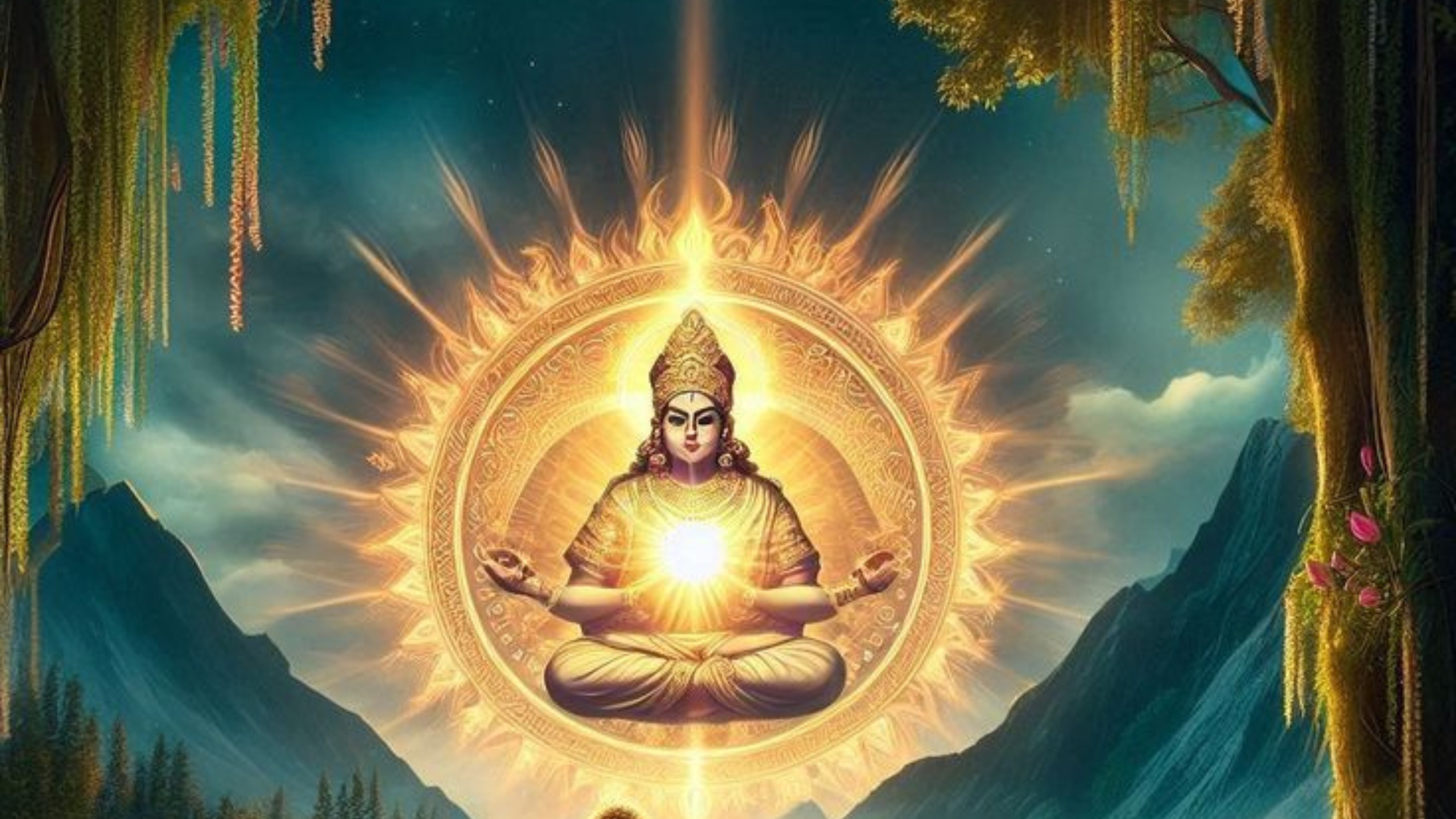
7. Q: What does the text say about Ganesha’s presence in all beings?
A: The Upanishad proclaims that Ganesha is the inner Self (Atman) in every living being. This means that the divine is not separate or distant, but is the universal consciousness pervading all life. Realizing this unity is the essence of spiritual liberation.
8. Q: What role does meditation play according to this Upanishad?
A: Meditation on Ganesha — especially through mantra and contemplation on his unity with Brahman — helps still the mind, dissolve ego-based limitations, and lead the seeker to direct experience of pure consciousness beyond duality. The Upanishad ties devotion and meditation closely to self-realization.
9. Q: How does the Upanishad elevate traditional Ganesha worship?
A: While Ganesha is popularly worshipped as the remover of obstacles in daily life, the Upanishad elevates this worship to a path toward liberation (moksha) by teaching that the focus should be on realizing Ganesha’s identity with the Supreme Brahman, not just external rituals. Click Here To Access.
10. Q: What benefits does the Upanishad suggest from chanting or contemplating it?
A: According to traditional interpretations, reciting, meditating on, or preserving the Upanishad brings purity of mind, spiritual insight, removal of internal and external obstacles, success in spiritual and worldly pursuits, and progression toward liberation. Even listening to it attentively is considered meritorious.
11. Q: Does the Upanishad mention symbolic meanings of Ganesha’s form?
A: Yes — the text (and traditional commentaries) often explain symbolic aspects of Ganesha’s elephant head, large ears, trunk, and other features as representing cosmic principles and spiritual truths, linking form symbolism to inner realization.
12. Q: How does the Upanishad integrate devotion and knowledge?
A: The Upanishad unites bhakti (devotion to Ganesha) and jnana (knowledge of Brahman) by showing that devotion guided by inner insight — recognizing Ganesha as the non-dual Self — ultimately leads to self-realization and liberation. Click Here To Access.
13. Q: What philosophical viewpoint does this text represent?
A: Although devotional in tone, the Upanishad conveys non-dual (Advaita) philosophy, declaring that the individual soul (jiva) and the ultimate reality (Brahman) are not different, and that the divine manifests as all deities and beings.
14. Q: What is meant by “Ganesha is the creator, sustainer, and destroyer”?
A: This phrase symbolizes that Ganesha is the source, maintenance, and dissolution of all existence. It reflects the Vedantic idea that the supreme reality underlies all cosmic functions, not limited to one role or aspect.
15. Q: What does the Upanishad say about form and formlessness?
A: It teaches that Ganesha’s physical form is a symbol to support devotion, but his true nature is formless, attribute-less Brahman, the ineffable ground of reality beyond physical names and shapes. Click Here To Access.

16. Q: How is liberation (moksha) presented here?
A: Liberation is presented as realization of one’s true nature as the universal Self — which the Upanishad identifies with Ganesha himself. This realization liberates the seeker from ignorance, ego, and the sense of separateness.
17. Q: Can this Upanishad be chanted by anyone?
A: Traditionally, it is said the text should be taught and chanted with respect and proper guidance, as its syllables are considered sacred and powerful. Even hearing it attentively is said to benefit the seeker.
18. Q: Does the Upanishad emphasize inner transformation?
A: Yes — the ultimate focus of the Upanishad is inner transformation through awareness of the divine Self, not merely superficial ritual. Meditative insight and realization are presented as the true goal. Click Here To Access.
19. Q: How does this Upanishad relate to the larger Vedic tradition?
A: Though short, it extends the core Vedantic message — that the ultimate reality is non-dual and present within all — by using the beloved symbol of Ganesha to make deep truths approachable for devotees.
20. Q: What is the heart-message of the Ganapati Atharvashirsha Upanishad?
A: The essence is that Lord Ganesha is not merely a deity but the Supreme Brahman, the non-dual Self of all existence. Recognizing this through divine name, meditation, and inner realization dissolves ignorance and leads to liberation.
Summary in Simple Life Terms
The Ganapati Atharvashirsha Upanishad teaches that Ganesha — the remover of obstacles — is the supreme consciousness (Brahman) present in all beings. By meditating on his mantra and inner nature, one can transform devotion into realization, overcoming ignorance and finding lasting peace and wisdom.