Chapter 1, Section 2 – Classification and Significance of the 108 Upanishads
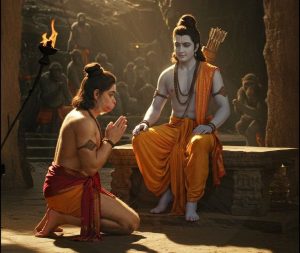
Chapter 1, Section 2 continues the dialogue between Hanuman and Lord Rama, focusing on the classification and significance of the 108 Upanishads. Rama explains how the Upanishads are divided according to the four Vedas and their respective purposes for spiritual guidance. He emphasizes that some Upanishads are suited for beginners, while others guide advanced seekers toward deeper self-realization. The section highlights the importance of devotion, meditation, and ethical living alongside scriptural study. Rama also stresses that understanding the true meaning of the Upanishads requires a qualified Guru. This section reinforces the idea that consistent study and practice lead to liberation and direct experience of the eternal self. For More Information Click Here
Verse-by-Verse Summary – Chapter 1, Section 2
- Rama explains to Hanuman that the 108 Upanishads are classified according to the four Vedas, each serving as a guide to spiritual knowledge. He emphasizes that this classification helps seekers approach the study of scriptures systematically according to their level of understanding.
- The Rig Veda contains ten principal Upanishads, which lay the foundation for knowledge of Brahman and the self. These Upanishads focus on the essential principles of meditation, devotion, and ethical conduct.
- The Shukla Yajur Veda has nineteen Upanishads, guiding aspirants on meditation techniques and understanding the subtle aspects of the self. They provide insights into the practice of rituals combined with knowledge for progressive spiritual growth.
- The Krishna Yajur Veda includes thirty-two Upanishads, emphasizing self-inquiry, detachment, and knowledge as the path to liberation. These texts help advanced seekers deepen their understanding of the non-dual nature of reality.
- The Sama Veda has sixteen Upanishads, primarily focusing on devotion and the use of sound (chanting) to elevate consciousness. They teach how meditative practices and devotional singing purify the mind and aid in realization of the self.
- The Atharva Veda comprises thirty-one Upanishads, which combine ethical conduct, meditation, and knowledge for attaining immortality. Rama concludes by stressing that with devotion, guidance from a Guru, and consistent study, one attains liberation and eternal bliss.
Shankaracharya’s Insights:
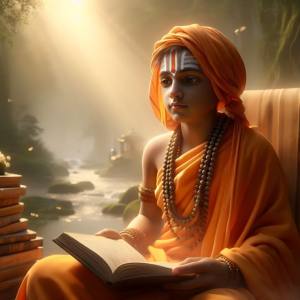
Shankaracharya notes that the Upanishads are authoritative texts for self-realization, with each Veda’s Upanishads emphasizing specific aspects of knowledge, devotion, and meditation. He stresses that true understanding requires a Guru, as literal study alone cannot reveal the ultimate reality. Shankara also highlights the non-dual nature of liberation, attainable only through discrimination between the eternal self and the transient world. This section, according to him, provides a systematic roadmap for seekers, guiding them through beginner to advanced stages of spiritual inquiry and leading to the realization of Atman as Brahman. For More Information Click Here
Core Teaching – Chapter 1, Section 2
Section 2 emphasizes the classification and purpose of the 108 Upanishads according to the four Vedas, showing how each serves the seeker’s spiritual progress. It highlights that scriptural study alone is insufficient; ethical living, devotion, meditation, and guidance from a qualified Guru are essential. The Upanishads are presented as a systematic pathway for all levels of seekers, from beginners to advanced, leading to the realization of the eternal, non-dual self (Atman/Brahman). This section reinforces the importance of consistent practice and proper understanding for attaining liberation. For More Information Click Here
Conclusion:
Chapter 1, Section 2 establishes that the Upanishads are the supreme guides to liberation, classified to suit different aspirants. With devotion, meditation, and ethical conduct, under the guidance of a Guru, a seeker can progressively deepen self-knowledge. The section lays a structured foundation for studying the 108 Upanishads, ensuring that consistent effort leads to moksha and eternal bliss.
Join Our Classes:
The Upanishads are more than just ancient texts—they are timeless guides to living with clarity, balance, and inner peace. Our classes make their profound wisdom easy to understand and apply in everyday life. Join us to explore these teachings and discover a new way of seeing yourself and the world!