Introduction to the Cosmic Beginning: The One Self Before Creation
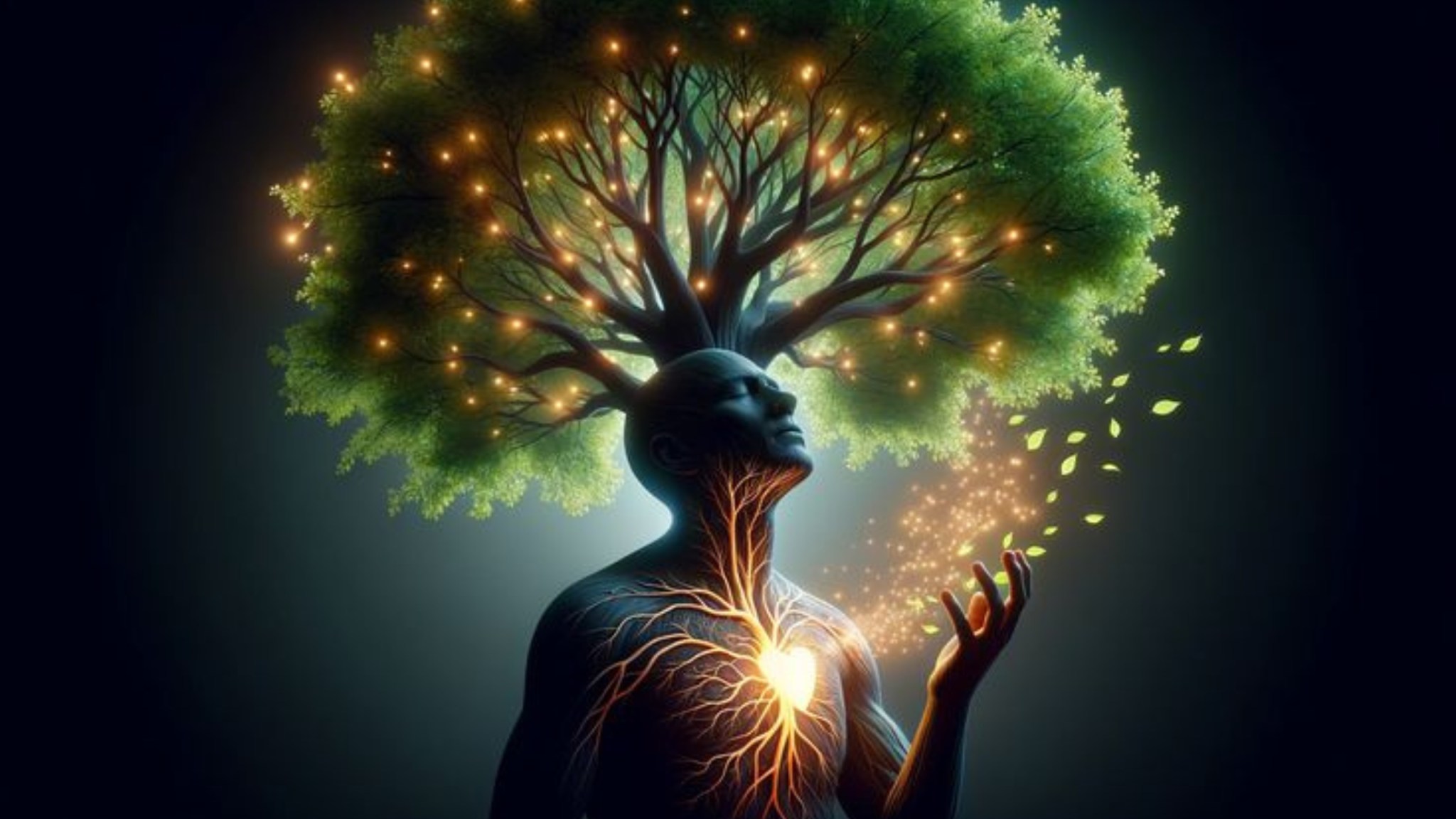
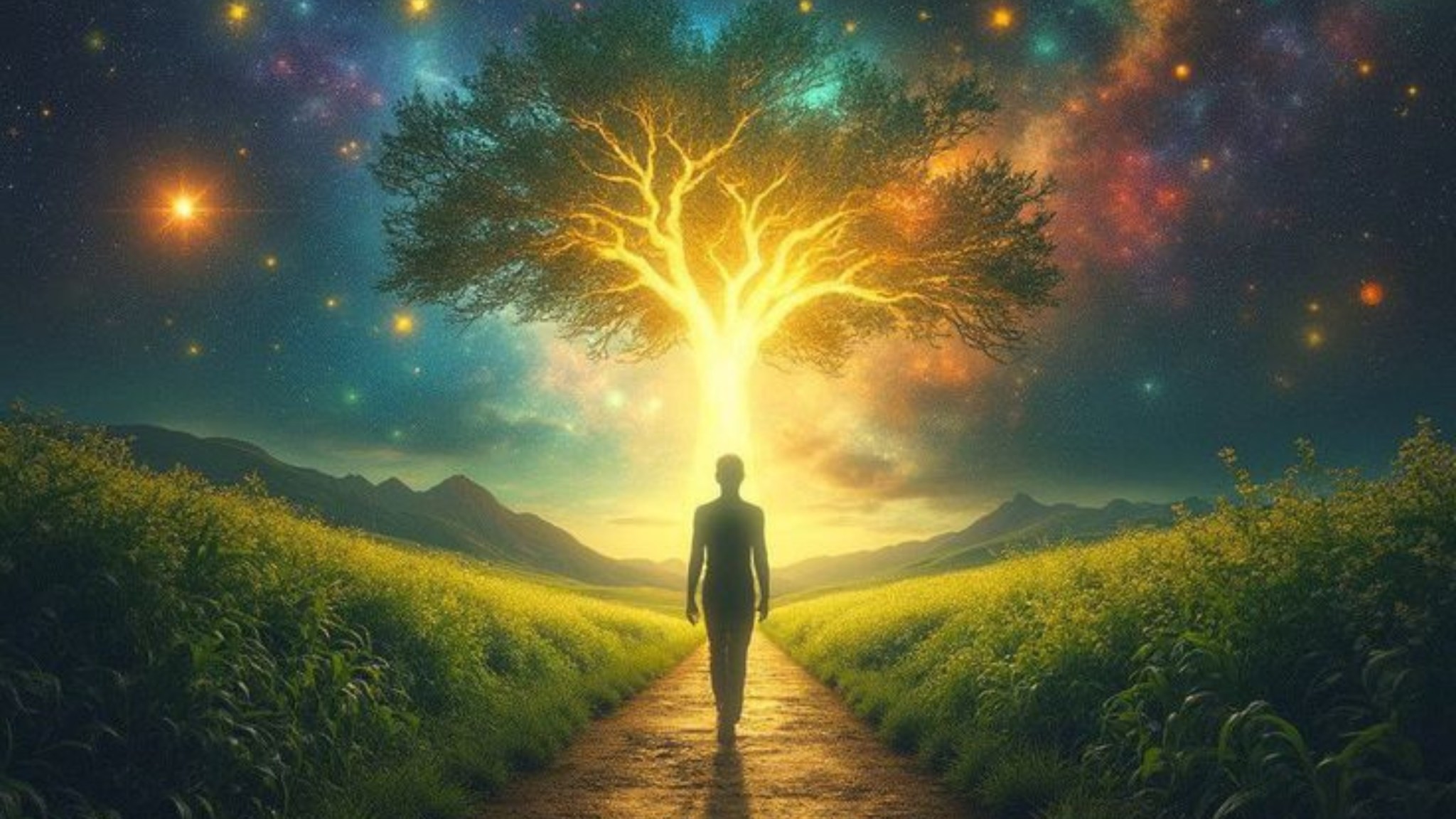
The Aitareya Upanishad begins by addressing the most fundamental spiritual inquiry—what was there before creation? This section presents the profound vision that only the Ātman, the pure Self, existed. There was no external world, no beings, no elements—just pure consciousness. The Upanishad doesn’t describe creation as a material event but as an expression of the Self’s will, revealing a deep non-dual truth. This sets the stage for Advaita Vedanta, where the world is seen not as a separate reality but a projection within consciousness itself. For More Information Click Here
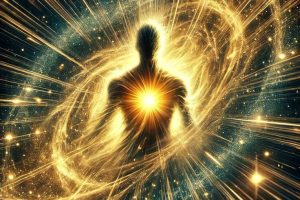
Aitareya Upanishad – Chapter 1, Section 1: The Origin of the Universe
Summary:
In the beginning, only the Self (Ātman) existed—there was nothing else. This Self desired, “Let me create the worlds.” From this will, various realms were brought into existence:
- Ambhas (the higher world, heavens),
- Marīci (space or the intermediate region),
- Māra (the mortal world or earth), and
- Āpah (the lower world or waters beneath).
These represent the cosmic regions in a hierarchical structure. The Self creates these realms as the foundation or field for further manifestation, including beings, deities, and consciousness itself. For More Information Click Here
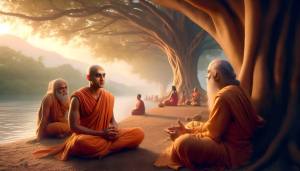
Shankara’s Insight: Non-Dual Vision of the One Self as Creator
Shankara begins his commentary by asserting the non-dual nature of creation. The use of the term “Ātman” instead of “Īśvara” (God) is deliberate—emphasizing that the Self is both the creator and the creation.
He explains that the desire in the Self is not like human desire born of ignorance, but is metaphorical, reflecting the natural unfolding of consciousness into experience. Creation is not an act in time but an apparent projection from the Self.
The worlds are not truly independent entities but modifications of the one reality—the Self. This serves as the backdrop for the drama of life, where the Self will eventually enter and appear as the individual (jīva), leading to the realization of the Self again.

Importance of Aitareya Upanishad – Chapter 1, Section 1
This opening section holds deep metaphysical and philosophical significance in Vedantic thought:
- Declares the Primacy of the Self (Ātman):
It begins with the bold assertion that only the Self existed before creation—there was no God, no matter, no world—only pure consciousness. This lays the foundation for non-duality (Advaita). - Explains the Origin of the Universe from Consciousness:
Unlike materialistic theories, this Upanishad teaches that creation emerges from consciousness, not from inert matter. The worlds are not real in themselves, but manifestations of the Self’s will. - Symbolic Representation of Evolution:
The sequence—ambhas, marīci, māra, āpah—symbolizes the hierarchy of existence from the subtle (heaven) to the gross (earth and water), showing how the Self unfolds as creation. - Spiritual Cosmology, Not Literal Creation Myth:
Shankara interprets this as symbolic, not a physical creation event. The idea is to understand that all apparent multiplicity has its root in the One Consciousness. - Sets the Stage for Inner Realization:
This section prepares the seeker to later understand that the same Self that created the world also dwells within, waiting to be realized. - Introduces a Vision of Unity:
All realms and beings are connected through the Self. This fosters a sense of oneness and sacredness of all existence, essential for spiritual growth. For More Information Click Here

Conclusion
Section 1 affirms that consciousness alone is the source of all that exists. The division of the cosmos into distinct realms is symbolic, showing how the One Self appears as many. Shankara clarifies that this creation is not literal but apparent—the world exists only so long as ignorance prevails. When knowledge dawns, one realizes that everything—including the worlds—is only the Self. This insight is the foundation for the Upanishad’s unfolding revelation: that the individual self (jīva) is not separate from the cosmic Self (Ātman/Brahman).
Join Our Classes:
The Upanishads are more than just ancient texts—they are timeless guides to living with clarity, balance, and inner peace. Our classes make their profound wisdom easy to understand and apply in everyday life. Join us to explore these teachings and discover a new way of seeing yourself and the world!