Path of Yoga, Pranayama, and Self-Realization
The Amrita Nada Upanishad is a profound text of the Krishna-Yajur Veda that guides aspirants on the path of Yoga and self-realization. It emphasizes control of Prana (vital breath) through Pranayama, meditation, and Dharana to purify body and mind. The Upanishad outlines the step-by-step discipline of a yogin, from sense withdrawal (Pratyahara) to deep absorption (Samadhi). It teaches that union of the individual self with the universal Self leads to liberation (Kaivalya) and freedom from rebirth. Through focused practice, the yogin attains inner quiescence, mastery over senses, and realization of Brahman. Ultimately, it provides practical methods for attaining bliss, spiritual insight, and eternal peace. For More Information Click Here
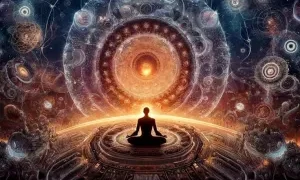
Essence of Yoga and Self-Realization in the Amrita Nada Upanishad
The Amrita Nada Upanishad contains 1 chapter, which includes 39 verses. This Upanishad focuses on the spiritual practices of Yoga, the control of Prana (vital breath), meditation, and the realization of the Self (Atman) as Brahman. It describes the step-by-step discipline for a yogin, from Pratyahara (sense withdrawal) to Samadhi (deep meditation), emphasizing both physical and mental purification.
Key Verses and Their Meanings:
- Verse 1: Abandoning worldly attachments like a fire-brand, the wise attains knowledge of Brahman.
- Verse 6: The six limbs of Yoga—Pratyahara, Dhyana, Pranayama, Dharana, Tarka, and Samadhi—lead to spiritual perfection.
- Verses 10-14: Proper practice of Pranayama (inspiration, expiration, and retention) purifies the mind and body.
- Verse 16: Dharana is the concentration of the mind on the Atman, merging Sankalpa (intentions) into the Self.
- Verse 24: Union of Prana through the Susumna channel leads to Samadhi, the yogic absorption in the Self.
- Verses 30-31: Following the disciplined practice, the yogin attains Kaivalya (liberation) in a few months.
- Verse 39: The yogin whose Prana exits through the top of the head (Brahmarandhra) is free from rebirth. For More Information Click Here
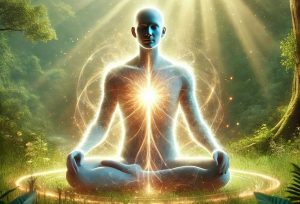
Liberation through Pranayama, Yoga, and Self-Realization
The Amrita Nada Upanishad teaches that mastery over the breath and the mind leads to liberation. By practicing Pranayama, Dharana, and Samadhi, the yogin purifies body and mind, attaining control over the senses. Meditation on the Atman reveals the unity of the individual self with Brahman. Discipline, self-control, and the proper execution of yogic practices result in the destruction of sins and mental impurities. Ultimately, the yogin transcends bodily limitations, attains Kaivalya, and is free from the cycle of rebirth. This Upanishad emphasizes practical steps toward spiritual perfection through inner focus and the subtle control of Prana. For More Information Click Here
Conclusion
The Amrita Nada Upanishad emphasizes the purification of body, mind, and senses through Yoga, Pranayama, and meditation. By controlling Prana and practicing Dharana, Tarka, and Samadhi, one attains mastery over the self. The text guides aspirants toward inner quiescence and realization of the Atman as Brahman. Through dedicated practice, one transcends worldly attachments and experiences the eternal bliss of Kaivalya. It highlights the union of the individual self with the supreme consciousness. Ultimately, the Upanishad reveals that liberation is achieved through disciplined spiritual effort and self-knowledge.
Join Our Classes:
The Upanishads are more than just ancient texts—they are timeless guides to living with clarity, balance, and inner peace. Our classes make their profound wisdom easy to understand and apply in everyday life. Join us to explore these teachings and discover a new way of seeing yourself and the world!