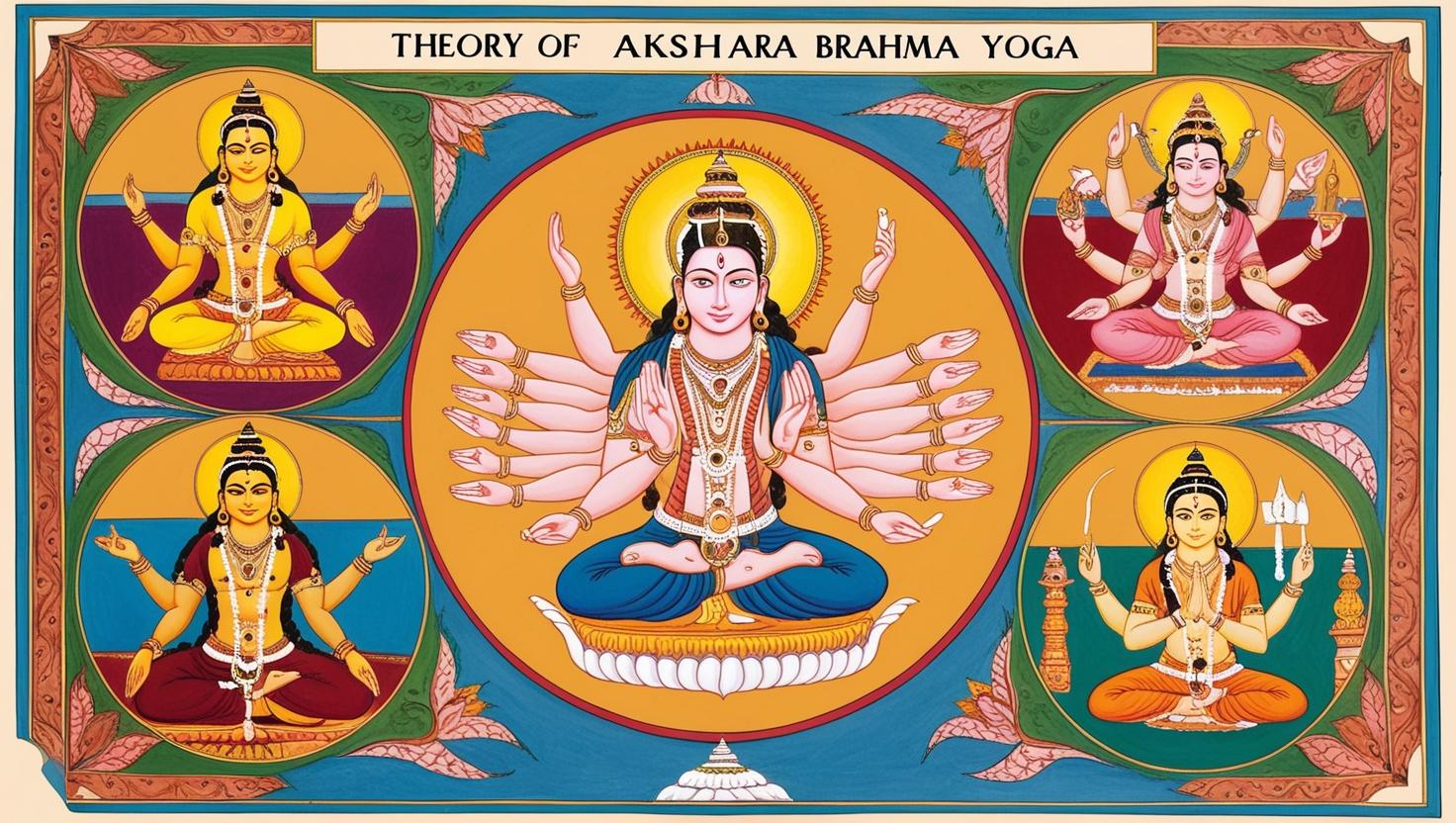
Bhahmananda Vallli – Anuvaka 8
Anuvaka 8 of the Brahmananda Valli presents Brahman as the very essence of bliss (ānanda-svarūpa), not dependent on anything external. Sankaracharya emphasizes that one who realizes this truth becomes utterly fearless, as all fear arises from duality, which vanishes in the vision of non-dual Brahman. This supreme bliss is beyond the grasp of the mind and speech, being the innermost Self and not an object of knowledge. Even the gods are said to seek and worship this bliss, acknowledging its transcendence. True fulfillment lies not in heaven or ritual but in direct Self-knowledge. This Anuvaka exalts the fearless joy of one who abides in Brahman. For More Information Click Here

Sanskrit Mantra:
“ānandaṁ brahmaṇo vidvān na bibheti kutascana | etam ha devānām pratyarcināṁ pratyarcayata | yato vāco nivartante aprāpya manasā saha || ānandaṁ brahmaṇo vidvān na bibheti kutascana ||”
Translation:
He who knows the bliss of Brahman fears nothing whatsoever. Indeed, the gods seek to attain this bliss, for it is that from which words turn back, along with the mind, not reaching it. He who knows the bliss of Brahman fears nothing whatsoever.
Sankara’s Commentary – Key Insights:
1. Bliss as the Nature of Brahman (Ānanda-svarūpa):
Sankara states that Brahman is not just associated with bliss—it is bliss. Not fleeting emotional pleasure, but infinite, unchanging fullness (pūrṇatva) that is the essence of one’s own Self. He calls this “ānanda-svarūpa-brahma”, the very form of bliss.
2. Fearlessness Through Realization:
According to Sankara, fear arises only from duality—from the perception of something other than oneself. When a person realizes that there is nothing apart from the Self, and that Self is Brahman, fear has no basis. This is the liberation born of abheda-jñāna (non-dual knowledge).
3. Brahman Beyond Words and Thought:
Sankara explains that since Brahman is not an object, it cannot be reached by speech (vāk) or mind (manas)—both of which operate in the realm of duality. Only through direct realization (aparokṣa-jñāna) can Brahman be known as the Self.
He remarks: “yato vāco nivartante aprāpya manasā saha” means that both conceptual thinking and language fail to grasp Brahman, which is ever the subject, never the object.
4. Even the Gods Seek This Bliss:
Sankara interprets the line about gods worshipping this bliss as symbolic—even beings of great knowledge and power revere this ultimate reality, acknowledging their incompleteness without Self-realization.
Sankara’s Core Message:
-
Brahman is not merely blissful—it is bliss itself.
-
Fearlessness arises only through the realization of non-duality.
-
Brahman cannot be approached through intellect or ritual, only through direct Self-knowledge.
-
The pursuit of this realization is the highest spiritual aspiration, even for divine beings.
Sankaracharya’s Teaching in Anuvaka 8: Realizing the Self as Infinite Bliss and Fearlessness
In Anuvaka 8, Adi Sankaracharya conveys that Brahman is not merely associated with bliss—it is bliss itself (ānanda-svarūpa), the unchanging, infinite fullness that constitutes the true nature of the Self. He emphasizes that fear arises only from duality, and the knower of Brahman becomes fearless, having realized that there is nothing apart from the Self. Sankara also points out that Brahman cannot be reached by speech or mind, as it is not an object of thought, but the eternal subject—the witness of all experience. The line “yato vāco nivartante…” is interpreted to mean that conceptual knowledge fails where direct realization begins. Even gods seek this bliss, showing that nothing surpasses Self-realization. Thus, Sankara teaches that knowing Brahman as one’s own Self is the supreme knowledge and the source of true, fearless joy. For More Information Click Here

The Supreme Significance of Anuvaka 8: Abiding in the Blissful and Fearless Self
Anuvaka 8 holds a central place in the Brahmananda Valli as it encapsulates the culmination of Vedantic realization—the identity of the Self with limitless bliss (ānanda). It declares that the knower of Brahman attains absolute fearlessness, a hallmark of liberation (moksa), because fear is born of duality, which vanishes upon realizing the non-dual Self. The verse also affirms that Brahman is beyond speech and thought, highlighting the inadequacy of intellectual efforts and the need for direct intuitive realization. The fact that even gods revere this bliss underscores its supreme and transcendental nature. Thus, Anuvaka 8 is a profound declaration of the parama-puruṣārtha (supreme goal of life)—to abide in the fearless, blissful Self that is none other than Brahman.

Conclusion
In conclusion, Anuvaka 8 proclaims that the highest goal of life is the realization of Brahman as limitless bliss—a state beyond fear, thought, and speech. Adi Sankaracharya clarifies that this is not an external attainment but the recognition of one’s own true nature. The seeker who knows Brahman as the Self transcends all limitations, as fear and sorrow exist only in ignorance and duality. Even divine beings revere this truth, which lies beyond the reach of all objective knowledge. Thus, the Upanishad and Sankara together reveal that liberation is the fearless abiding in one’s own blissful Self.
Join Our Classes:
The Upanishads are more than just ancient texts—they are timeless guides to living with clarity, balance, and inner peace. Our classes make their profound wisdom easy to understand and apply in everyday life. Join us to explore these teachings and discover a new way of seeing yourself and the world!