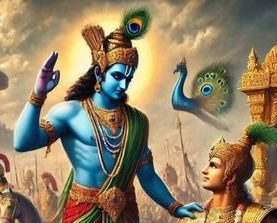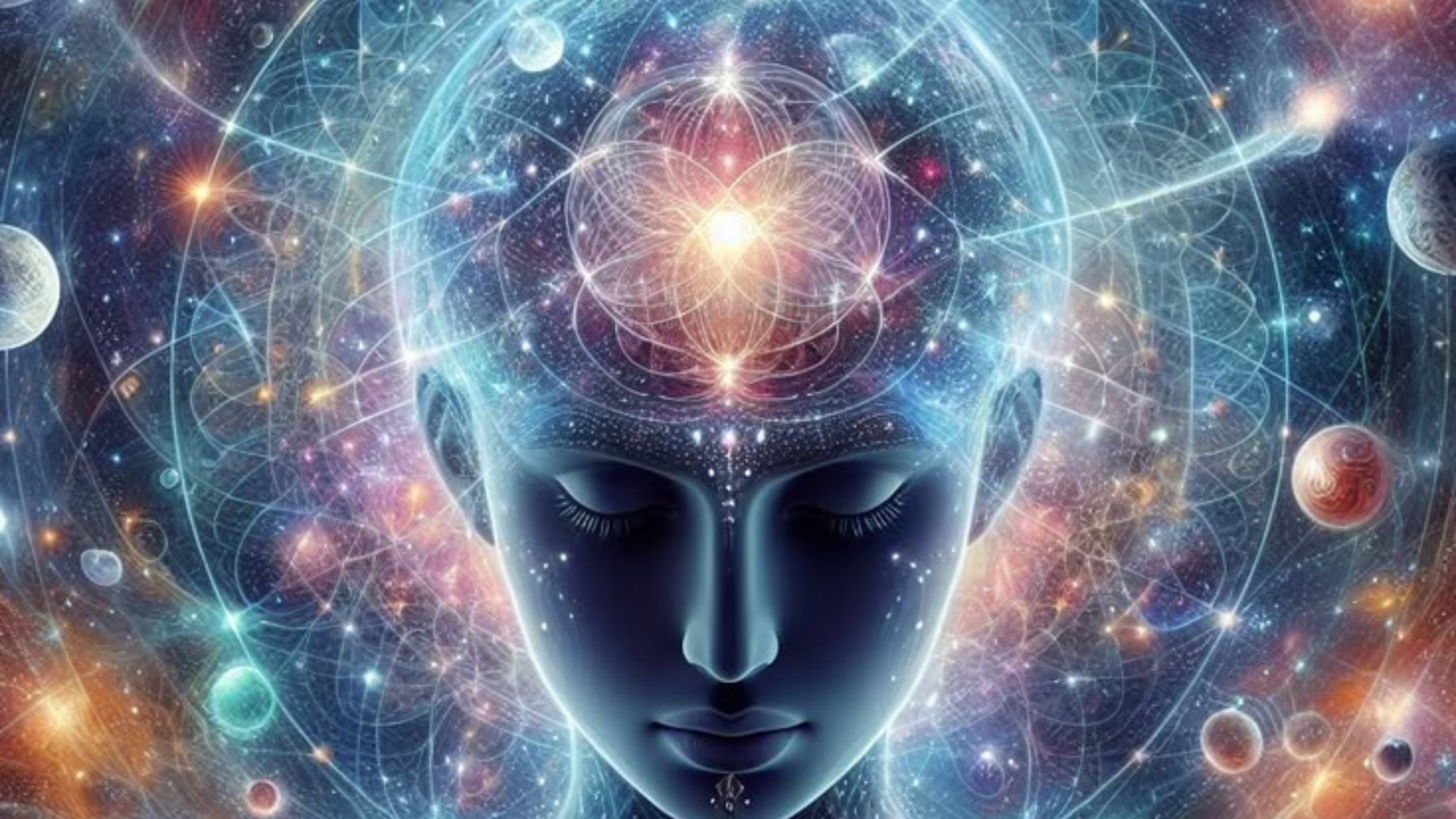
Anubhuti Prakasha Volume 2 – Insights on the Keno Upanishad
Anubhuti Prakasha Volume 2 continues Swami Vidyaranya’s systematic commentary on the Upanishads, offering profound clarity on the path of self-realization. This section specifically focuses on the Keno Upanishad, where subtle questions about the nature of Brahman, knowledge, and the Self are explored in depth. Verses 39 to 72 unfold the essence of inquiry into “That” which empowers the senses, mind, and intellect, yet remains beyond their grasp. The text integrates Advaitic reasoning with illustrative examples, guiding seekers towards direct experience of truth. Each verse emphasizes that Brahman is not an object of perception but the very source of awareness. Volume 2 thus bridges philosophical insight with meditative practice, making it invaluable for serious students of Vedanta. For More Information Click Here

Overview of Verses 39–72: The Essence of the Keno Upanishad
Verses 39 to 72 of Anubhuti Prakasha (Chapter 19, Volume 2) focus on the subtle teachings of the Keno Upanishad. They explain how Brahman, the supreme reality, is the source of all knowledge yet beyond sensory perception and intellectual grasp. Vidyaranya Swami uses reasoning and examples to show that the Self is the illuminator of mind and senses. The verses guide seekers toward realizing Brahman as pure awareness, transcending all duality.
Verse-by-Verse Commentary on Verses 39–72
Verse 39 – Brahman is that which enables all functions of speech, mind, and senses, yet itself cannot be grasped by them.
Verse 40 – The knower of Brahman recognizes that the source of all knowledge cannot itself be an object of knowledge.
Verse 41 – Brahman is not perceivable as sound, form, or touch—it is beyond empirical categories.
Verse 42 – The mind cannot think of Brahman, since Brahman is the very witness of thought.
Verse 43 – Speech fails to describe Brahman, for words themselves arise from Its power.
Verse 44 – The Self that illumines the intellect cannot be illumined by the intellect.
Verse 45 – The seeker must turn inward, realizing Brahman as the substratum of consciousness.
Verse 46 – Brahman is not grasped by logic alone but through purified insight.
Verse 47 – Direct experience (anubhuti) is emphasized as the means to realize Brahman.
Verse 48 – Just as fire is unseen yet revealed through sparks, Brahman is recognized through its expressions in life.
Verse 49 – Brahman is not distant; it is the immediate Self within.
Verse 50 – The Upanishad negates sensory and mental categories to reveal the Absolute.
Verse 51 – Realization occurs when the mind surrenders its grasping tendencies.
Verse 52 – Knowledge of Brahman is not intellectual but transformative awareness.
Verse 53 – The ego dissolves in the recognition of Brahman as the only reality.
Verse 54 – Brahman is self-proven (svayam-prakasa), needing no other validation.
Verse 55 – Objects appear and disappear, but Brahman remains constant as the witness.
Verse 56 – The seeker should cultivate inner purity to realize Brahman.
Verse 57 – Liberation is freedom from ignorance, not attainment of something new.
Verse 58 – The Upanishadic method (neti-neti) removes false identifications to reveal truth.
Verse 59 – Brahman is not bound by time, space, or causality.
Verse 60 – The Self is ever free, untouched by worldly experiences.
Verse 61 – Brahman is subtle, beyond perception, but nearer than the nearest.
Verse 62 – The illumined one recognizes unity behind diversity.
Verse 63 – Sense organs depend on Brahman, just as rays depend on the sun.
Verse 64 – Knowledge of Brahman leads to fearlessness and freedom.
Verse 65 – Ignorance is the only veil; once lifted, truth shines naturally.
Verse 66 – Brahman is realized as bliss itself, beyond worldly pleasure and pain.
Verse 67 – The wise perceive Brahman in all beings equally.
Verse 68 – Meditation deepens awareness of the Self as Brahman.
Verse 69 – Duality is an appearance; the substratum is one.
Verse 70 – Brahman is known not through argument but through silence of mind.
Verse 71 – Realized sages live in the world yet remain unattached.
Verse 72 – The teaching culminates: Brahman alone is real; the knower, known, and knowledge merge into one Self. For More Information Click Here
Swami Vidyaranya’s Insights on Volume 2
Swami Vidyaranya, through Anubhuti Prakasha Volume 2, emphasizes that true knowledge is self-knowledge—the realization of Brahman as the source of all awareness. He highlights that Brahman is beyond the reach of the senses, mind, and intellect, yet is the very foundation that enables all perception and cognition. The commentary shows that spiritual inquiry requires turning inward, cultivating discernment, and transcending superficial understanding. By presenting detailed explanations of the Keno Upanishad’s verses, the author guides seekers toward direct experiential realization rather than mere intellectual grasp.
Key Teachings and Essence of Volume 2
Volume 2 teaches that Brahman, the ultimate reality, cannot be seen, heard, or conceptualized—it is the witness of all faculties. The text emphasizes that liberation and insight arise from inner awareness, meditation, and contemplation, not from external knowledge or rituals. It underscores that the seeker must recognize the unity behind apparent diversity and realize that the Self, mind, and intellect are illumined by Brahman. In essence, Volume 2 bridges philosophical reasoning with practical guidance for spiritual realization, showing that understanding Brahman is both an intellectual and experiential journey. For More Information Click Here
The Significance of Volume 2: Realizing Brahman
Anubhuti Prakasha Volume 2 is crucial for students of Vedanta because it provides a deep, systematic exposition of the Keno Upanishad, revealing the subtle nature of Brahman and the Self. It teaches that true knowledge transcends the senses and intellect, guiding seekers toward direct experience of reality. The volume emphasizes inner inquiry, meditation, and the dissolution of ego as the path to liberation. Its clarity helps bridge the gap between philosophical understanding and spiritual realization. By highlighting the relationship between the Self, mind, and senses, it serves as a practical guide for contemplative practice. As the Upanishad declares, “That which cannot be seen, but through which the eye sees, know that alone as Brahman”—reminding us that the ultimate truth is the witness within. For More Information Click Here

Conclusion
Anubhuti Prakasha Volume 2 offers profound guidance for understanding the Keno Upanishad and realizing the Self. It emphasizes that Brahman, the ultimate reality, is beyond senses and intellect, yet illuminates all perception and knowledge. By turning inward, practicing meditation, and cultivating discernment, seekers can experience liberation and inner bliss. The volume bridges philosophical insight with practical spiritual practice, making it essential for serious students of Vedanta. As the Upanishad beautifully states, “The Self is not perceived by the mind, but the mind is illumined by the Self”—highlighting that true knowledge is direct, experiential awareness.