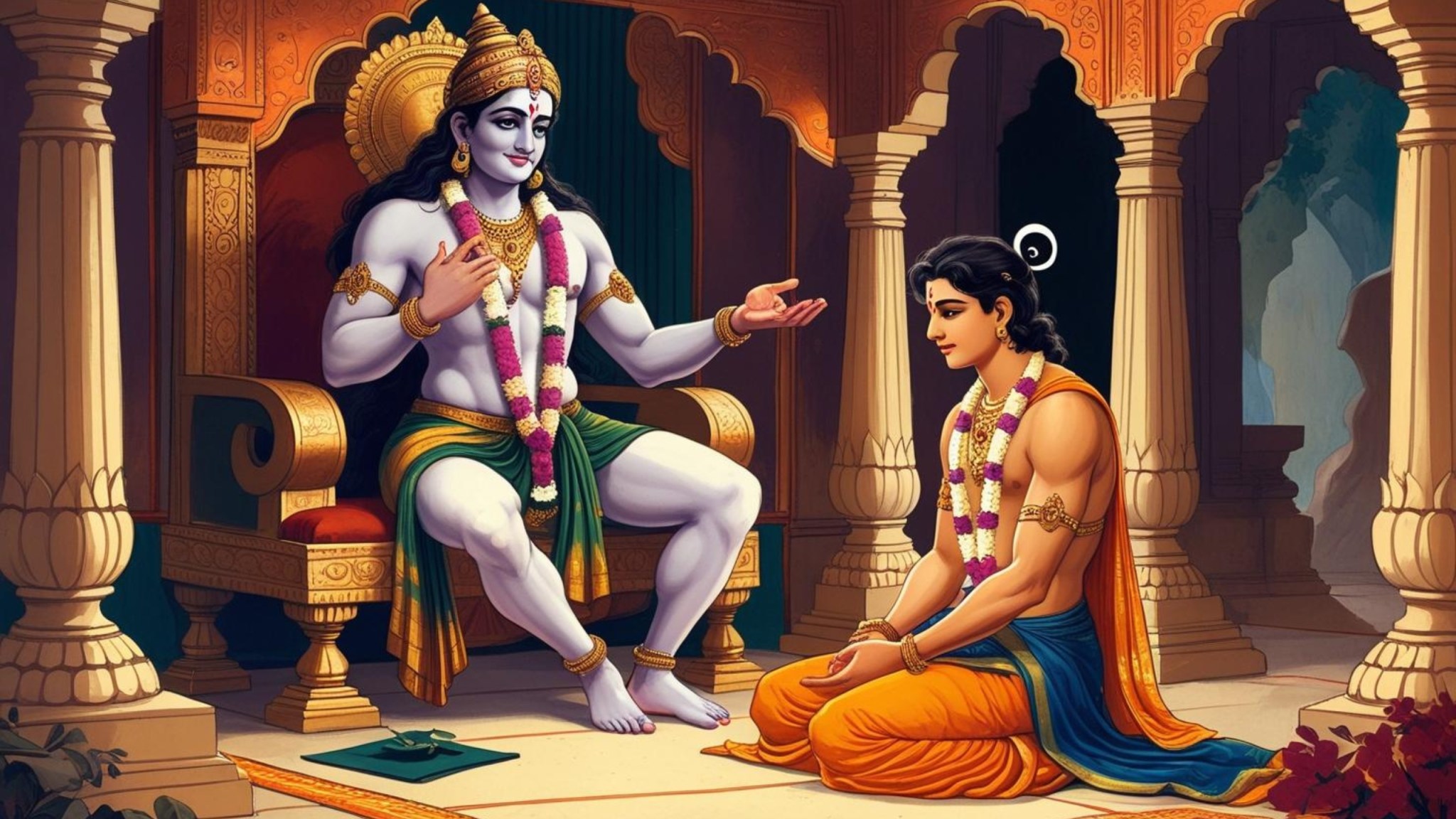
Chapter 16 – Daivāsura-Sampad Vibhāga Yoga
Chapter 16 of the Bhagavad Gita contains 24 verses and explains two fundamental types of human nature:
-
Daivī Sampad — Divine Qualities
-
Āsuri Sampad — Demoniac Qualities
Krishna shows how these qualities shape mind, character, behavior, destiny, and ultimately spiritual growth or decline. This chapter is deeply psychological and practical — teaching how inner nature determines outward life. Click Here To Access more other text.

Meaning of Daivāsura-Sampad Vibhāga Yoga
-
Daivī Sampad are traits that uplift, purify, and connect one with higher consciousness and universal harmony.
-
Āsuri Sampad are traits rooted in ego, ignorance, and self-destructive impulses that lead to bondage and suffering.
Krishna teaches that one can progress spiritually by cultivating divine traits and abandoning demoniac tendencies. Click view PDF.
Significance of Chapter 16
This chapter is significant because it:
-
Distinguishes inner qualities that lead toward freedom vs. bondage
-
Shows how character determines destiny
-
Reveals the psychological roots of ethical behavior
-
Offers a practical self-assessment framework
-
Points toward spiritual transformation and liberation
Verse & Meaning
Verse 16.1 – Krishna’s Declaration
Sanskrit
श्रीभगवानुवाच |
अभयं सत्त्वसंशुद्धिर्ज्ञानयागाश्च दृढधिया: ।
दानं दमश्च यज्ञश्च स्वाध्यायस्तप आ समाः ॥ १ ॥
Meaning
The Blessed Lord said:
“Fearlessness, purity of heart, steadfast intelligence, knowledge, self-control, sacrifice, study of sacred texts, and austerity are the qualities of the divine nature.”
Teaching
-
Divine qualities support inner clarity and ethical life
-
These form the foundation for spiritual evolution Click view PDF.
Verse 16.2 – More Divine Traits
Sanskrit
शमः शौचं क्षमा धृति: दया येषां सुखदुःखद: |
अभयाभयमतितुष्टा: सततं साम्यसमन्विताः ॥ २ ॥
Meaning
Self-control, purity, forgiveness, fortitude, compassion, and equanimity toward pleasure and pain — such persons are of divine nature.
Teaching
-
True strength lies in inner balance, not aggression
-
Compassion and forgiveness are key markers of spiritual character

Verse 16.3 – Even More Divine Traits
Sanskrit
एताः शुभाशुभगुणा: मते चाऽस्य भारत ।
मत्पराधीनाः शुभाशुभकार्येषु निश्चयाः ते ॥ ३ ॥
Meaning
These divine qualities, O Bharata, lead to auspicious results, and those who follow them remain steadfast in all actions.
Teaching
-
Divine qualities yield beneficial results
-
Stability in action comes from inner harmony Click view PDF.
Verse 16.4 – Demoniac Tendencies
Sanskrit
असत्धार्मिकमत्वेन बहु द्रोहपरोऽभवत् |
आचार्यगणमनातुः श्रेष्ठमनुतापमश्रिताः ॥ ४ ॥
Meaning
Persons of demoniac nature, out of unrighteousness and treachery, reject discipline and disrespect teachers and elders.
Teaching
-
Demoniac nature is marked by disrespect and rebellion
-
Lack of discipline reveals inner chaos
Verse 16.5 – Pride and Arrogance
Sanskrit
ते प्रसादं यजन्ति हिन्दुर्मदमथावतृष्णा: |
दीर्घशङ्का विद्वांसो विषमता येषु गता: ॥ ५ ॥
Meaning
Out of pride and insatiable desire, foolish people worship only those things that give pleasure and avoid what is wholesome.
Teaching
-
Ego seeks short-term gratification
-
Self-indulgence blinds moral insight Click view PDF.

Verse 16.6 – Arrogant and Dominating
Sanskrit
अहंकारं बलं दम्भं दर्पं कामं क्रोधमेव च |
एतेषां दैवी संस्पर्शा वर्णोपलब्धिर्यतीनां तु ॥ ६ ॥
Meaning
Ego, strength, deceit, pride, lust, and anger — though these may associate with divine forms, for the disciplined they are obstacles.
Teaching
-
Even powerful traits can become demonic when rooted in ego
-
Discipline is the antidote
Verse 16.7 – Destructive Forces
Sanskrit
अहितैहितवन्तो भावाश्च भवेयात्पुरुषर्षभ |
तल्लोकत्रयमाभवन्तो दैवी संपदां स्थितिधी: ॥ ७ ॥
Meaning
Those whose nature is harmful or misguided do not stand in divine qualities and fall into the three lower worlds.
Teaching
-
Negative qualities determine one’s life trajectory
-
Inner nature shapes destiny
Verse 16.8–9 – Demoniac Traits Continue
Sanskrit
द्रोहात्मा विनश्यच्चात्मा राक्षसादयुक्तः शुभम् |
अभिलाषी च परेषां न काङ्क्षी च शुभान्वये ॥ ८ ॥
Meaning (Combined)
The demoniac nature includes treachery, destruction, attachment to wrongdoing, self-serving desires, and a refusal to seek what is wholesome.
Teaching
-
Self-serving focus leads to harm
-
Spiritual direction is reversed in demoniac nature Click view PDF.

Verse 16.10 – Three Doors to Hell
Sanskrit
कामः क्रोधः द्वेषाभ्यां राजसं रजसो गतिः |
मामयानन्ययोगोऽस्य महाबाहो हानमद्भवः ॥ १० ॥
Meaning
Desire and anger are the two gateways to hell; intense attachment to the mode of passion leads to ruin.
Teaching
-
Desire and anger are deeply binding emotional forces
-
Emotional awareness is required for freedom
Verse 16.11 – Virtue and Spiritual Norms
Sanskrit
यद्गुणेभ्य: सर्वभूतानां न षड्भिर्भवति संपदा |
तमसो भूतेषु भूय: प्रवृद्धा धारणायाऽन्यथा ॥ ११ ॥
Meaning
Among beings, six types of qualities manifest — but in those in the mode of ignorance, tamas grows with no regard for support of virtue.
Teaching
-
Ignorance negates moral restraint
-
Virtue requires conscious cultivation Click view PDF.
Verse 16.12–13 – Disdain for Righteousness
Sanskrit
ये चात्महन्तारमनाथाश्च मैथुनसमन्विताः |
मानोपमानिभयाभयकराः सर्वकामकामयाः ॥ १२ ॥
Meaning
Those who delight in killing the self, cause harm, engage in sexual misconduct, and prioritize egoistic honor and fearlessness — all driven by selfish desire.
Teaching
-
Moral corruption arises from craving and ego
-
Ethical decay is psychological before it is behavioral Click view PDF.

Verse 16.14–15 – Consequences of Demonic Nature
Sanskrit
ये चांत: पूतः सौम्याः सन्तोऽपि तानुपासते |
भवन्ति पापसंयोगा राजसाः तमसान्विताः ॥ १४ ॥
Meaning (Summary)
Even those who appear gentle but are bound by passion and ignorance remain connected to the modes, affecting life and behavior.
Teaching
-
Outer calm can mask inner disorder
-
True peace arises only from wisdom, not from appearance Click view PDF.
Verse 16.16–18 – Godless Rejection of Dharma
Sanskrit
तेषामहं दु:खभागः सङ्कल्पोद्भवचेतसा |
धर्मप्रित्यत्यागात्मानस्तेषामुपविशिष्यते ॥ १६ ॥
Meaning
For those who reject dharma, actions that arise only from selfish intention lead to suffering and separation from divine support.
Teaching
-
Rejecting dharma leads to inner fragmentation
-
Selfish motives bind consciousness Click view PDF.
Verse 16.19 – Higher Principle Above Guṇas
Sanskrit
ये तु धर्म्यं चरन्तो प्राप्तानि समाधि पदं तत् |
अभ्यासार्थमपि चान्यत्तत्र तीर्त्वा भवरोगिणाम् ॥ १९ ॥
Meaning
Those who walk the path of righteousness and attain stabilizing wisdom cross over the ocean of worldly existence.
Teaching
-
Righteousness and disciplined inner life lead to liberation
-
Ethics supports spiritual realization Click view PDF.
Verse 16.20–22 – Qualities of the Divine
Sanskrit
भूतग्राममहमर्जुन सर्वलोकेषु राष्ट्रये |
असुराणां च मनुष्याणां त्रायते च धर्मसंस्थिताम् ॥ २० ॥
Meaning
I am the leader of the hosts of beings, the protector of all worlds and for establishing dharma — I also rescue the righteous and destroy the wicked.
Teaching
-
Divine supports harmony and righteous life
-
Spiritual strength serves life, not ego Click view PDF.
Psychological & Spiritual Dimensions
Chapter 16 teaches that:
-
Character arises from inner qualities, not mere behavior
-
Ego, craving, anger, ignorance are psychological states leading to suffering
-
Compassion, humility, equanimity, self-restraint arise from divine qualities
Understanding these qualities is a self-assessment tool for spiritual growth. Click view PDF.

Practical Applications
Self-Reflection
Observe inner responses — are they rooted in fear, craving, anger, or clarity and compassion?
Cultivate Divine Traits
Practice forgiveness, non-hate, self-control, generosity, and humility.
Transform Emotional Patterns
Rather than suppress emotions, understand their basis in guṇas and choose responses aligned with wisdom. Click view PDF.