Chapter 3 – The Hidden Self Behind All Powers
Chapter 3 of the Keno Upanishad presents a symbolic story of the gods—Indra, Agni, and Vayu—who seek to discover the ultimate source of their powers. Despite their might, they fail to grasp the hidden Self, illustrating that intellect, energy, and life force cannot independently realize Brahman. A mysterious Yaksha, representing the guru or inner wisdom, reveals that all faculties are enabled by the unseen consciousness. The chapter emphasizes humility and surrender as essential for spiritual insight. By recognizing the Self as the ultimate knower and enabler, one transcends ego and worldly achievements. It teaches that true strength, immortality, and liberation come from realizing the inner Self, not from external power. For More Information Click Here

Chapter 3 – The Myth of the Gods and the Hidden Self
Theme:
Chapter 3 illustrates the elusiveness of Brahman through a symbolic myth involving Indra, Agni, Vayu, and a mysterious Yaksha. The gods, representing powers of the mind and senses, cannot discover the true Self on their own. This chapter emphasizes that humility, guidance, and introspection are necessary to realize the inner consciousness that underlies all power.
Teaching:
The chapter teaches that no amount of external power or intellect can grasp Brahman. True realization comes by recognizing the Self as the unseen force behind all faculties. Spiritual progress requires humility, reverence for the teacher (guru), and awareness that all powers—hearing, thinking, seeing, burning—belong to Brahman.
Verse-by-Verse Summary – Chapter 3 (12 Verses)
Verse 1: The gods (Indra, Agni, Vayu) are proud of their powers and seek to find the source behind them.
Verse 2: They approach a mysterious being (Yaksha) to test their strength and wisdom.
Verse 3: The Yaksha asks them questions they cannot answer, showing their powers are limited.
Verse 4: Indra, symbolizing the intellect, cannot comprehend the hidden Self.
Verse 5: Agni, representing energy and will, also fails to grasp the inner source.
Verse 6: Vayu, symbolizing life force and action, recognizes its dependence on a higher power.
Verse 7: The Yaksha teaches that all powers arise from Brahman, the unseen Self.
Verse 8: Brahman cannot be known through ego or external accomplishments.
Verse 9: Humility and reverence are necessary; without them, the Self remains hidden.
Verse 10: Even gods must submit to the wisdom of the guru or inner guide to realize Brahman.
Verse 11: The Self is the ultimate knower and enabler of all faculties; it is beyond senses and intellect.
Verse 12: Realizing Brahman grants true strength, immortality, and liberation, surpassing all worldly powers. For More Information Click Here
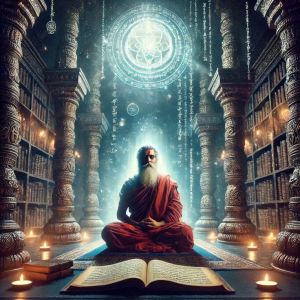
Shankaracharya’s Insights – Chapter 3
- Gods as faculties (Verses 1–6):
Shankara interprets Indra, Agni, and Vayu as metaphors for the intellect, energy, and life force. Their failure illustrates that no inner faculty can know Brahman independently. - Yaksha as the teacher (Verses 2–3):
The Yaksha represents the guru or inner witness, revealing that Brahman is beyond all conventional measures of power or intellect. - Dependence on Brahman (Verses 7–8):
All faculties—seeing, hearing, thinking—are enabled by Brahman. Shankara stresses that recognizing this is key to true knowledge. - Humility and surrender (Verses 9–10):
Even the mightiest (symbolic gods) must approach Brahman with humility. Ego obstructs realization. - The Self as ultimate power (Verses 11–12):
Brahman is the unseen knower, the source of immortality and liberation. Shankara highlights that realization transforms identity: the knower becomes established in the Self. For More Information Click Here

Conclusion
Chapter 3 uses the symbolic story of the gods and the Yaksha to show that no external power or faculty can grasp Brahman. True knowledge arises only through humility, introspection, and guidance from a teacher or inner wisdom. The Self, unseen and beyond intellect, is the source of all faculties—hearing, seeing, thinking, and acting. By recognizing this, the seeker transcends ego and worldly powers, attaining inner strength, immortality, and liberation. This chapter emphasizes that realization of Brahman is a matter of insight, surrender, and turning inward, not of external accomplishments.
Join Our Classes:
The Upanishads are more than just ancient texts—they are timeless guides to living with clarity, balance, and inner peace. Our classes make their profound wisdom easy to understand and apply in everyday life. Join us to explore these teachings and discover a new way of seeing yourself and the world!