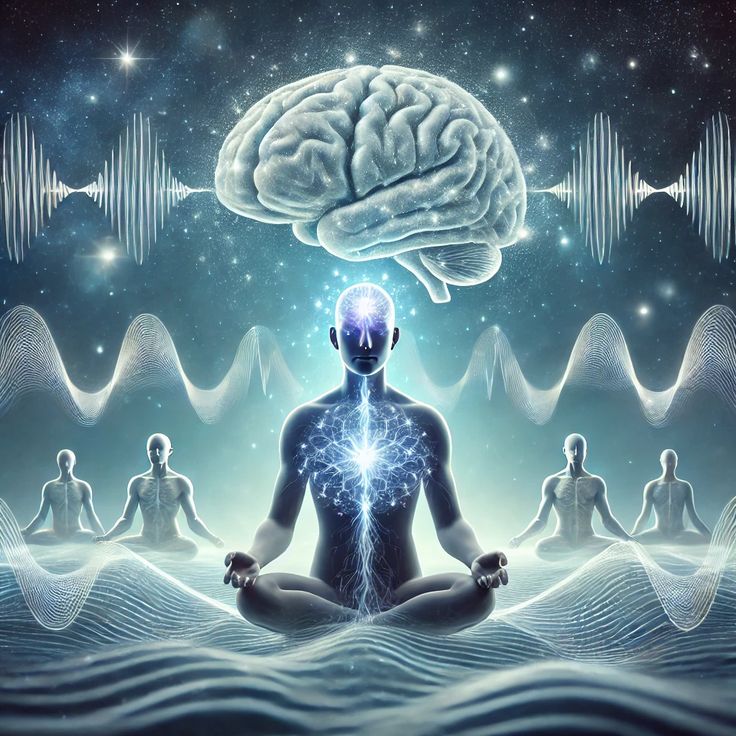
Chapter 6 – Dhyāna Yoga
Chapter 6 of the Bhagavad Gita contains 47 verses and presents Krishna’s systematic teaching on meditation and the control of the mind. After explaining the paths of knowledge and selfless action, Krishna now guides Arjuna on how to steady the restless mind, withdraw the senses, and realize the Self through inner discipline. Meditation (dhyāna) is shown not as an escape from life, but as the culmination of spiritual practice that arises from self-control, balance, and disciplined awareness. Click Here To Access more other text.

Meaning of Dhyāna Yoga
Dhyāna means meditation or sustained contemplation, and Yoga means union with the Supreme. Dhyāna Yoga is the discipline through which the mind transcends its constant fluctuations (vṛttis) and rests in the Self, leading to direct realization of one’s true nature. Krishna teaches that this inner stillness comes not from suppression, but from balanced living, sense control, focus, and practice. Click view PDF.
Significance of Chapter 6 in the Bhagavad Gita
Chapter 6 is significant because it:
-
Teaches a practical method for meditation
-
Explains the nature of the mind and senses and how to control them
-
Shows how meditation integrates with action and devotion
-
Presents the yogi’s state of equilibrium, peace, and self-realization
-
Bridges inner discipline with everyday life
This chapter helps seekers understand that true meditation is a way of life, not a momentary exercise. Click view PDF.

Key Concepts & Teachings
1. Renunciation Leads to Yoga (Verses 1–9)
Krishna begins by clarifying that the person who renounces desires and acts without craving the fruits of action is truly a renunciant. A yogi who acts with self-control, offering all actions to the Divine, goes beyond both renunciation and mere action. Thus, meditation and disciplined action are not separate but interdependent.
Krishna explains how a person with a disciplined mind, balanced in success and failure, achieves peace.
2. Controlling the Mind and Senses (Verses 10–17)
Krishna describes the process of meditation:
-
Choose a clean, quiet spot
-
Sit in a steady posture
-
Withdraw the senses from external objects
-
Keep the body, breath, and mind balanced and composed
-
Focus the mind on the Self or the Divine without distraction
This teaches that meditation begins with external discipline and deepens into inner stillness.
3. The Steadfast Yogi (Verses 18–23)
Krishna explains that the yogi whose mind is fully restrained, without craving or aversion, and established in inner calm, is truly a meditator. The mind naturally retreats from external sensory temptations when one’s focus is shifted inward.
The yogi lives with:
-
Equanimity in pleasure and pain
-
Freedom from desire, fear, and anger
-
Insight into the Self as witness and observer
Krishna notes that the mind is like the wind — restless by nature — but can be controlled through practice (abhyāsa) and detachment (vairāgya). Click view PDF.

4. The Experience of Inner Bliss (Verses 24–30)
When the mind becomes still, free from agitation, the yogi rests in inner awareness and experiences a bliss that is not dependent on external sense pleasures. This bliss arises from the Self — the unchanging reality within.
Krishna emphasizes that the one who is free from desires, anger, and fear, and who abides in meditation, sees the Self in all beings and all beings in the Self. This revelation leads to universal compassion and unity.
5. The Goal of Meditation (Verses 31–47)
Krishna explains that one who meditates with unwavering focus attains the supreme peace and ultimate realization. If the mind wanders, the yogi gently brings it back, like a gardener tending a plant. Krishna reassures Arjuna that though the mind is difficult to control, through practice and detachment, it can be mastered.
Finally, Krishna says that the one who devotes all actions and thoughts to the Divine, acts without ego, and abides in meditation, attains liberation (mokṣa) — the highest spiritual goal. Click view PDF.
Psychological and Spiritual Dimensions
Chapter 6 penetrates the psychology of the restless mind and shows:
-
The mind’s natural tendency toward distraction
-
The need for disciplined practice rather than force
-
The importance of balanced living
-
The transformation from sense-dependence to inner stability
-
That meditation is not escape but integration of awareness into daily life
Krishna’s teaching here is practical, step-by-step, and ultimately transformative. Click view PDF.

Practical Applications
Daily Meditation Practice
Setting aside regular time — even short — to sit, breathe, and watch the mind fosters deep calm and clarity.
Balanced Living
Moderation in food, sleep, work, and recreation supports a contemplative mind.
Sense Control
Awareness of sensory impulses reduces emotional turbulence and supports inner stability.
Continuous Awareness
Bringing mindfulness into daily activities — not only formal meditation — leads to steady inner growth. Click view PDF.
Conclusion
Chapter 6 – Dhyāna Yoga teaches that true meditation leads to self-realization by transforming a restless mind into a calm, disciplined, and aware consciousness. Meditation is not a passive escape but an active, aware, and balanced journey toward the Self. Krishna’s teachings show that through discipline, self-control, and devotion, the mind can be stilled, and the meditator abides in inner bliss and unity with all beings. Meditation thus becomes the path of peace, balance, and liberation — the culmination of spiritual practice.