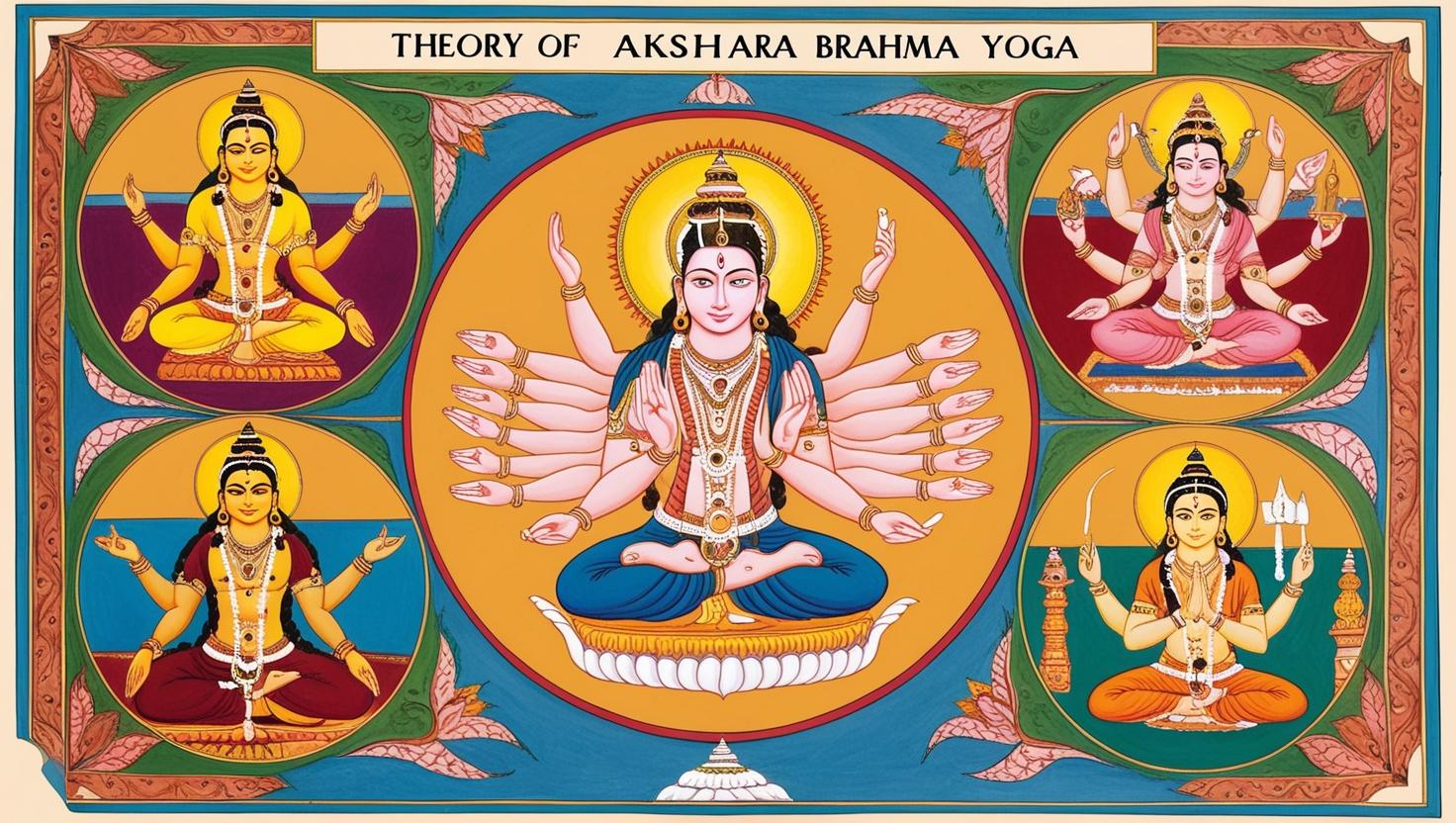
Bhrigu Valli – Anuvaka 10
Anuvaka 10 highlights the sacred importance of annam (food), stating that it should never be reviled or refused. The Upaniṣad enjoins a sacred vow (vratam)—to honor, offer, and partake of food in reverence. One who understands food as Brahman must also nourish others, ensuring that no one is denied sustenance. Offering food with humility and devotion becomes an act of worship, recognizing the divine in all beings. This section links material sustenance with spiritual realization, reinforcing that Brahman pervades both the giver and the gift. Food is not just nourishment but an expression of cosmic interdependence and unity. For More Information Click Here
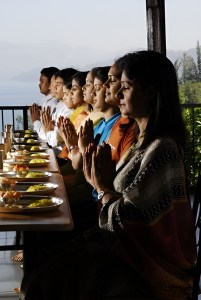
Bṛgu Valli – Anuvaka 10: Sacredness of Food and the Vow of Reverence
Sanskrit Key Lines :
“Annam na nindyāt. Tad vratam.”
“Let one not speak ill of food. That is the vow.”
“Annam na pari chakṣīta. Tad vratam.”
“Let one not refuse food (when offered). That is the vow.”
“Prāṇo vā annam, śarīram anna-dānam.”
“Prana is food; the body is the consumer of food.”
Expanded Commentary with Sankaracharya’s Insights:
In this Anuvaka, the Upaniṣad shifts from meditative knowledge to ethical and practical conduct rooted in Brahma-jñāna (knowledge of Brahman). After attaining realization in Anuvakas 6–9, the realized being now expresses that wisdom through action, particularly through honoring and sharing food. For More Information Click Here
1. “Do not despise food” (Annam na nindyāt)
Sankaracharya comments that food (annam), though the most physical of entities, was also the starting point in Bṛgu’s inquiry into Brahman (Anuvaka 2). Thus, it is not low or impure, but a manifestation of Brahman at the grossest level. To revile or reject it is to misunderstand the unity of all.
Food is not merely a substance—it is the very support of life and an embodiment of the divine.
2. “Do not refuse food when offered” (Annam na pari chakṣīta)
To refuse food is considered an offense, not just of etiquette but of dharma and spiritual integrity. If food is Brahman, then every offering of food is an offering of Brahman to Brahman. Refusing food implies a rejection of the cosmic order (ṛta).
Sankara says: “One who knows food as Brahman must also uphold the sanctity of giving and receiving.”

3. “Prana is food, and the body is the consumer”
This line highlights mutual dependence. In a deeper symbolic sense:
-
Prana (life force) is sustained by food, and
-
The body, in turn, becomes food for other beings or for the fire at death.
Sankara expands this by stating that life itself is an exchange of food-energy, part of the cyclical oneness of existence. Everything feeds and is fed upon—there is no separation in truth.
4. The Vow (Vratam)
Each statement ends with the phrase: “Tad vratam” – “This is the vow.”
Sankaracharya interprets this as a discipline of the knower—the vrata of the realized soul is not to escape the world, but to serve it with reverence, seeing Brahman in all.
This marks a mature Vedantic ethic—wisdom must manifest in compassion, generosity, and responsibility.

Spiritual Implication:
Anuvaka 10 links Jnana (Knowledge) with Karma (Right Action). The realized sage does not become indifferent but becomes a source of nourishment and shelter for others. Food, in this view, is sacred, universal, and a means of expressing oneness.
In the larger context of Vedic culture, Anna-dāna (offering food) is the highest charity because it is life-giving and symbolic of non-duality—giver, gift, and receiver are all Brahman.
The Realized One Sees Food as Brahman: Sankara’s Teaching on Anuvaka 10
In his bhasya (commentary), Adi Sankaracharya conveys that true realization of Brahman must reflect in one’s daily conduct. In Anuvaka 10, he underscores the spiritual sanctity of food (annam) and its non-dual relationship with Brahman. Having traced Brahman from gross to subtle—food to bliss—the realized sage must now honor the unity in all, especially through reverence and sharing of food. Sankara teaches that food is Brahman, and giving or receiving food is an act of Brahma-yajña (offering to Brahman). To despise or refuse food is not just wrong but a rejection of the very truth of non-duality. Therefore, he insists that one must observe the vow (vratam) of humility, generosity, and reverence toward food, as a direct expression of Jnana in action. The knower becomes not just enlightened, but also nourishing and compassionate—seeing no distinction between the eater, the food, and the offered. For More Information Click Here
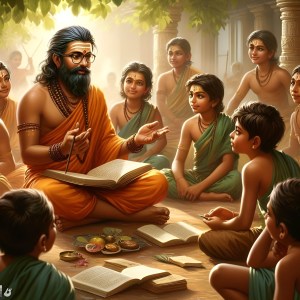
Anuvaka 10: Living Vedanta Through Reverence for Food
Anuvaka 10 of the Bhrigu Valli highlights the spiritual sanctity of food (annam) and its direct connection to Brahman. It emphasizes that reverence for food is a sacred vow (vratam) for the one who has realized the unity of existence. The teaching moves from intellectual realization to ethical responsibility, showing that Brahma-jñāna must manifest as compassion, generosity, and right conduct. Offering food becomes a sacred act—a yajña (sacrifice)—where giver, receiver, and food are all Brahman. Adi Sankaracharya stresses that the knower of Brahman lives the truth by honoring the cosmic cycle of nourishment. Thus, this Anuvaka bridges inner realization and outer action, making it a cornerstone of Vedantic living.
Conclusion:
Anuvaka 10 reaffirms that Brahma-jñāna is not complete without ethical living. Reverence for food becomes a spiritual practice, a living Vedanta. According to Sankara, this represents the embodiment of knowledge—where the Self-realized person lives the truth through simple, sacred acts, honoring the interdependence of all beings as one Brahman.
Join Our Classes:
The Upanishads are more than just ancient texts—they are timeless guides to living with clarity, balance, and inner peace. Our classes make their profound wisdom easy to understand and apply in everyday life. Join us to explore these teachings and discover a new way of seeing yourself and the world!