Chapter 8 – Akṣara-Brahma Yoga
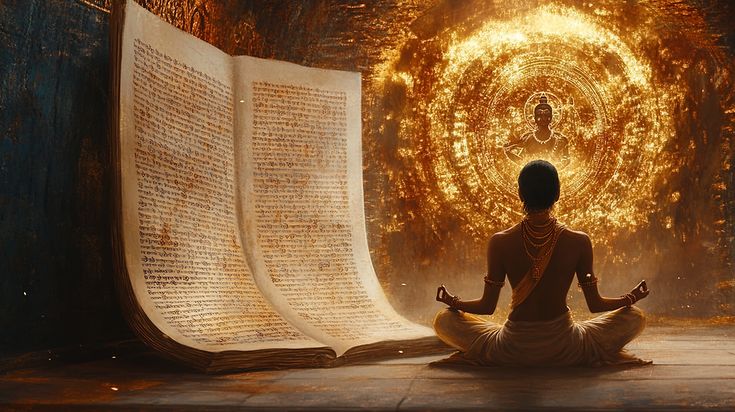
Chapter 8 of the Bhagavad Gita contains 28 verses and is titled Akṣara-Brahma Yoga, meaning the Yoga of the Imperishable Supreme Reality. In this chapter, Arjuna seeks deeper clarity about Brahman, the Self, karma, creation, and most importantly, the state of consciousness at the time of death. Krishna explains that liberation is attained by remembering the Supreme at life’s final moment, which is made possible through lifelong spiritual discipline, devotion, and meditation.
This chapter bridges metaphysical knowledge with practical spiritual preparation, emphasizing remembrance of God as the key to liberation. Click Here To Access more other text.
Meaning of Akṣara-Brahma Yoga
-
Akṣara – the imperishable, eternal reality
-
Brahma – the Supreme Absolute
-
Yoga – union with that Supreme
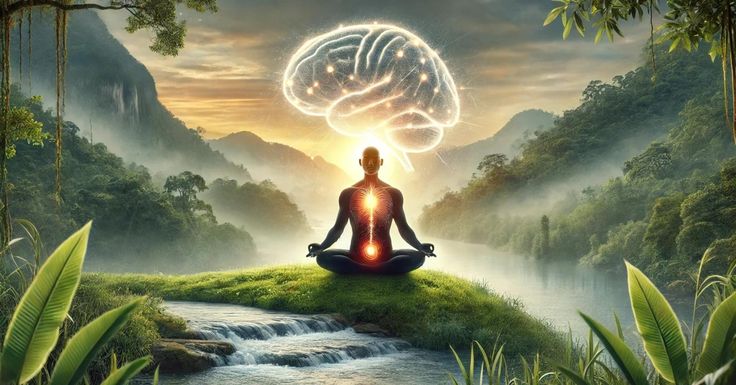
Akṣara-Brahma Yoga teaches that realization of the imperishable Brahman is achieved through constant remembrance, disciplined living, meditation on Om, and devotion, culminating in conscious departure from the body. Click view PDF.
Significance of Chapter 8 in the Bhagavad Gita
Chapter 8 is significant because it:
-
Defines Brahman, the Self, karma, and creation
-
Explains the power of final thought at death
-
Describes two paths after death
-
Introduces Om (AUM) as a meditation symbol
-
Emphasizes continuous remembrance of God
This chapter answers one of humanity’s deepest questions: What happens at death, and how can one attain liberation? Click view PDF.
Verse & Meaning
Verse 8.1 – Arjuna’s Fundamental Questions
Sanskrit
अर्जुन उवाच |
किं तद्ब्रह्म किमध्यात्मं किं कर्म पुरुषोत्तम |
अधिभूतं च किं प्रोक्तमधिदैवं किमुच्यते ||
Meaning
Arjuna said:
“What is Brahman? What is the Self? What is action? What is the material manifestation, and who is the Divine principle?”
Teaching
-
Establishes metaphysical inquiry
-
Shows Arjuna’s readiness for deeper truth
-
Frames the entire chapter Click view PDF.
Verse 8.3 – Definition of Brahman and Karma
Sanskrit
श्रीभगवानुवाच |
अक्षरं ब्रह्म परमं स्वभावोऽध्यात्ममुच्यते |
भूतभावोद्भवकरो विसर्गः कर्मसंज्ञितः ||
Meaning
Krishna said:
“The imperishable is Brahman. The Self is one’s intrinsic nature. Action is that which causes the creation of beings.”
Teaching
-
Brahman is eternal and unchanging
-
Karma sustains the cycle of creation
-
Self is distinct from body and mind Click view PDF.
Verse 8.4 – Adhibhūta, Adhidaiva, Adhiyajña
Sanskrit
अधिभूतं क्षरो भावः पुरुषश्चाधिदैवतम् |
अधियज्ञोऽहमेवात्र देहे देहभृतां वर ||
Meaning
The perishable is the material world; the Divine governs cosmic functions; and I Myself am the Lord of sacrifice within the body.
Teaching
-
God dwells within every being
-
Sacrifice is internal, not merely ritual
-
Spirituality is inward Click view PDF.
Verse 8.5 – Remembrance at Death
Sanskrit
अन्तकाले च मामेव स्मरन्मुक्त्वा कलेवरम् |
यः प्रयाति स मद्भावं याति नास्त्यत्र संशयः ||
Meaning
Whoever remembers Me alone at the time of death attains My state without doubt.
Teaching
-
Final thought determines destination
-
Lifelong remembrance prepares the mind
-
God-consciousness leads to liberation Click view PDF.

Verse 8.6 – Law of Final Thought
Sanskrit
यं यं वापि स्मरन्भावं त्यजत्यन्ते कलेवरम् |
तं तमेवैति कौन्तेय सदा तद्भावभावितः ||
Meaning
Whatever one remembers at death, that state one attains, having been absorbed in it throughout life.
Teaching
-
Habitual thinking shapes destiny
-
Mind must be trained spiritually
-
Conscious living is essential Click view PDF.
Verse 8.7 – Constant Remembrance
Sanskrit
तस्मात्सर्वेषु कालेषु मामनुस्मर युध्य च |
मय्यर्पितमनोबुद्धिर्मामेवैष्यस्यसंशयः ||
Meaning
Therefore, remember Me at all times and perform your duty. With mind and intellect fixed on Me, you shall surely attain Me.
Teaching
-
Devotion and duty go together
-
Spiritual life does not negate action
-
Continuous remembrance is key Click view PDF.
Verse 8.8 – Practice of Meditation
Sanskrit
अभ्यासयोगयुक्तेन चेतसा नान्यगामिना |
परमं पुरुषं दिव्यं याति पार्थानुचिन्तयन् ||
Meaning
By constant practice of meditation and unwavering focus, one attains the Supreme Divine Person.
Teaching
-
Practice (abhyāsa) steadies the mind
-
Meditation leads to realization
-
Focus must be consistent

Verse 8.10 – Departure with Awareness
Sanskrit
प्रयाणकाले मनसाऽचलेंन भक्त्या युक्तो योगबलेन चैव |
भ्रुवोर्मध्ये प्राणमावेश्य सम्यक् स तं परं पुरुषमुपैति दिव्यम् ||
Meaning
At death, one who fixes the mind between the eyebrows with devotion and yogic strength attains the Supreme.
Teaching
-
Conscious departure is possible
-
Yoga prepares one for death
-
Awareness transcends mortality Click view PDF.
Verse 8.13 – Om as the Supreme Symbol
Sanskrit
ओमित्येकाक्षरं ब्रह्म व्याहरन्मामनुस्मरन् |
यः प्रयाति त्यजन्देहं स याति परमां गतिम् ||
Meaning
One who departs remembering Me while chanting Om attains the supreme state.
Teaching
-
Om represents Brahman
-
Sound supports meditation
-
Sacred symbols aid realization
Verse 8.15 – Freedom from Rebirth
Sanskrit
मामुपेत्य पुनर्जन्म दुःखालयमशाश्वतम् |
नाप्नुवन्ति महात्मानः संसिद्धिं परमां गताः ||
Meaning
Great souls who attain Me do not return to this impermanent world of suffering.
Teaching
-
Liberation ends rebirth
-
World is transient
-
God-realization is final freedom Click view PDF.

Verse 8.23–26 – The Two Paths
Meaning (Summary)
Krishna explains the Path of Light (leading to liberation) and the Path of Darkness (leading to rebirth). Yogis who depart during the bright path attain liberation, while others return to rebirth.
Teaching
-
Consciousness determines destiny
-
Knowledge removes fear of death
-
Yogis transcend both paths
Psychological & Spiritual Dimensions
Chapter 8 teaches that:
-
Fear of death arises from ignorance
-
Remembrance of God removes fear
-
Conscious living leads to conscious dying
-
Meditation disciplines the wandering mind Click view PDF.

Practical Applications
Prepare for Life and Death
Live each day in remembrance of the Divine so that death becomes peaceful and fearless.
Practice Meditation and Om
Daily meditation refines awareness and steadies the mind.
Perform Duty with Devotion
Spirituality is practiced through ordinary life.
Conclusion
Chapter 8 – Akṣara-Brahma Yoga teaches that liberation is attained through constant remembrance of the imperishable Brahman. Krishna reveals that the mind trained in devotion, meditation, and self-discipline naturally turns toward God at death, leading to freedom from rebirth. This chapter powerfully integrates knowledge, devotion, yoga, and meditation, showing that conscious living leads to conscious dying — and ultimately, to eternal liberation.