Chapter 10 – Vibhūti Yoga
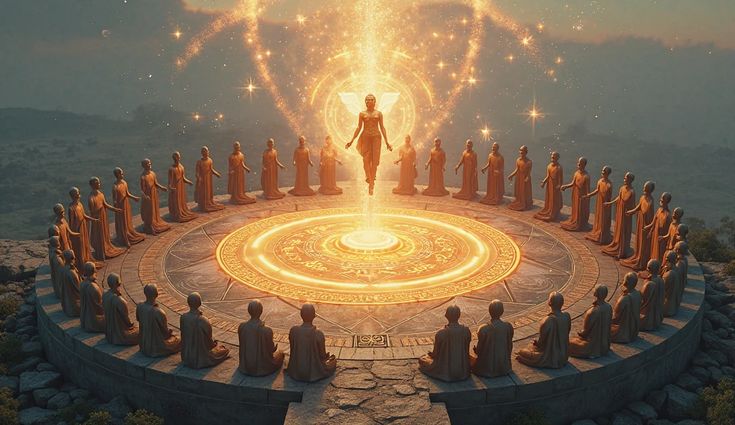
Chapter 10 of the Bhagavad Gita contains 42 verses and is known as Vibhūti Yoga, the Yoga of Divine Manifestations. In this chapter, Lord Krishna reveals His divine glories (vibhūtis)—the extraordinary expressions through which the Infinite manifests in the finite world. This chapter deepens Arjuna’s devotion and prepares him for the direct vision of the Universal Form in Chapter 11. Krishna explains that all greatness, excellence, power, beauty, and brilliance seen anywhere in the universe arise from a fraction of His divine splendor. By recognizing these manifestations, a seeker develops devotion, humility, and a constant awareness of the Divine presence in everyday life. Click Here To Access more other text.

Meaning of Vibhūti Yoga
The word Vibhūti means special divine manifestations, and Yoga means union or spiritual discipline. Vibhūti Yoga teaches how the Supreme Reality expresses itself through:
-
Natural forces
-
Noble qualities
-
Great personalities
-
Cosmic principles
-
Moral and spiritual excellences
Krishna does not list all manifestations exhaustively, but gives representative examples to help the seeker contemplate the Divine in all forms of greatness. Click view PDF.
Significance of Chapter 10 in the Bhagavad Gita
Chapter 10 is significant because it:
-
Bridges philosophical knowledge and devotional experience
-
Teaches how to see God in the world, not away from it
-
Strengthens devotion rooted in understanding rather than blind belief
-
Reduces ego by revealing that all excellence belongs to the Divine
-
Prepares the mind for the Visvarūpa Darśana (Universal Form) in Chapter 11
This chapter transforms devotion into continuous remembrance of God through daily perception.

Key Concepts & Teachings
Verse 10.1 – Krishna’s Supreme Teaching
Krishna announces that He will again speak the highest wisdom for Arjuna’s welfare. This emphasizes that the coming knowledge is not repetitive, but deeper and more refined.
Teaching:
Spiritual knowledge unfolds gradually, deepening understanding and devotion.
Verse 10.2 – Source of Gods and Sages
Krishna declares that even gods and great sages do not fully know His origin, for He is the source of them all.
Teaching:
The Supreme Reality transcends all limited beings, including celestial powers. Click view PDF.
Verse 10.3 – Knowledge that Liberates
One who knows Krishna as unborn, beginningless, and the Supreme Lord becomes free from delusion and sin.
Teaching:
Right knowledge of the Divine destroys ignorance and bondage.
Verses 10.4–10.5 – Divine Qualities
Krishna explains that qualities such as intelligence, forgiveness, courage, truthfulness, fear, fearlessness, joy, sorrow, birth, and death all arise from Him.
Teaching:
All psychological and emotional states originate in the Divine order.
Verse 10.6 – Cosmic Progenitors
The great sages, Manus, and ancient beings originate from Krishna’s will, and through them the world functions.
Teaching:
Cosmic order is not accidental but divinely structured. Click view PDF.

Verse 10.7 – Unshakeable Yoga
Those who understand Krishna’s divine manifestations become firmly established in spiritual awareness without doubt.
Teaching:
Understanding divine glory stabilizes faith and devotion.
Verses 10.8–10.9 – Devotion of the Wise
The wise, knowing Krishna as the source of all, fix their minds on Him, speak of Him, and delight in His presence.
Teaching:
True devotion naturally arises from right understanding.
Verses 10.10–10.11 – Buddhi Yoga
Krishna grants spiritual intelligence (buddhi) to devoted seekers and removes the darkness of ignorance with the lamp of knowledge.
Teaching:
Grace follows sincere devotion and inquiry. Click view PDF.
Verses 10.12–10.17 – Arjuna’s Praise and Request
Arjuna acknowledges Krishna as the Supreme Reality and requests Him to explain His divine manifestations in detail so that he may meditate upon them.
Teaching:
Devotion matures into the desire for deeper contemplation.
Verses 10.18–10.42 – Divine Manifestations (Vibhūtis)
Krishna lists examples of His manifestations, including:
-
Among words: Om
-
Among rivers: Ganga
-
Among mountains: Meru
-
Among warriors: Rama
-
Among serpents: Ananta
-
Among lights: the Sun
-
Among sacrifices: japa
-
Among beings: consciousness
Krishna concludes that all greatness and glory in the universe arise from a spark of His infinite power. Click view PDF.
Teaching:
Seeing excellence anywhere should remind one of the Divine source.
Psychological and Spiritual Insights
Vibhūti Yoga reshapes perception:
-
Ego dissolves when excellence is seen as divine, not personal
-
Attachment reduces when one recognizes a higher source
-
Devotion becomes effortless through awareness
-
Life becomes sacred through reverent perception
Practical Applications
Seeing the Divine Everywhere
Recognizing divine presence in people, nature, virtues, and talents cultivates humility, gratitude, and compassion.
Devotion Through Awareness
Daily remembrance of the Divine through observation leads to inner peace and spiritual stability.
Legacy and Contemporary Relevance
Vibhūti Yoga has deeply influenced:
-
Bhakti traditions
-
Devotional poetry and music
-
Contemplative spiritual practices
-
Ethical and reverent living
In modern life, it teaches how to remain spiritually connected while fully engaged in the world. Click view PDF.
Conclusion
Chapter 10 reveals that God is not distant or abstract but present in every form of greatness and excellence. By recognizing Krishna’s divine glories, the seeker develops devotion rooted in wisdom, leading to humility, clarity, and unwavering faith. Vibhūti Yoga transforms ordinary perception into a continuous spiritual vision, preparing the heart and mind for the direct experience of the Universal Reality.