Chapter 3 – Karma Yoga (The Yoga of Action)
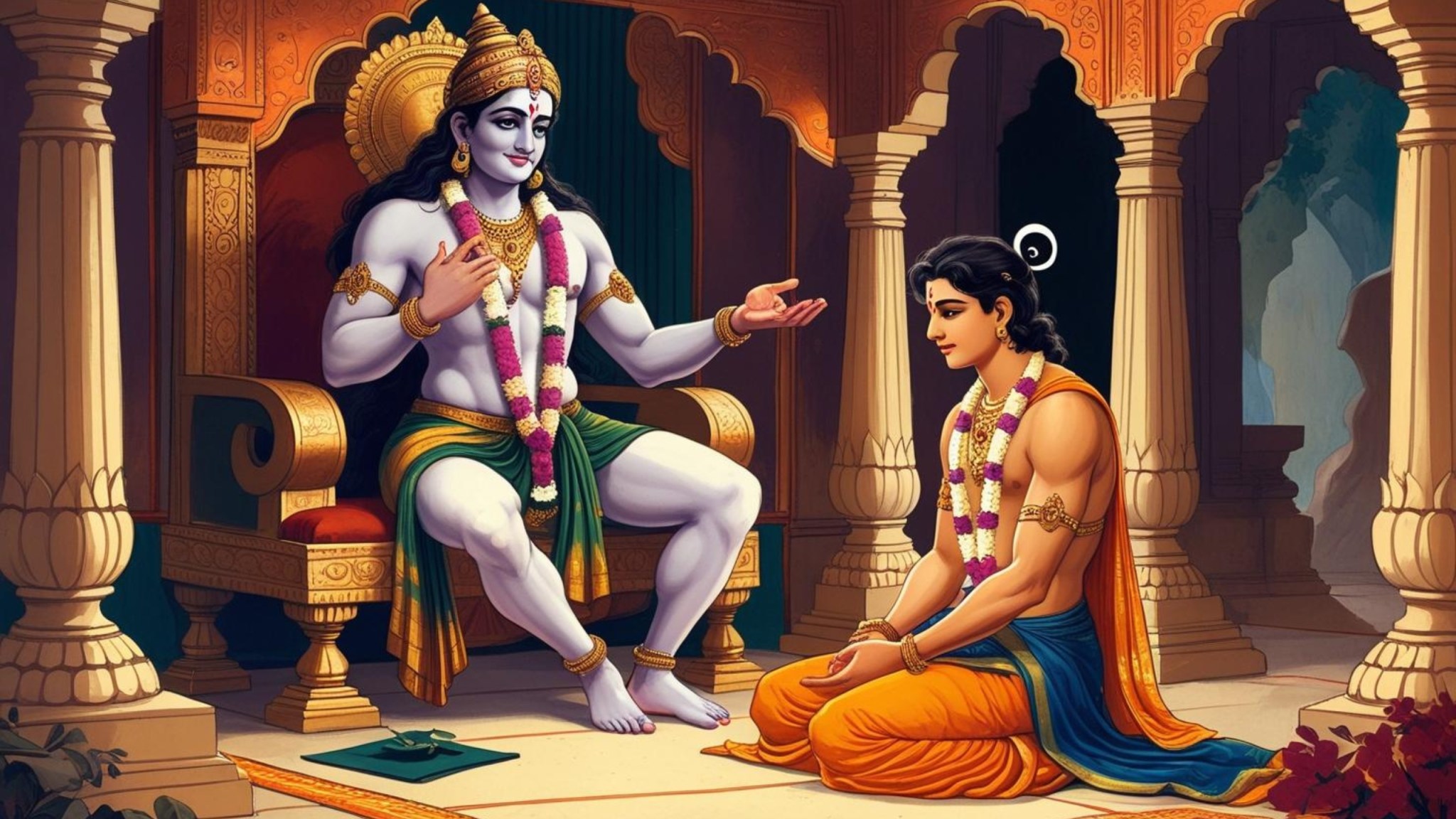
Chapter 3 of the Bhagavad Gita consists of 43 verses and presents a detailed and practical philosophy of Karma Yoga, the Yoga of Action. This chapter arises from Arjuna’s confusion after hearing the exalted teachings on knowledge and renunciation in Chapter 2. Arjuna wonders why, if knowledge leads to liberation, Krishna urges him to engage in action—especially a violent war. Lord Krishna resolves this dilemma by teaching that action is unavoidable and that true liberation does not come from physical renunciation, but from inner renunciation of attachment and ego. Karma Yoga thus becomes the essential bridge between spiritual wisdom and active worldly life. Click Here To Access more other text.

Meaning of Karma Yoga
Karma means action, and Yoga means union with the Divine. Karma Yoga is the spiritual discipline of performing one’s duties selflessly, with dedication to God and without attachment to results. It is not the rejection of work, but the purification of motive behind work.
Krishna explains two essential attitudes of Karma Yoga:
- Ishvara Arpana Buddhi – Offering every action to the Divine
- Prasada Buddhi – Accepting results as divine grace
With these attitudes, action becomes a means of inner growth rather than bondage. Click view PDF.
Significance of Karma Yoga in the Bhagavad Gita
Karma Yoga is the most universally applicable spiritual path because it does not require withdrawal from society. The Bhagavad Gita recognizes that most seekers are householders engaged in duties and responsibilities.
Chapter 3 establishes Karma Yoga as:
- A preparatory discipline for Jnana Yoga
- A means of purifying the mind (Chitta Shuddhi)
- A foundation for social, moral, and cosmic harmony
Key Concepts and Teachings (Verse-wise Study)
Verse 3.5 – Inevitability of Action
Sanskrit
न हि कश्चित्क्षणमपि जातु तिष्ठत्यकर्मकृत् ।
कार्यते ह्यवशः कर्म सर्वः प्रकृतिजैर्गुणैः ॥
Meaning
No one can remain without action even for a moment. Everyone is compelled to act according to their nature born of the three gunas.
Teaching & Benefits
- Reveals the impossibility of inaction
- Encourages responsible engagement with life
- Removes the illusion of escapism Click view PDF.

Verse 3.7 – True Discipline
Sanskrit
यस्त्विन्द्रियाणि मनसा नियम्यारभतेऽर्जुन ।
कर्मेन्द्रियैः कर्मयोगमसक्तः स विशिष्यते ॥
Meaning
One who controls the senses by the mind and performs action through the organs of action without attachment is superior.
Benefits
- Teaches inner mastery
- Prevents hypocrisy
- Cultivates discipline and balance Click view PDF.
Verse 3.9 – Action as Sacrifice (Yajna)
Sanskrit
यज्ञार्थात्कर्मणोऽन्यत्र लोकोऽयं कर्मबन्धनः ।
तदर्थं कर्म कौन्तेय मुक्तसङ्गः समाचर ॥
Meaning
Work done as sacrifice frees one from bondage; work done for selfish gain binds.
Benefits
- Transforms work into worship
- Aligns individual life with cosmic order
- Reduces selfishness and anxiety Click view PDF.
Verse 3.19 – Path to Liberation Through Action
Sanskrit
तस्मादसक्तः सततं कार्यं कर्म समाचर ।
असक्तो ह्याचरन्कर्म परमाप्नोति पूरुषः ॥
Meaning
Perform your duty without attachment; by doing so, one attains the Supreme.
Benefits
- Clarifies the spiritual value of action
- Encourages perseverance
- Leads toward liberation Click view PDF.

Verse 3.27 – Doership and Ego
Sanskrit
प्रकृतेः क्रियमाणानि गुणैः कर्माणि सर्वशः ।
अहङ्कारविमूढात्मा कर्ताहमिति मन्यते ॥
Meaning
All actions are performed by the gunas of nature, but the deluded ego thinks, “I am the doer.”
Benefits
- Dissolves ego
- Reduces pride and guilt
- Encourages humility Click view PDF.
Verse 3.36–39 – Desire: The Inner Enemy
Meaning (Summary)
Krishna identifies desire (kama), born of passion (rajas), as the force that drives people toward sinful actions against their will.
Benefits
- Develops self-awareness
- Helps conquer anger and greed
- Strengthens moral clarity Click view PDF.
Verse 3.43 – Conquest Through Knowledge
Sanskrit
एवं बुद्धेः परं बुद्ध्वा संस्तभ्यात्मानमात्मना ।
जहिशत्रुं महाबाहो कामरूपं दुरासदम् ॥
Meaning
Knowing the Self as higher than intellect, control the lower self and destroy desire, the enemy of wisdom.
Benefits
- Leads to self-mastery
- Awakens spiritual strength
- Prepares for Self-realization Click view PDF.

Psychological Dimensions of Karma Yoga
Karma Yoga transforms the psychology of action. Instead of suppressing desires, it redirects motivation toward service. This results in reduced anxiety, emotional stability, and inner clarity.
It cultivates humility, patience, resilience, and mental balance—essential traits for spiritual maturity.
Karma Yoga and Liberation
Krishna clearly teaches that action does not bind; attachment binds. When ego and expectation are removed, actions cease to create karma.
Thus, Karma Yoga becomes a direct path to liberation by dissolving the sense of doership and individuality. Click view PDF.
Practical Applications of Chapter 3
Work as Worship
Professional duties, family responsibilities, and social service become sacred when performed with surrender and dedication.
Living with Balance
Equanimity in success and failure leads to peace, clarity, and spiritual growth.
Legacy of Karma Yoga
Karma Yoga has deeply influenced Indian civilization and global thought. Mahatma Gandhi embodied its principles through non-violence and selfless service.
It continues to inspire ethical leadership, service-oriented living, and spiritual activism. Click view PDF.
Contemporary Relevance of Karma Yoga
In a fast-paced, results-driven world, Karma Yoga offers a sustainable model of work without burnout. It teaches how to remain inwardly free while fully engaged in life.
Conclusion
Chapter 3 firmly establishes that spiritual life does not require escape from action. Instead, life itself becomes the field for liberation when action is guided by wisdom, surrender, and detachment. Through Karma Yoga, Krishna teaches Arjuna—and all seekers—how ordinary action can become a sacred journey toward Self-realization.