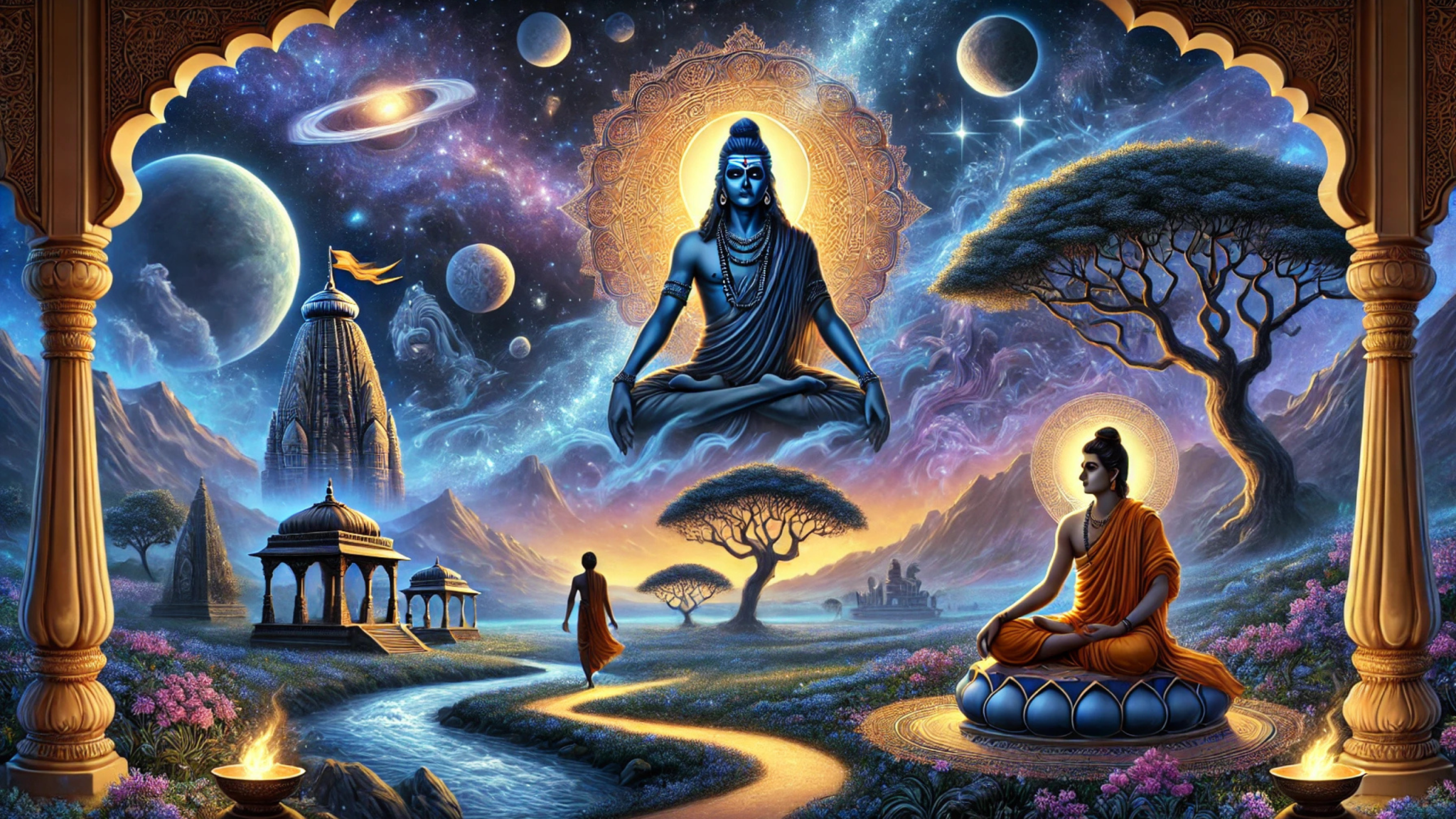
Chapter 12 – Bhakti Yoga
Deep Q&A Explanation
1. What is the title of Chapter 12?
Answer:
Chapter 12 of the Bhagavad Gita is called Bhakti Yoga.
-
Bhakti = devotion, love, heartfelt surrender
-
Yoga = union / spiritual path
So this chapter explains the path of devotion as a direct way to spiritual realization.
It focuses not on theory, but on how a devotee lives, thinks, feels, and acts. Click Here To Access more other text.

2. What is the main theme of Chapter 12?
Answer:
The main theme of this chapter is:
Which spiritual path is easier and more effective — devotion to a personal God or meditation on the formless Absolute?
Arjuna asks Krishna to clarify:
👉 Is it better to worship God with form
👉 or meditate on the formless, unmanifest reality?
Krishna’s answer makes this chapter one of the most practical and compassionate teachings of the Gita.
3. What are the two spiritual paths compared here?
Answer:
Krishna compares two approaches:
1️⃣ Bhakti – Devotion to the personal form of God
2️⃣ Jnana – Meditation on the formless, imperishable Absolute
Krishna acknowledges both paths are valid, but clearly explains that:
👉 Devotion is easier, safer, and more accessible for most human beings.
This is a realistic spiritual psychology — not an idealistic demand.
4. Why does Krishna say devotion is easier than the formless path?
Answer:
Krishna explains that the formless path is:
-
mentally demanding
-
abstract
-
difficult to sustain
-
requires extreme inner discipline
For most people:
👉 the mind needs emotion, relationship, and connection.
Devotion provides:
✔ emotional grounding
✔ mental stability
✔ continuous motivation
This aligns perfectly with modern psychology:
👉 Humans regulate emotions better through attachment to meaning, not abstraction. Click Here For Chapter-12.

5. What does true Bhakti (devotion) really mean here?
Answer:
Bhakti is not blind belief or ritualism.
True devotion means:
-
fixing the mind on the Divine
-
offering all actions to God
-
surrendering ego and doership
-
remaining inwardly connected in all activities
Krishna makes devotion a way of living, not a religious label.
Real-life meaning:
👉 Doing your duties with sincerity, love, and humility is also devotion.
6. What qualities define a true devotee according to Krishna?
Answer:
Krishna lists the qualities of a true devotee in great detail. A true devotee is someone who:
✔ is free from hatred
✔ is friendly and compassionate to all
✔ is not ego-driven
✔ remains balanced in pleasure and pain
✔ forgives easily
✔ is content and simple
✔ controls desires
✔ is steady in mind and purpose
This is not mysticism —
👉 it is a blueprint for emotional maturity and inner peace. Click Here For Chapter-12.
7. How does Bhakti Yoga help with emotional balance?
Answer:
A devotee described in Chapter 12:
-
is not shaken by praise or blame
-
does not cling to outcomes
-
does not react impulsively
-
remains inwardly stable
This directly matches modern concepts like:
👉 emotional regulation
👉 resilience
👉 secure attachment
👉 stress management
Bhakti Yoga is emotional intelligence refined through spirituality. Click Here For Chapter-12.
8. What does Krishna say about fear, anxiety, and suffering?
Answer:
Krishna implies that suffering increases when:
-
the ego dominates
-
outcomes are over-controlled
-
identity is fragile
Devotion dissolves this by:
✔ surrendering outcomes
✔ trusting a higher order
✔ letting go of excessive control
This doesn’t make a person passive —
it makes them calm, focused, and resilient. Click Here For Chapter-12.

9. How does this chapter apply to modern life?
Answer:
Chapter 12 is extremely relevant today because it teaches:
🔹 how to live without constant anxiety
🔹 how to remain calm under pressure
🔹 how to deal with people without hatred
🔹 how to work without burnout
🔹 how to live with purpose, not emptiness
Bhakti here is not temple-based —
👉 it is life-based devotion. Click Here For Chapter-12.
Summary: Core Message of Chapter 12
The highest devotion is not emotional excitement —
it is steady love, humility, balance, and surrender in everyday life.
Krishna teaches that:
-
devotion transforms character
-
love stabilizes the mind
-
surrender removes fear
-
inner peace is the sign of spiritual growth
One Deep Takeaway
Devotion is not about escaping life —
it is about living life with love, awareness, and freedom from ego.