Chapter 2 – Sankhya Yoga (Yoga of Knowledge)
This chapter has 72 verses and serves as a bridge between Arjuna’s dilemma in Chapter 1 and the teachings of Lord Krishna on spiritual paths. Krishna explains the essence of knowledge, selfless action, and how one can overcome suffering through understanding one’s true self. Feel free to share more details for. Click Here For Chapter-2.
Sankhya Yoga: The Path of Knowledge
Sankhya Yoga is one of the core teachings in the Bhagavad Gita, particularly discussed in Chapter 2. It is often referred to as the Yoga of Knowledge or The Knowledge of the Self. “Sankhya” translates to “knowledge” or “counting,” and “Yoga” means “union” or “discipline,” so Sankhya Yoga refers to the discipline of knowledge or the union achieved through understanding the true self.
Significance of Samkhya Yoga in the Bhagavad Gita
It looks like you’ve referenced content from Vedanta Students regarding the significance of Samkhya Yoga in the Bhagavad Gita. While I cannot access external websites, I can help you summarize or further explore the ideas presented in the text.
The explanation you provided accurately captures the central teachings of Samkhya Yoga from the Bhagavad Gita. It highlights key points such as:
- Eternal Soul (Atman): The soul’s immortality and its distinction from the temporary physical body.
- Samkhya: The analytical approach to understanding the difference between the transient material world and the eternal, unchanging soul.
- Arjuna’s Transformation: The philosophical discourse helps Arjuna move from emotional turmoil to a deeper understanding of duty and reality.
- Foundation for the Gita: Samkhya Yoga sets the stage for the broader themes of duty, selfless action (Karma Yoga), and spiritual realization in the Gita.
If you want, I can help expand on these concepts or assist you with any specific content from the website. Feel free to share more details for Click Here For Chapter-2.
Key Concepts & Teachings:
Arjuna’s Dilemma (Verses 1-12):
- Arjuna, the warrior prince, is in a state of confusion and moral dilemma on the battlefield of Kurukshetra. He does not want to fight his own kin and teachers, so he turns to Krishna for guidance.
- Arjuna’s doubt represents the human condition of emotional turmoil, where the right course of action isn’t always clear.
Krishna’s Response: The Nature of the Soul (Verses 13-30):
- Krishna begins by addressing Arjuna’s sorrow and confusion, revealing that the soul (Atma) is eternal and indestructible. The body is temporary and perishable, but the soul transcends physical death.
- Key Verse: “The soul never dies. It is eternal, and it is not destroyed when the body is destroyed.”
- Krishna tells Arjuna that he should not be grieving because he cannot kill the soul. It is the body that perishes, not the true essence of the individual.
- The importance of detachment is introduced: one should perform their duty (dharma) without attachment to the outcomes. Actions must be carried out in alignment with righteousness, not for personal gain or with a desire for rewards.
Karma Yoga (The Yoga of Selfless Action) (Verses 31-53):
- Karma Yoga becomes the central focus of this chapter. Krishna emphasizes the importance of performing one’s duties selflessly, without attachment to the results.
- Performing one’s duties as an offering to God (Ishvara) purifies the mind and helps in self-realization.
- Actions should not be influenced by personal desires. Instead, one should focus on the action itself and the welfare of society, acting as an instrument of the Divine.
- Krishna teaches Arjuna that all actions should be considered as offerings to the divine, which helps purify the mind and remove ego and attachment.
Jnana Yoga (The Yoga of Knowledge) (Verses 54-72):
- Krishna explains that true wisdom leads to self-realization. Knowledge (Jnana) of the self is the path to liberation (moksha).
- The person who has attained Jnana Yoga has risen above dualities such as pleasure and pain, success and failure, and maintains equanimity.
- The goal is to achieve mental balance, where the individual is neither disturbed by external circumstances nor swayed by desires or attachments. The yogi, thus, becomes free from all emotional fluctuations.
- Key Verse: “One who is able to remain unaffected by joy and sorrow, success and failure, is truly wise.”
Karma and its Impact:
- Krishna teaches that karma (action) done with attachment to results leads to bondage and suffering. However, when performed without attachment, it leads to freedom.
- One should act according to their nature and duties without worrying about the fruits of the action. This is the essence of selfless action.
- The law of cause and effect is emphasized: good actions lead to positive consequences, and bad actions lead to negative consequences.
Important Teachings:
- Self-Realization: By understanding the eternal nature of the soul and transcending bodily identification, one can realize their true self.
- Equanimity: Krishna stresses the importance of maintaining a calm mind in all circumstances, whether in success or failure, pleasure or pain.
- Role of Dharma: One should perform their duty (dharma) based on their role in society, without selfish motives.
- Surrender to God: Krishna suggests that surrendering to the Divine and performing selfless actions will lead to liberation.
Psychological Aspect:
- Krishna points out that mental detachment from the results of actions and controlling the mind are essential for spiritual progress.
- Krishna says that actions performed with an unbalanced mind lead to suffering. But actions performed with wisdom and a stable mind contribute to growth.
The Nature of Knowledge and Renunciation:
- Jnana (knowledge) leads to renunciation. By understanding the truth of the self, one naturally detaches from worldly desires.
- True renunciation is not about abandoning the world, but about renouncing attachment to the fruits of action.
The Role of the Guru:
- The importance of a teacher or guru is highlighted, especially in the path of Jnana Yoga. The guru helps the seeker overcome ignorance and realize the truth.
- The Guru helps one move beyond material attachments and toward spiritual wisdom.
Practical Applications:
- Living in the World with Detachment: Krishna urges Arjuna to live in the world but not be affected by it. This teaching applies to every individual who must deal with the ups and downs of life but stay grounded in spiritual understanding.
- Performing Daily Duties: By focusing on performing one’s duties selflessly and without attachment to outcomes, a person can live a fulfilling and spiritually progressive life. If you want, more than information Click Here For Chapter 2 .

Legacy of Sankhya Yoga
Sankhya Yoga has left a significant and lasting impact on both Indian philosophy and global spiritual traditions. As one of the oldest philosophical systems, its teachings have deeply influenced many schools of thought, spiritual practices, and religious movements. Here’s a look at the legacy of Sankhya Yoga.
1. Influence on Vedanta and Other Philosophies
-
Vedanta Philosophy:
Vedanta, one of the most prominent schools of Hindu philosophy, is profoundly influenced by Sankhya Yoga. Both systems share similar ideas, such as the distinction between the eternal soul (Atman) and the impermanent body and mind. Vedanta, particularly through thinkers like Adi Shankaracharya, adapted many of Sankhya’s concepts about the nature of reality and the self. -
Yoga Philosophy:
Patanjali’s Yoga Sutras, which form the basis of classical Yoga, integrate elements of Sankhya Yoga. Sankhya’s dualism—between Purusha (consciousness) and Prakriti (matter)—is echoed in Patanjali’s system, which distinguishes between the mind (Chitta) and the spirit (Purusha). Sankhya Yoga thus became a foundational influence in shaping the practical aspects of Yoga. -
Samkhya and Buddhism:
Buddhism, although distinct, shares some commonalities with Sankhya Yoga, such as the rejection of the self (Atman) and the transient nature of the material world. The Buddhist concepts of impermanence (anicca) and suffering (dukkha) bear resemblance to the Sankhya view of the impermanence of the material body and mind.
2. Spiritual Practices and Meditation
-
Meditation and Self-Realization:
Sankhya Yoga emphasizes the realization of the Atman through knowledge, which influences modern-day meditation practices. The idea of transcending the material world through mental discipline is central to many contemplative and meditative traditions in the East. In particular, Jnana Yoga (the Yoga of Knowledge) continues to be a path that many spiritual seekers follow today, seeking to experience their true nature through meditation and deep reflection. -
Selflessness and Karma Yoga:
Sankhya Yoga’s teachings on detachment from the fruits of actions (Karma Yoga) have inspired many modern-day spiritual practices, including those within the Bhakti and Tantric traditions. This focus on selfless action has also influenced the Gandhian philosophy of non-violence (Ahimsa) and social service, which emphasizes detached service for the greater good.
3. Influence on Hindu Practices and Devotional Movements
-
Impact on Bhakti Movements:
Sankhya Yoga’s influence on devotional movements is also significant. While Sankhya itself does not focus on personal deity worship, its understanding of the soul’s true nature and the distinction between the soul and body laid a foundation for the Bhakti tradition. Bhakti emphasizes devotion to God and the realization of one’s spiritual essence, which resonates with the ideas of detachment and transcendence in Sankhya Yoga. -
Role in Hindu Reform Movements:
Various Hindu reform movements, especially during the 19th and 20th centuries, such as those led by Swami Vivekananda and Aurobindo, have drawn upon Sankhya Yoga principles. These reformers highlighted the importance of self-awareness, mental discipline, and spiritual knowledge to achieve liberation (moksha), which aligns with the teachings of Sankhya Yoga.
4. Contribution to the Global Understanding of Philosophy and Spirituality
-
Western Philosophical Influence:
Sankhya Yoga has also contributed to the development of Western philosophy. Early scholars of Indian philosophy, such as Schopenhauer, Carl Jung, and Hermann Hesse, were influenced by Indian thought, including Sankhya Yoga. Concepts like the eternal soul (Atman) and the transcendence of the self have found resonance in Western philosophical discussions on existentialism, metaphysics, and consciousness. -
Transcendental Meditation:
The Transcendental Meditation movement, founded by Maharishi Mahesh Yogi, draws upon many ideas that are rooted in Sankhya Yoga. The focus on transcending the ego and realizing a higher state of consciousness echoes Sankhya’s philosophy of separating the eternal self (Atman) from the transient world of matter (Prakriti).
5. Legacy in Modern Yoga and Psychology
-
Modern Yoga Practices:
Sankhya Yoga’s influence is still prevalent in modern yoga practices. While Ashtanga Yoga and Hatha Yoga emphasize physical postures, the underlying Sankhya-based philosophy about the distinction between body and spirit remains relevant in guiding the holistic aspects of yoga, including breathwork (pranayama) and meditation. -
Psychological Impacts:
The dualistic nature of Sankhya (mind and body, spirit and matter) has informed contemporary psychological theories, particularly in the area of consciousness and self-awareness. The separation between the eternal soul (Atman) and the changing nature of the mind and emotions aligns with modern understandings of the human psyche in Western psychology.
6. Sankhya Yoga’s Contemporary Relevance
-
Philosophy of Detachment:
In today’s fast-paced world, where materialism and attachment often dominate, Sankhya Yoga’s teachings on detachment and equanimity offer a path to inner peace and balance. By focusing on the eternal nature of the self and practicing detachment from outcomes, individuals can achieve a sense of peace and purpose amidst the chaos of modern life. -
Conscious Living and Self-Realization:
In the age of mindfulness and self-improvement, the principles of Sankhya Yoga—including self-awareness, mindfulness, and the distinction between the physical body and the spiritual self—continue to resonate with people seeking personal and spiritual growth.
Bhagavad Gita – Chapter 2, Verse 2 (2.2) Explanation
Sanskrit Verse:
श्रीभगवानुवाच |
कुतस्त्वा कश्मलमिदं विषमे समुपस्थितम् |
अनार्यजुष्टमस्वर्ग्यमकीर्तिकरमर्जुन || 2.2 ||
Transliteration:
śrī-bhagavān uvāca |
kutas tvā kaśmalam idaṁ viṣame samupasthitam |
anārya-juṣṭam asvargyam akīrti-karam arjuna ||
Translation:
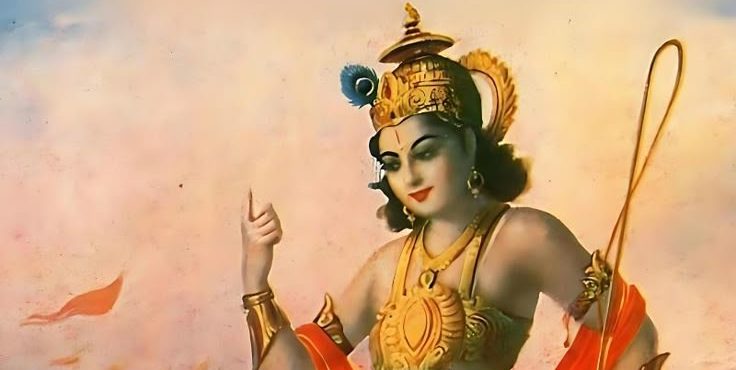
The Supreme Lord, Shri Krishna, said:
“O Arjuna, from where has this weakness of heart come upon you at this critical moment? This is not befitting of an honorable person (Arya); it does not lead to heaven and brings disgrace.”More Then Information For Click here to View Chapter 2 Note.

Conclusion:
In Chapter 2, Krishna provides Arjuna with the essential knowledge to understand his spiritual nature. This knowledge helps him rise above the confusion and sorrow caused by external circumstances. The essence of the chapter is to follow the path of Karma Yoga (selfless action) and Jnana Yoga (wisdom) to transcend the temporary worries of life and realize the eternal nature of the soul.
By the end of Chapter 2, Arjuna begins to gain clarity, understanding that his duty as a warrior is part of a larger divine plan, and he should act without attachment to personal desires.
Join Our Classes:
The Bhagavad Gita is more than just a book—it’s a guide to living with balance and peace. Our classes make its deep wisdom easy to understand and apply in everyday life. Join us to explore the teachings and see the world in a new light!
Explore More Text Join Our Classes
1. Watch Chapter-2 Youtube Video 2. Watch Chapter-2 Youtube Video 3. Watch Chapter-2&3 Youtube Video